
Saturday, April 4, 2026
Home Blog Page 654

Lawlessness: A looming threat to stability and development

0

In recent years, Ethiopia has witnessed a troubling rise in lawlessness, characterized by rampant violence, kidnappings, and a breakdown of public order. This alarming trend poses significant risks not only to the safety of citizens but also to the country’s long-term stability and development. As the government grapples with insurgencies and criminal activities, the implications of this lawlessness extend far beyond immediate security concerns, threatening to undermine the very foundations of Ethiopian society.

Ethiopia is currently facing a multifaceted crisis marked by escalating violence and insecurity. Reports indicate that armed gangs are increasingly targeting travelers on major highways, with kidnappings for ransom becoming a common occurrence. Often individuals are taken hostage by highwaymen demanding exorbitant ransoms. Families are often left helpless, unable to pay the sums demanded, which can reach up to millions of birr per captive.

The situation is exacerbated by ongoing conflicts between government forces and various insurgent groups, particularly in regions like Amhara and Oromia. The government’s narrative often downplays these incidents, presenting a façade of stability that contradicts the lived experiences of many Ethiopians.

The rise in lawlessness has profound implications for Ethiopian society. First and foremost, it erodes public trust in government institutions tasked with ensuring safety and security. When citizens feel unsafe in their own neighborhoods or while traveling, their confidence in the state diminishes. This lack of trust can lead to increased social fragmentation and a sense of helplessness among communities.

Moreover, lawlessness stifles economic development. Foreign investors are deterred by the prospect of operating in an unstable environment where their assets may be at risk. The inability to guarantee safety not only affects foreign direct investment but also hampers local businesses that struggle to thrive amidst insecurity. As economic activities dwindle, so too does job creation, exacerbating poverty levels and further entrenching cycles of violence.

The Ethiopian government’s response to rising lawlessness has been met with mixed reactions. While there have been efforts to combat insurgent groups and restore order, these actions often come at a cost. Reports indicate that government forces have engaged in operations that result in civilian casualties, raising concerns about human rights violations. The perception of heavy-handed tactics can alienate communities and fuel further unrest.

Additionally, the government’s control over information regarding violence and conflict contributes to a distorted understanding of the situation on the ground. By selectively reporting on security operations while downplaying civilian suffering, authorities risk creating an environment where accountability is absent. This lack of transparency not only undermines public confidence but also hinders efforts to address the root causes of lawlessness.

In this context, civil society organizations play a crucial role in advocating for accountability and justice. They serve as watchdogs, documenting incidents of violence and raising awareness about human rights abuses. However, these organizations often face significant challenges themselves, including government restrictions on their activities and limited access to resources.

Empowering civil society is essential for fostering a culture of accountability and promoting dialogue between communities and the state. By amplifying the voices of those affected by lawlessness, civil society can help bridge the gap between citizens and their government, advocating for policies that prioritize safety and security.

Addressing lawlessness in Ethiopia requires a multifaceted approach that encompasses security reforms, community engagement, and economic development initiatives. First and foremost, the government must prioritize restoring public safety through effective policing strategies that respect human rights. This includes training law enforcement personnel to engage constructively with communities rather than resorting to violence.

Furthermore, fostering economic opportunities is vital for reducing vulnerability to crime. By investing in job creation programs and supporting small businesses, the government can help alleviate poverty—one of the root causes of lawlessness. Additionally, improving access to education will empower individuals with skills necessary for meaningful employment.

Strengthening governance structures is equally important. Transparency in reporting incidents of violence and conflict will build public trust and ensure accountability for those responsible for perpetuating lawlessness. Engaging civil society organizations as partners in this process will enhance oversight and provide valuable insights into community needs.

The rise of lawlessness in Ethiopia presents a formidable challenge that threatens not only individual safety but also national stability and development prospects. As armed gangs proliferate and insurgent groups gain ground, it is imperative for the Ethiopian government to take decisive action to restore order while respecting human rights.

By prioritizing public safety through effective policing strategies, fostering economic opportunities for vulnerable populations, and engaging civil society as partners in governance reform, Ethiopia can begin to address the underlying issues contributing to lawlessness. Failure to act decisively risks plunging the nation into deeper chaos—one that could have lasting repercussions for generations to come.

As Ethiopians navigate this complex landscape marked by insecurity and fear, it is crucial for all stakeholders—government officials, civil society leaders, community members—to work collaboratively towards a safer future where rule of law prevails over chaos. Only then can Ethiopia hope to realize its full potential as a stable and prosperous nation on the Horn of Africa’s geopolitical landscape.

Trustworthy Leadership and Economic Development: A Critical Nexus

0

Alazar Kebede

In an increasingly complex global landscape, the interplay between trustworthy leadership and economic development is drawing considerable attention. Leadership that is grounded in trust not only strengthens the social fabric but also fuels sustainable economic growth. Trustworthy leaders, those who demonstrate integrity, transparency, accountability, and fairness, are essential to fostering a stable environment where economies can thrive. This article explores how trustworthy leadership influences economic development, the mechanisms through which it operates, and the far-reaching impacts it can have on societies.

Trustworthy leadership is characterized by the ability of leaders to act in the best interest of their constituents, maintaining transparency and consistency in decision-making. It hinges on several key traits: Integrity: Leaders who adhere to ethical standards and moral principles build trust by aligning their actions with their words. Accountability: A trustworthy leader takes responsibility for both successes and failures, creating a culture of ownership. Transparency: Open communication and decision-making processes allow stakeholders to feel informed and involved. Empathy and fairness: Leaders who prioritize the well-being of all stakeholders, ensuring equitable treatment, earn deep-rooted trust.

Trustworthy leadership impacts economic development through various channels: Promoting Investor Confidence: Investors, whether domestic or foreign, seek stable, predictable environments to invest their capital. Trustworthy leaders reduce the risks of corruption, political instability, and arbitrary policymaking, making countries more attractive to investors. For example, nations with transparent governance and anti-corruption frameworks, such as those in Northern Europe, consistently rank higher on global investment indices.

Improving Public Institutions: Trustworthy leadership improves the efficiency of public institutions, from regulatory agencies to the judiciary. Leaders who uphold the rule of law and ensure institutions function with integrity create a favorable climate for business operations. In contrast, weak or corrupt leadership undermines these institutions, leading to inefficiency, insecurity, and economic stagnation.

Fostering Social Cohesion and Productivity: Trust between leaders and citizens encourages social cohesion, reducing social unrest and enabling greater collaboration. When people trust their government, they are more likely to comply with regulations, pay taxes, and participate in civic life, all of which contribute to economic development. Conversely, distrust can lead to civil disobedience, tax evasion, or even protest movements that destabilize economies.

Facilitating Long-term Development Goals: Economic development is often a long-term process requiring careful planning and consistent execution. Trustworthy leaders are more likely to implement and follow through on long-term development goals, such as infrastructure projects, education reform, or healthcare expansion. Short-term, populist decisions that serve political interests over societal ones can derail progress, creating cycles of economic instability.

Several countries serve as compelling examples of how trustworthy leadership has driven economic progress: – Rwanda’s Transformation Under Paul Kagame: Rwanda, under President Paul Kagame, has experienced remarkable economic growth since the mid-1990s. While Kagame’s leadership has been the subject of debate, his administration’s emphasis on anti-corruption measures, economic reforms, and national unity has garnered significant trust among citizens and foreign investors alike. Rwanda has maintained a high GDP growth rate and a strong sense of national identity, both rooted in Kagame’s consistent and transparent governance.

Singapore’s Economic Miracle: Singapore’s rise from a developing nation to a global financial hub is largely credited to its first prime minister, Lee Kuan Yew. Lee’s leadership was marked by a strong emphasis on meritocracy, anti-corruption, and long-term planning. By creating a trustworthy, effective government, Singapore attracted foreign investments and developed one of the world’s most competitive economies. Today, Singapore ranks among the least corrupt nations, with an efficient public sector that drives innovation and economic resilience.

Germany’s Stability and Growth: Germany, Europe’s largest economy, has long benefited from trustworthy leadership. Leaders like Angela Merkel, known for her steady hand and pragmatic approach, have fostered a stable political and economic environment. Germany’s strong institutions, combined with an emphasis on transparency and accountability, have made it a global economic powerhouse. Trust in leadership has allowed for bold decisions, such as transitioning towards renewable energy and adapting to economic challenges without undermining growth.

Conversely, the absence of trustworthy leadership can severely undermine economic potential. Countries suffering from corruption, political instability, or authoritarian regimes often face slow or negative economic growth. 

For instance, Venezuela: Once one of the wealthiest countries in Latin America, Venezuela’s decline can be attributed in large part to leadership that prioritized personal and political gain over the national interest. Economic mismanagement, corruption, and lack of transparency have led to hyperinflation, widespread poverty, and a collapsed economy.

Zimbabwe: Under the long-standing rule of Robert Mugabe, Zimbabwe’s economy suffered immensely due to policies that lacked transparency, accountability, and respect for private property. Hyperinflation and economic isolation followed, highlighting the deep connection between trustworthy leadership and economic health.

To conclude, trustworthy leadership is a cornerstone of sustainable economic development. It lays the foundation for effective institutions, attracts investments, and fosters social cohesion, all critical components of a thriving economy. As the world faces new challenges, from climate change to global pandemics, the need for leaders who can be trusted to guide countries through uncertainty has never been more urgent.

By prioritizing trustworthiness, through transparency, accountability, and integrity, leaders can create environments where economies not only grow but thrive for generations. Countries that invest in cultivating trustworthy leadership will be better positioned to unlock their full economic potential, ensuring prosperity and stability for all citizens.

Exhibition “Impressions d’Afrique: Jean-Michel Basquiat” opens 

0

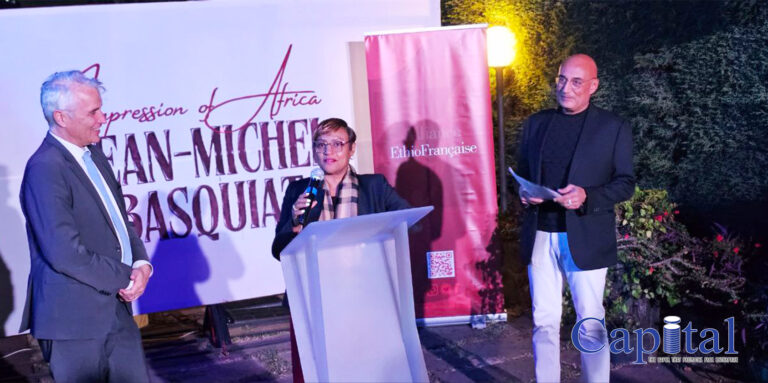
The Alliance Ethio-Française has officially inaugurated the exhibition “Impressions d’Afrique: Jean-Michel Basquiat,” showcasing a remarkable fusion of Basquiat’s vibrant urban artistry with Ethiopian traditions and modernity. This unique exhibition features a total of 98 works from 17 artists, including 15 painters, the sculptor Tesfahun Kibru, and the poet Bewketu Seyum, whose verses resonate harmoniously with Basquiat’s dynamic colors and forms.

Mohamed Beldjoudi, Director of the Alliance Ethio-Française Addis Ababa, emphasized the significance of this exhibition, noting its uniqueness in the Ethiopian context. “This evening marks an important milestone,” he stated. “Unlike previous Basquiat exhibitions in Africa, we have the immense privilege of showcasing an original work by Jean-Michel Basquiat. This is an exceptional opportunity, and we must preserve this rarity.”

The opening ceremony attracted notable figures, including Alexis Lamek, Ambassador of France to Ethiopia and the African Union; Teguest Yilma, President of Alliance Ethio-Française and Laurent Serrano, Head of Cooperation and Cultural Action at the French Embassy. 

In her remarks, Teguest Yilma highlighted the exhibition’s dual significance: “This exhibition transcends mere artistic celebration; it embodies a meeting of two worlds—the vibrant urban universe of Basquiat and the rich traditions and modernities of Ethiopia.”

Ambassador Alexis Lamek also praised the exhibition, stating, “It illustrates once again the power of cultural dialogue, where art elevates our daily lives. The collection demonstrates the Alliance’s commitment to celebrating Ethiopian artistry while honoring major figures in global contemporary art.”

Yaser Bagerish during the opening said that the exhibition will stay open until March 2025, signifying the works of the artist.

Beyond Body and Space: A Journey Through Memory, Material, and Movement

0

The Goethe-Institut Äthiopien’s main hall was bathed in a soft, warm orange glow as visitors stepped onto the compound, setting the stage for an evening of art, introspection, and connection. Inside, Beyond Body and Space took over the entire hall, transforming it so completely that the familiar space became unrecognizable. Suspended from a towering 3.4-meter-high structure, the immersive installation redefined the space, wrapping it in cascading forms that turned everyday textiles into a meditative exploration of memory, identity, and environmental change.

As visitors entered, they were greeted by forms coming down from the ceiling, their organic shapes inviting touch and interaction. These sculptural pieces, created from textiles traditionally used for storage, shading, and lightweight shelter, blended cultural heritage with a vision for sustainability. Below, floral-inspired benches made from the same materials provided a tactile and contemplative resting space, creating a seamless connection between the artwork and its audience.

The project was generously funded by the IFA – Institut für Auslandsbeziehungen, an organization dedicated to promoting international cultural relations and supporting artistic and cultural exchange. Their support was instrumental in bringing this ambitious vision to life, highlighting the universal language of art as a bridge between cultures and histories.

The opening night on Thursday, December 12, 2024, welcomed a dynamic mix of artists, architects, and the Goethe-Institut’s community. Outside, music from a garden DJ created a festive ambiance, while inside, the hall buzzed with curiosity and wonder. Visitors wandered through the installation, brushing their hands against the textured forms, exploring the infill materials within, and marveling at the interplay of light and shadow that danced across walls, ceilings, and floors. The constantly shifting environment seemed alive, responding to every movement.

Dr. Angelika Eder, Director of Goethe-Institut Äthiopien, officially inaugurated the exhibition, introducing the collaborators: artist Isabel Tesfazghi, architect and installation artist Alebel Desta, and curator Tinsae Tsegahun. Both Isabel and Alebel took turns sharing the story behind their collaboration—a year and eight months in the making—emphasizing the joy and challenges of creating something as intricate and large-scale as this installation.

In this fully immersive space, shadows danced, textures beckoned touch, and the hall itself became part of the story, transformed into a sensory journey through time and materiality.

Beyond Body and Space will remain open to visitors until January 31, 2025, inviting all to engage with its themes of memory, material, and renewal. It showcases the potential of art to reclaim and reimagine, turning the forgotten into something breathtakingly new.