Wednesday, November 25, 2026
Home Blog Page 691

Insurance giant reports premium growth

0

The Ethiopian Insurance Corporation (EIC), the nation’s leading insurance provider, has reported robust premium growth for the 2024/25 fiscal year, marking a milestone in the company’s performance amidst a challenging claims environment that poses significant risks to profitability.

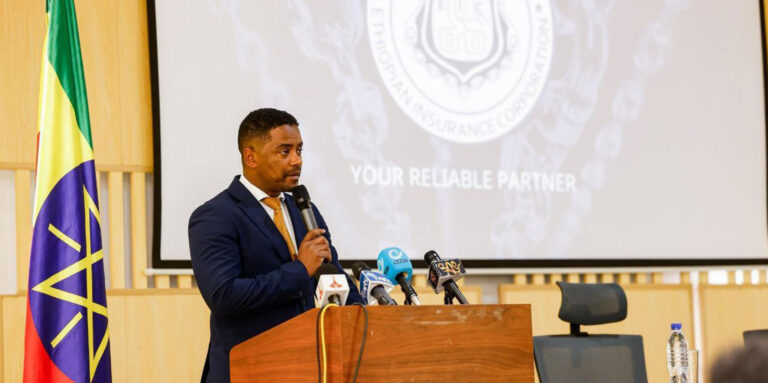
During its 38th Annual Management Conference, held under the theme “Adapting. Advancing. Achieving,” EIC’s senior leaders from across Ethiopia convened to review a year of strong financial results alongside pressing operational challenges. The conference set the stage for strategic initiatives designed to maintain EIC’s leadership while navigating an increasingly complex insurance landscape shaped by Ethiopia’s rapid economic transformation.

According to EIC’s Chief Executive Officer, Abel Tadesse, Ethiopia’s insurance industry experienced vigorous growth of 45% in the fiscal year, with total premium revenues reaching an unprecedented 41.13 billion birr. The general insurance sector dominated the market, accounting for 38.49 billion birr or 93.6% of total premiums, while the life insurance sector contributed 2.63 billion birr, representing the remaining 6.4%.

EIC’s own premium revenue rose significantly to over 13.3 billion birr, with general insurance generating approximately 12.9 billion birr and life insurance bringing in around 428 million birr. While this achievement was 9% below the company’s annual target, it still reflected an impressive 56% increase over the prior fiscal year. This strong performance helped the corporation increase its market share from 30.2% to 32.5%, retaining its position as the industry leader. Over the year, EIC issued a total of 170,479 insurance policies — 164,346 for general insurance and 6,133 for life insurance. However, a policy retention rate of 58% was identified as an area requiring improvement going forward.

Despite these gains, Abel sounded a cautionary note regarding the rapid increase in compensation payments. Total compensation payouts reached a record 6.56 billion birr, soaring 137.9% above the previous year’s payouts. This dramatic rise primarily stems from external economic factors, particularly the weakening purchasing power of the birr amid persistent inflationary pressures. Inflation has driven up costs for key items covered under claims, including spare parts, garage services, and medical expenses, escalating compensation obligations significantly.

Although the final quarter of the year saw a concerted effort to reduce outstanding claims reserves, bringing them down to 3.8 billion birr, the surging compensation payments remain a threat to the company’s long-term profitability.

EIC’s financial results nevertheless remain solid, with a net loss ratio at 51.4%, underwriting profits exceeding 3 billion birr, and investment income contributing over 70% to total income, amounting to 1.27 billion birr. Pre-tax profit for the fiscal year hit 1.98 billion birr, slightly surpassing internal targets by 1.7%, and representing an 18.8% increase relative to the prior year.

Within this context of growth and challenge, the CEO also highlighted internal hurdles that have hindered EIC’s modernization efforts. Project delays and weaknesses in the ongoing digital transformation initiative have slowed the organization’s ability to update its systems and improve operational efficiency. Additionally, a reduction in donor-funded programs has dampened revenue growth, particularly within the life insurance segment.

Addressing these multifaceted challenges, the Ethiopian Insurance Corporation is crafting a range of strategic initiatives expected to shape its future trajectory. The company is developing a new corporate strategy complemented by an enhanced human resources approach and an employee performance evaluation system. These organizational reforms, awaiting board approval, are intended to provide a strong foundation for continued success and competitiveness.

Looking back on five decades of service, EIC positioned itself as a reliable partner for Ethiopian consumers and businesses alike and anticipates celebrating its Golden Jubilee with renewed enthusiasm. The leadership expressed full confidence that the corporation will continue consolidating its market advantage by building on its proven strengths and successfully adapting to emerging challenges.

Ethiopia, Nigeria vie to host 2027 UN Climate Summit, setting stage for continental showdown

0

In a significant bid that could determine Africa’s role in global climate leadership, Ethiopia has formally launched its campaign to host the 2027 United Nations climate change summit (COP32) in its capital city, Addis Ababa. This places the country in direct competition with Nigeria, which has proposed Lagos as the venue for the prestigious event.

The COP—Conference of the Parties—is the foremost global forum where nearly 200 nations convene annually for two weeks of intensive negotiations aimed at combating climate change. Hosting the summit grants the selected nation a crucial platform to influence agenda-setting and elevate its climate initiatives on the world stage.

President Taye Atske Selassie emphasized the country’s readiness at a recent UN event in Addis Ababa, stating, “We have the capacity, the facilities, the location, and the connectivity to host the much-anticipated climate summit.”

The decision on the COP32 host city lies with the unanimous consent of the 54-member UN Africa regional group, as the presidency of such summits traditionally rotates among global regions. Beyond the opportunity to shape international climate policy, hosting also introduces scrutiny of the host country’s environmental record and domestic industries.

Ethiopia points to its strong environmental credentials in its pitch. The nation became the first to ban imports of non-electric vehicles as part of an ambitious target to reach net-zero emissions by 2050. According to the International Energy Agency, Ethiopia has powered all of its electricity generation from renewable sources since 2022, despite still relying significantly on biofuels and waste in its overall energy consumption.

The selection of host cities typically occurs more than a year before the event to accommodate the logistics for hosting tens of thousands of delegates. Brazil is scheduled to host COP30 in Belém in November 2025, while Australia and Turkey are both vying to stage COP31 in 2026.

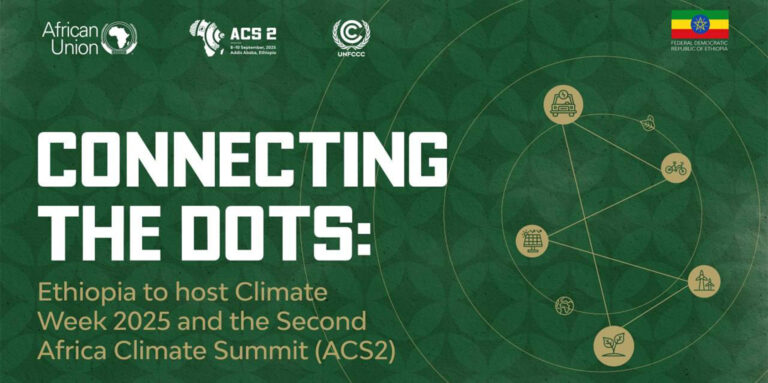
Meanwhile, Ethiopia continues to advance climate action on the continent through the ongoing second Africa Climate Summit (ACS2) held in Addis Ababa. In a related development, the COP30 Presidency, in partnership with the International Energy Agency and the African Union, announced that the second “High-Level Dialogue on Energy Transition” will convene on September 8, 2025. This session, taking place alongside ACS2, will help shape energy agendas for the upcoming COP30 in Brazil.

Key figures expected to address the dialogue include IEA Deputy Executive Director Mary Burce Warlick, COP30 President-Designate André Corrêa do Lago, and African Union Commissioner for Infrastructure and Energy Lerato Mataboge. Discussions will focus on pressing topics such as energy access and clean cooking, critical concerns for Africa’s sustainable development.

Ethiopia faces staggering $253 Billion climate finance gap, Report Warns 

0

As Ethiopia hosts its second African Climate Summit and the United Nations Climate Week in 2025, a new report has delivered a stark warning: the country faces a formidable climate finance gap of $252.8 billion needed by 2030 to meet its ambitious climate change goals. This yawning shortfall threatens to undermine Ethiopia’s position as a climate leader in Africa, raising urgent questions about how the nation will bridge the divide between its commitments and available resources.

A Critical Moment for Climate Leadership

Ethiopia has gained recognition across Africa and the world for its proactive approach to climate change. Its pioneering policies include banning imports of non-electric vehicles and achieving 100% electricity generation from renewable sources since 2022. Yet, behind this leadership lies a daunting financial challenge that threatens the implementation of essential climate adaptation and mitigation projects.

The new ‘Climate Finance Shadow Report for the Intergovernmental Authority on Development Regional Economic Community (IGAD REC)’—released by Oxfam on September 4, 2025—illuminates the scale of the funding gap confronting Ethiopia and its IGAD neighbors. The $252.8 billion figure required by Ethiopia alone stands as the highest financial need among the eight IGAD member states, which also include Djibouti, Eritrea, Kenya, Somalia, South Sudan, Sudan, and Uganda.

Across the entire IGAD region, the total climate finance needs are estimated at $417.9 billion by 2030. This figure is particularly alarming given that it represents only about 42% of the $100 billion annual global climate finance target pledged by developed countries to be provided by 2025.

The Size and Nature of the Climate Finance Gap

The report reveals that the bulk of Ethiopia’s climate funding requirement—approximately $220.4 billion—is earmarked for mitigation efforts aimed at cutting greenhouse gas emissions. Adaptation, which involves strengthening resilience to climate impacts, accounts for $32.4 billion, a figure the report cautions may be underestimated due to the inherent difficulties in assessing adaptation needs accurately.

Across the IGAD region, total mitigation costs outpace adaptation costs, with $273.1 billion needed for mitigation compared to $144.8 billion for adaptation. However, the uncertainties around future climate scenarios and limited technical capacity mean that actual adaptation costs could be higher.

The financing gap is compounded by the fact that climate finance flows to the region remain woefully inadequate. Between 2013 and 2022, the IGAD region received an average of $2.3 billion annually in climate finance, which falls drastically to $1.7 billion per year when adjusted for interest and debt servicing. This accounts for a mere 4% of the total financing demand, underscoring a profound mismatch between need and delivery.

Regional Disparities and Access Barriers

The report highlights significant inequalities in climate finance distribution within the IGAD states. Ethiopia, Kenya, and Uganda fare comparatively better, receiving $8.2 billion, $7.4 billion, and $3.4 billion respectively. By contrast, conflict-affected and fragile states like South Sudan ($891 million), Sudan ($960 million), Eritrea ($117 million), and Somalia ($1.4 billion) receive far less support.

On a per capita basis, disparities are stark: Kenya receives approximately $14 per person per year, while Sudan and Eritrea receive only $2 and $3 respectively. These figures pale in comparison to the global average of $25 per person annually estimated by the OECD between 2016 and 2022.

Challenges are further exacerbated by complex application procedures, stringent eligibility standards, and onerous financial regulations of current climate finance mechanisms. These obstacles disproportionately affect weak and conflict-ridden countries in the IGAD region, hampering their access to necessary funds.

Debt Crisis Deepens Climate Finance Vulnerability

A major concern underscored by the report is the reliance on loan-based climate finance, which adds to an already severe debt burden across the IGAD states, particularly Ethiopia. According to the International Monetary Fund and World Bank’s debt sustainability analyses, Ethiopia is officially classified as facing debt distress.

Ethiopia’s external debt ballooned to 56% of GDP in 2022, surpassing the IMF’s recommended 50% threshold for low-income countries. Roughly 30% of this external debt is owed to private creditors, which often carry higher interest rates and less favorable terms.

The report explains that increasing reliance on foreign loans for climate projects risks exacerbating Ethiopia’s fiscal constraints, as rising global interest rates have significantly increased debt servicing costs. This troubling trend undermines the country’s capacity to invest in climate resilience and sustainable development, potentially pushing it further into financial fragility.

Climate Change, Gender, and Agriculture: Interlinked Vulnerabilities

The Oxfam report also brings attention to the crucial intersections of climate change with gender and agriculture—two pillars of Ethiopia’s economy and society.

The agricultural sector, which more than 80% of the IGAD population depends on for livelihoods, faces critical underfunding; only 15% of the estimated climate finance needs for agriculture have been allocated. Given that agriculture is highly sensitive to climate variability, insufficient investment poses risks to food security and rural incomes.

Women, who constitute approximately 29% of Ethiopia’s workforce, bear disproportionate burdens from climate change impacts. Structural challenges—such as limited land ownership rights, restricted access to financing, and technology deficits—render women especially vulnerable. The report strongly advocates for climate finance that explicitly prioritizes gender equality and delivers targeted support to women to enhance their resilience.

Calls to Action: Justice and Equity in Climate Finance

The Oxfam report issues a powerful call to climate finance providers, national governments, and civil society organizations to urgently increase aid-based (grant) funding, especially for conflict-affected countries within the IGAD region.

The briefing insists climate finance is not charity but a matter of climate justice. Since IGAD countries collectively contribute negligibly to global greenhouse gas emissions, expecting them to shoulder climate action primarily through debt-financing is unjust and unsustainable.

Moreover, the report warns that excessive dependence on high-interest credit—particularly for climate resilience initiatives that may not yield immediate economic returns—could entrench cycles of debt and poverty, exacerbating inequalities and undermining the very goals of sustainability.

China, Africa unite to honor shared history, forge a prosperous future

0

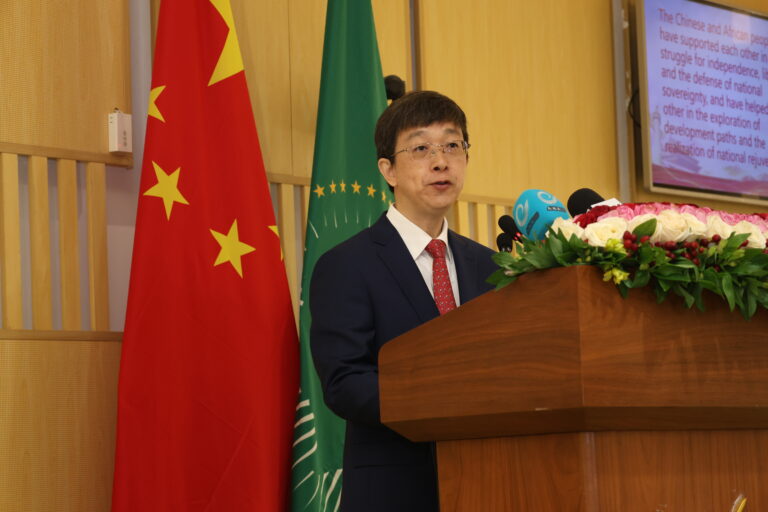
Chinese and African Union leaders and diplomats gathered at the Adwa Victory Memorial Museum to mark the 80th anniversary of the Chinese people’s resistance against Japanese aggression and commemorate the victory of the global anti-fascist war. The high-level seminar, themed “Honor the History for a Better Future—China and Africa Jointly Building a New Era of Peace and Prosperity,” highlighted the deep historical bonds and shared destiny linking China and Africa.

The event coincided with two significant historical observances: China’s triumph in World War II and the African Union’s 2025 theme, “Justice for Africans and People of African Descent Through Reparation.” This dual celebration underscored the ongoing, collective struggle for justice, dignity, and peace that unites both peoples.

In his opening remarks, Amb.JIANG Feng, head of the Mission of China to the African Union, described the occasion as a “great triumph of justice over evil” and a “victory of light over darkness.” He reaffirmed the longstanding brotherhood between China and Africa, emphasizing their joint fight for independence, sovereignty, and dignity. Ambassador JIANG highlighted mutual support in these struggles as a foundation for their enduring partnership.

The seminar reflected on the critical role China and Africa played during World War II, particularly in the global anti-fascist effort. The Chinese People’s Resistance War, part of the Eastern Front, was acknowledged for its significance, while African nations were recognized as strategic strongholds and resource hubs for Allied forces. Millions of African troops contributed substantially to the allied cause.

A major focus was on reinforcing multilateralism and advancing a just international order. Ambassador JIANG reiterated China’s steadfast support for the United Nations-centered global order and the principles of the UN Charter. He called for united opposition to unilateral actions breaching international law and trade agreements. In addition, he reaffirmed China’s firm stance on the one-China principle, linking Taiwan’s reintegration to the post-World War II international framework, and urged continued African support for China’s national unity.

Both parties emphasized strengthening the representation and voice of developing nations in global governance. China, the first country to back the African Union’s bid for G20 membership, has championed increased African engagement in international platforms such as BRICS. The recent G20 summit in South Africa served as a notable example of Africa’s rising influence in global affairs.

Looking ahead, the seminar spotlighted future cooperation with a focus on economic development. China has remained Africa’s largest trading partner for 16 consecutive years. With diplomatic ties spanning 53 African countries, China has eliminated tariffs on 100 percent of African imports, expanding market access and opening new opportunities for African goods.

Discussions centered on implementing “Ten Partnership Actions” and supporting the modernization of African industry and agriculture. Both sides stressed building a “China-Africa community with a shared future,” a vision championed by Chinese President Xi Jinping.

As the world grapples with conflicts, inequality, and climate challenges, participants agreed that intensified cooperation is essential. The Global Governance Initiative (GGI), proposed by President Xi, aims to promote global governance grounded in sovereign equality, the rule of law, and a people-centered approach. This framework aligns closely with the African Union’s Agenda 2063, offering a roadmap for sustainable peace and shared prosperity.

The seminar concluded with a renewed commitment by China and Africa to advance their historic partnership and collaboratively tackle the complex challenges of the 21st century.