Sunday, June 7, 2026
Home Blog Page 716

EMC emphasizes importance of media in national dialogue

0

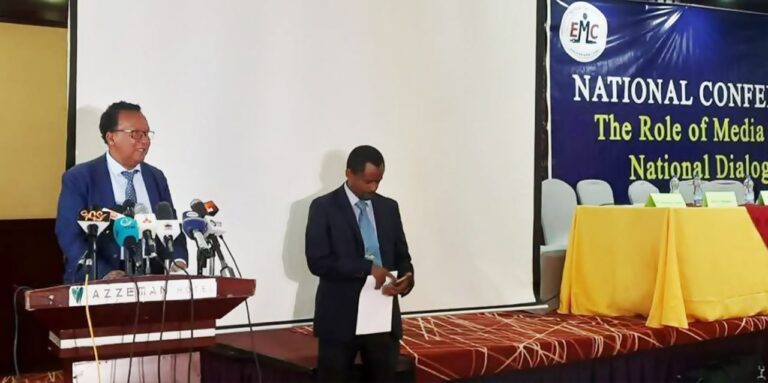
The Ethiopian Media Council, in partnership with the United Nations Development Programme (UNDP), recently hosted a two-day forum titled “Role of the Media in the National Consultative Commission.” The event aimed to highlight the critical role that the media plays in facilitating national dialogue and ensuring the success of ongoing consultations in Ethiopia.

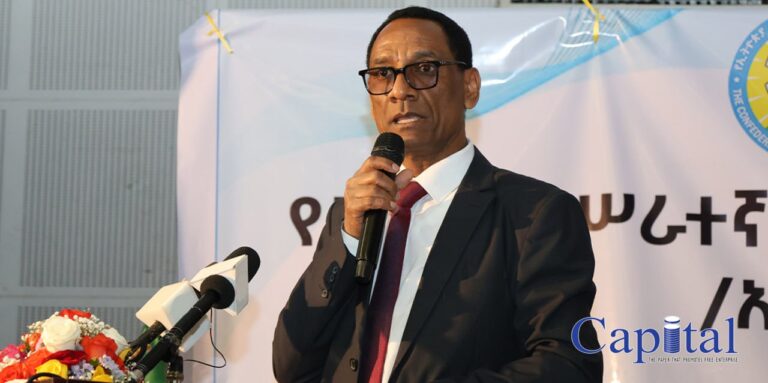
During the discussions, experts stressed that effective media involvement is essential for the success of national consultations launched by the government. Amare Aregawi, Executive Chairman of the Ethiopian Media Council (EMC), emphasized that the media must maintain a trustworthy, independent, and impartial environment to support these dialogues. He called for all stakeholders to ensure that journalists can operate without fear or intimidation.

The forum underscored the need for media outlets to raise awareness about the importance and nature of the national consultation process, encouraging public participation and inclusivity.

Tegrgnework Getu, Commissioner of the Ethiopian National Dialogue Commission (ENDC), reiterated the media’s vital role in fostering an inclusive environment for national consultations. He urged media professionals to prioritize national and public interests while contributing to the success of these discussions.

Participants noted that the media could play a significant role in addressing Ethiopia’s fundamental challenges through dialogue and promoting a national consensus on key issues.

The event highlighted the pressing need for responsible land management and governance in Ethiopia. As discussions continue around various social and political issues, experts agree that a free and independent press is essential for fostering transparency and accountability within society.

The Ethiopian Media Council and UNDP aim to strengthen collaboration between media organizations and government entities to enhance public discourse and facilitate meaningful dialogue among citizens.
Experts warn government control of construction industry could lead to bankruptcy

0

Experts in the construction sector have raised alarms about the Ethiopian government’s increasing control over the industry, warning that it could lead to the bankruptcy of an already struggling sector. As private companies continue to secure contracts, concerns have been voiced regarding their ability to deliver satisfactory results.

A recent consultation forum, themed “Construction Breakthroughs for Nation-Building,” brought together key stakeholders to discuss the current state of the construction industry, its challenges, and future directions. One of the primary concerns highlighted during the discussions was the need for the government to step back and allow the private sector to thrive.

Participants at the forum expressed frustration over government practices that they believe hinder private sector growth. Critics pointed out that government entities often develop their own designs and award contracts to foreign companies, which can exceed local capabilities. Smaller projects are frequently allocated to associations rather than local contractors.

Girma Habtemariam, Vice President of the Construction Constructors Association, noted that while foreign contractors typically enter markets to undertake large-scale projects requiring advanced technology, their presence in Ethiopia has raised concerns. “Foreign contractors used to bid for projects worth more than 600 million birr, but now they can bid on projects over 3 million birr, while smaller projects are still not approved for local contractors,” he explained.

The government has established regulations aimed at ensuring that foreign contractors fill gaps in areas beyond local capabilities. However, Girma emphasized that this approach has created market challenges for local contractors, who are struggling against unhealthy competition and regulatory obstacles.

Yetemgeta Asrat, State Minister of Ministry of Urban and Infrastructure, reassured attendees that the government is focused on transitioning from foreign contractors to domestic ones. He acknowledged the need for significant improvements in local capacity to handle infrastructure and high-end construction projects.

Despite three decades of growth in the construction sector, Ethiopia remains heavily reliant on foreign contractors for major infrastructure developments. Experts have cited budget deficits, reliance on imported materials, supply chain issues, and foreign exchange challenges as significant barriers preventing domestic companies from achieving productivity.

The forum revealed alarming statistics regarding project completion times. Construction projects are reportedly completed 143% later than scheduled, while road construction projects face delays of 110%. These delays have resulted in a 35% increase in overall project budgets.Experts highlighted several bottlenecks contributing to these issues, including inadequate project completion rates, quality standards concerns, security issues, capacity gaps among contractors, and financing shortages.

CETU reports rising expenses amidst slowing revenue growth

0

The Confederation of Ethiopian Trade Unions (CETU) has revealed concerning financial trends, indicating that its expenses have been increasing by an average of 18% over the past five years, outpacing a gross revenue growth of only 12%. This information was presented during CETU’s 20th Annual General Meeting, where a five-year audit committee report was shared with its members.

The audit report covering the fiscal years from 2019 to 2024 highlighted that while the organization recorded a profit of 3.948 million birr in the 2019/20 budget year, subsequent years saw a significant rise in expenditures. As a result, CETU’s revenue began to fall short of its expenses, leading to a decline in net capital.

The report warned that if current spending trends continue, CETU’s operational viability could be jeopardized, posing an existential threat to the organization. For the 2023/24 financial year, CETU had planned to generate over 81 million birr but ended up spending more than 89 million birr—105% of its budgeted expenditure.

The increase in costs has been attributed primarily to education and training projects funded by donors without proper planning. During the meeting, Kassahun Follo, President of CETU, emphasized the importance of addressing these financial issues to safeguard the interests of over one million workers represented by the union across 2,300 grassroots trade unions.

Kassahun also noted that despite facing resource constraints and operational inefficiencies, CETU remains committed to advocating for workers’ rights and addressing pressing issues such as minimum wage adjustments and income tax reductions.

The audit committee reported that out of 4,163 employee complaints filed in court since 2020/21, only 169 were resolved in favor of employees. This statistic underscores ongoing challenges within the legal framework supporting workers’ rights.

As CETU continues to navigate these financial hurdles, it has called for immediate action to address the plight of employees who are struggling to meet basic needs. The confederation reiterated its commitment to enhancing worker welfare and ensuring that their voices are heard in discussions about labor policies.

Car importers claim excessive taxes and illegal account freezes by authorities

0

Car importers have raised serious concerns about excessive taxation and the freezing of their bank accounts, alleging that their funds are being illegally diverted to government coffers. According to a letter from the Addis Ababa City Revenue Bureau, traders who fail to comply with tax demands face account suspensions, leading to significant financial losses.

Importers have reported that their accounts were frozen due to the volume of money being transferred, claiming that these actions are unlawful. They argue that the government is monitoring financial transactions closely, with funds being redirected to cover budget deficits rather than supporting local businesses.

Legal experts consulted by Capital emphasized that while the law allows for income taxation based on authorized rates, there are strict procedures that must be followed. They noted that after an account is frozen due to non-compliance, authorities can only enforce tax collection based on proper assessments and cannot indefinitely hold funds as debts.

Many importers, who wished to remain anonymous for safety reasons, expressed frustration over the lack of transparency regarding new tax regulations. They argued that they should be informed of any legal changes in advance, allowing them to adjust their operations accordingly.

The importers criticized the recent directive from the Ministry of Revenue, claiming it disproportionately targets car importers in Addis Ababa. They argue that the taxes imposed under this directive are unnecessary and unlawful, stating that taxation should be based on established laws rather than arbitrary assessments.

The importers highlighted that while macroeconomic reforms are necessary for economic growth, tax policies should not hinder local businesses or create barriers to competition with international firms.

As the situation unfolds, car importers have reported significant increases in vehicle prices. For example, a standard automobile now costs approximately 1.8 million birr, while a Corolla Cross is priced at 7 million birr. The rising costs are attributed to increased taxes and regulatory burdens imposed on local businesses.

Despite these challenges, importers remain committed to advocating for fair treatment and transparency in tax policies. They emphasize the importance of creating an environment conducive to local business growth rather than one that stifles competition and innovation.