Sunday, June 7, 2026
Home Blog Page 715

Ethiopia accuses Somaliland of fueling clan conflicts

0

Ethiopia has accused the Somaliland government’s security apparatus of involvement in clan conflicts within the country. During a meeting in Jigjiga, security officials from both nations discussed the current situation.

Reliable sources from the Somali region report that clashes between two Somali clans have occurred in recent weeks in the Yoale kebele (district), near the Somaliland border in the Harshin woreda of the Jigjiga zone.

What began as disputes over grazing territory has escalated into deadly confrontations in recent days.

Sources indicate that Mohamed Abdulahi Gedi, the security commander of Harshin woreda, was killed, and his deputy was injured earlier this week while attempting to mediate tensions in the kebele. Following this incident, the security situation has reportedly worsened over the first four days of the week.

Senior officials from the Somali region, one of the largest in the country, informed Capital that soldiers from neighboring Somaliland participated in the clashes that erupted earlier this week.

After the death of the woreda security commander, Somaliland troops reportedly attacked the police forces that had responded to defuse the situation, causing serious injuries to the regional security personnel.

Local sources have reported that many were killed during the raid by Somaliland troops.

In total, around 50 civilians have either been killed or injured, along with approximately 30 Somali police officers, according to regional reports. Additionally, they noted that numerous vehicles and properties were destroyed.

Sources say that Somaliland security authorities have claimed that the armed individuals from Somaliland are not affiliated with the government, but rather part of a non-governmental security apparatus supporting their clan in the conflict within Ethiopian territory. However, Somali region officials assert that there is substantial evidence indicating that the fighters are members of the Somaliland army disguised as civilians.

A senior regional official informed Capital that the force that crossed the border and nearly overtook the kebele is both numerous and heavily armed.

This official, who requested anonymity, noted that a meeting between Ethiopian and Somaliland security officials took place in Jigjiga, the capital of the Somali area, on Thursday, December 26.

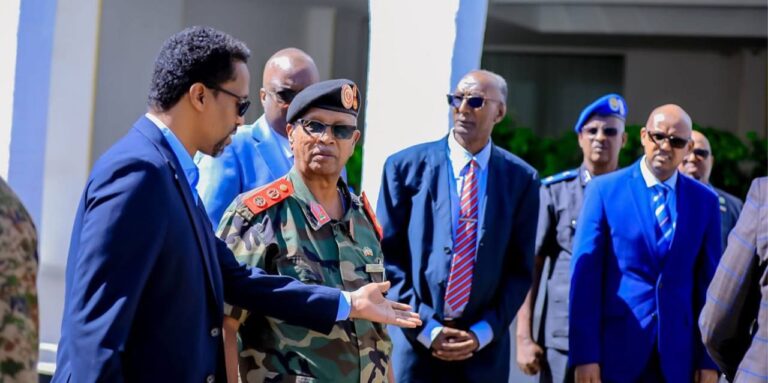
The meeting, chaired by Hussein Hashi, president of the Somali region, was held in the office of the regional president to assess the situation along the border. Officials confirmed the attendance of the heads of the Somaliland military and the internal security chief, along with senior generals from the Ethiopian National Defense Forces (ENDF) and Commissioner General Demelash Gebremichael of the Ethiopian Federal Police.

According to sources, the head of the Federal Police strongly emphasized that clan-based disputes should be resolved amicably.

“Demelash asserted that the Ethiopian side possesses sufficient evidence of Somaliland’s military involvement in the conflict, citing instances where members of the Somaliland military have apprehended Ethiopian security forces,” a source revealed. “He urged Somaliland officials to promptly withdraw their troops from the Ethiopian border,” the source added.

Sources allege that the current situation stems from a plot orchestrated by former Somaliland President Muse Bihi Abdi, who stepped down from office a few weeks ago to allow for the election of Abdirahman Mohamed Irro.

Despite his denials that he still had any responsibilities with the government, sources indicate that he was instructed to cease his engagements.

While Somaliland soldiers remain in the area, sources report that the Ethiopian National Defense Force (ENDF) began to assert control on Friday.

Since its declaration of independence in 1991, Somaliland has been one of Ethiopia’s peaceful neighbors.

A year earlier, the two countries had reached an agreement to provide landlocked Ethiopia with a sea outlet and a military base, although this agreement has yet to advance.

7th Annual ET Real Estate & Home Expo kicks off at Sheraton Hotel

0

The 7th Annual ET Real Estate & Home Expo officially opened its doors at the Sheraton Hotel in Addis Ababa on December 27, 2024, and will run until today Sunday December 29, 2024. This year’s expo aims to enhance the role of the private housing sector in Ethiopia’s economy by connecting real estate developers with buyers, sellers, and the broader business community.

During the opening discussions, industry leaders highlighted several challenges that have hindered the growth of the real estate sector, including limited financing options and the absence of a long-term loan servicing law. The expo emphasizes the importance of public-private partnerships in advancing housing and urban development across Ethiopia.

“This year’s expo is a milestone event for Ethiopia’s real estate sector,” stated Addis Alemayehou, founder of 251 Communications and Marketing. “We are committed to supporting the sector’s growth by creating an interactive platform that fosters sustainable development, innovation, and investment.”

The three-day event brings together key stakeholders from the Ethiopian real estate and construction industries, including top developers, investors, financial institutions, home builders, and interior designers. The expo serves as a valuable resource for networking and collaboration among industry leaders.

Ethiopia has recognized the crucial role of the private sector in driving economic growth and improving public services, particularly in infrastructure development. In light of this, the government enacted decree number 1076/2018 to promote collaboration between public entities and private enterprises.

The ET Real Estate & Home Expo aims to showcase the latest developments, innovations, and investment opportunities within the real estate sector. Attendees can expect to learn about emerging trends and solutions that can help address current challenges while promoting sustainable growth.

Financial sector navigates challenges while embracing foreign investment opportunities

0

Ethiopia’s financial sector is increasingly open to foreign investors, but experts are cautioning that critical factors related to current market demand and supply must be carefully considered. As the sector seeks to attract foreign capital, the pressing need for a skilled workforce remains a significant challenge.

With the financial sector in Ethiopia experiencing rapid growth, there is an urgent demand for competent and skilled professionals. Experts emphasize that the participation of foreign investors, who bring wealth and experience, must be addressed promptly to enhance the sector’s capabilities. In today’s competitive financial landscape, providing exceptional services is essential for success.

Meselu Alamnie, an economist and president of the National Academy of Finance, highlighted the challenges facing the labor market in his recent assessment. He noted that while Ethiopia’s financial sector has shown remarkable growth, there are deep-seated issues regarding the supply of skilled manpower. “New financial institutions entering the market often recruit talent from existing firms, leading to inconsistencies in service delivery,” he explained.

Existing financial institutions struggle to find qualified personnel when establishing new branches or expanding operations. Meselu pointed out that increasing monetization in the economy, along with the introduction of foreign banks and the development of national capital markets, is driving new demands for financial literacy and expertise.

Despite efforts by newly established training centers to fill this gap through short-term programs, a significant shortage of skilled professionals persists. The National Finance Academy (NFA) has been proactive in addressing this issue by offering various training programs that integrate practical experience with essential theoretical knowledge.

Meselu emphasized that there is currently no higher education institution or training center in Ethiopia specifically designed to meet the human resource needs of the financial sector. As a result, many institutions resort to hiring experienced employees from other banks or insurers. He believes that this approach will not sustainably address the rapidly growing human resource needs of the sector.

The NFA has developed a curriculum consisting of over 75 professional practice-oriented skills-based training programs tailored to address the challenges faced by Ethiopia’s financial sector. This initiative has gained traction among individuals familiar with the importance and challenges within the industry.

In addition to its existing programs, the NFA announced it has completed preparations to launch a “Professional Diploma in Insurance,” aimed at filling critical gaps in insurance education and training. This program is expected to enhance workforce capabilities significantly.

The National Finance Academy, which began with just 46 members, is poised to expand its training offerings further into banking and microfinance sectors soon. As Ethiopia continues to navigate its evolving financial landscape, addressing these workforce challenges will be crucial for attracting foreign investment and ensuring sustainable growth.

Experts call for responsible land management through national land policy

0

Experts in land management have emphasized the urgent need for responsible land governance in Ethiopia, warning that current practices could hinder productivity, weaken land markets, and negatively impact human rights, social cohesion, and environmental protection.

During the 2nd Ethiopian Land Day, organized by Land for Life under the theme “The Quest for Resilient Land Governance for a Better Life in Ethiopia,” Daniel Behailu, Senior Land Policy Advisor at the Land Governance (LaGo) project, highlighted how land has often been manipulated for political purposes, adversely affecting economic and social issues. He stressed the importance of establishing clear and enforceable property rights to enhance land security.

Melesse Damtie, Chairman of the General Assembly of Land for Life Ethiopia, stated that the event reflects a strong commitment to developing sustainable and equitable land management systems that empower communities and improve livelihoods.

Yalemzewud Demissie, Head of the Rural Land Management and Geospatial Desk at the Ministry of Agriculture, noted that collaboration with Land for Life Ethiopia is underway to promote people-centric land management and support ongoing reforms in land governance.

The expo emphasized the critical role of public-private partnerships in advancing Ethiopia’s housing and urban development. By showcasing innovations and investment opportunities in the real estate sector, it aims to foster networking among industry leaders and stakeholders.

Land for Life Ethiopia is dedicated to promoting dialogue on effective land management practices and agricultural investments. The organization believes that empowering communities through better land governance can lead to improved economic outcomes and social stability.