

Reply launches AI Film Festival to connect tech talent with global cinema

Technology consultancy Reply has launched the Reply AI Film Festival, a global competition designed to bridge the gap between artificial intelligence experts and the international film industry by showcasing short films created with AI tools.
Now in its 2026 edition, the festival invites AI practitioners, filmmakers and multidisciplinary teams to submit short films that explore how generative models, machine learning and other AI technologies can be used in storytelling, visual effects, sound design and narrative experimentation. The competition aims to highlight emerging talent at the intersection of technology and cinema, while encouraging responsible and creative uses of AI in audiovisual production.
A jury composed of directors, technology specialists and AI pioneers has been assembled to evaluate submissions and select the festival’s winners. The panel is tasked with assessing both the technical innovation and artistic merit of the entries, reflecting the dual focus of the competition on cinematic quality and AI experimentation.
The three winning projects will be announced during a special premiere event in Venice, hosted by Reply and its premiere partner Mastercard, in conjunction with the 83rd Venice International Film Festival. Finalists will be invited to attend the event, where their works will be screened for an audience of industry professionals, media and technology leaders. Mastercard’s involvement underscores the competition’s aim to connect emerging creative technologists with broader cultural and commercial ecosystems.
In addition to the main competition, the Reply AI Film Festival features a range of partners across the AI and creative sectors, including a premiere partner, premium partner, AI technical partner and community partners. These collaborations are intended to provide finalists with access to tools, platforms and networks that can support further development of their projects and careers.
The festival also maintains an archive of past editions, allowing visitors to review earlier entries and trace how AI-assisted filmmaking has evolved over time. By documenting previous winners and notable projects, Reply aims to build a growing reference point for practitioners interested in the possibilities and limits of AI in visual storytelling.
Organisers say the initiative responds to rapid advances in generative video, image and audio models, which are increasingly being adopted by independent creators and major studios alike. As AI tools become more accessible, the festival seeks to establish a space where technical experimentation is paired with narrative discipline, ethical reflection and cinematic craft.
UN adopts resolution to phase out Mercator Map and show Africa’s true size
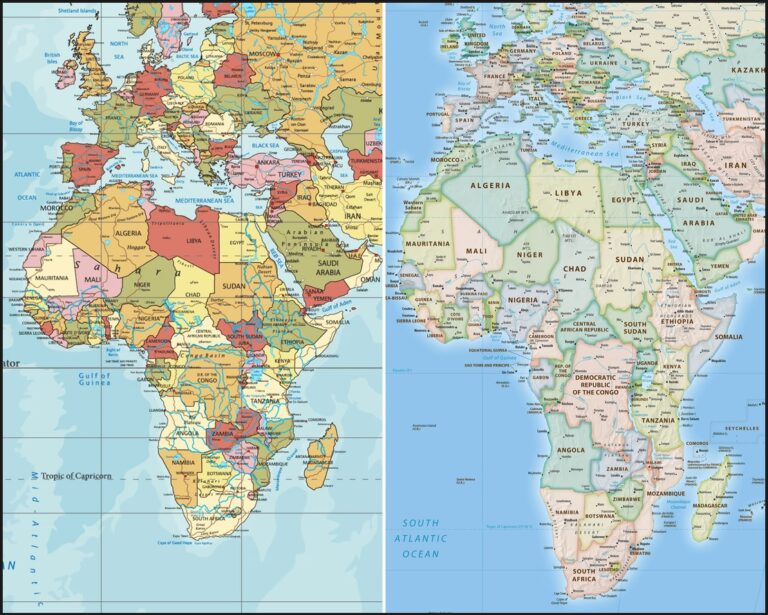
The United Nations has voted to adopt a resolution calling for the world to formally phase out the traditional Mercator map in favour of more accurate projections that better reflect Africa’s true size.
In a session at UN headquarters in New York, the General Assembly endorsed a move away from the 16th-century Mercator projection, recommending instead the use of equal-area designs such as the 2018 Equal Earth map. The resolution passed with 164 countries voting in favour. The United States voted against, with its representative describing the measure as “superfluous”, while six countries abstained.
UN resolutions are non-binding, so member states and institutions will not be legally required to abandon the Mercator projection. However, the outcome is expected to influence classroom curricula, textbooks, digital mapping platforms and official publications, given the widespread use of the Mercator design in education, technology and governance.
Togo, which spearheaded the campaign on behalf of the African Union, said the resolution “recognises and affirms that disproportionate cartographic representations, particularly those resulting from the Mercator projection, have had lasting cognitive, educational, cultural, geopolitical and socioeconomic effects, contributing to a drastic reduction in the perceived size of Africa and other regions of the world in the global collective imagination”.
Robert Dussey, Togo’s foreign affairs minister, told the assembly: “This discussion is not a political discussion [but] a scientific discussion, because there is scientific proof so we all have to accept the reality.”
The Mercator projection was introduced by Flemish cartographer Gerardus Mercator in 1569 to assist maritime navigation. Nearly five centuries later, it remains the global standard, despite well-documented distortions.
Because of its cylindrical projection style, regions near the equator appear significantly smaller than they are, while high-latitude areas look much larger. On a Mercator map, Africa appears roughly the same size as Greenland, even though the continent is about 14 times larger than the Danish territory.
“You could fit the United States, China, India, Japan, Mexico and much of Europe into Africa and still have land to spare,” reads a petition on Change.org for the #CorrectTheMap campaign, which has gathered more than 11,000 signatures. The African Union endorsed the campaign in August 2025 and subsequently asked Togo to lead efforts to secure UN backing.
Ahead of the vote, France’s foreign minister voiced support for the resolution. “We will abandon the Mercator projection in favour of map representations tailored to specific uses, more faithful to actual surface areas and in line with the recommendations of cartographers and scientists,” Jean-Noël Barrot said during a speech at Sorbonne University in Paris. France will now use the Eckert IV projection, which is close to the Equal Earth design recommended in the resolution.
Historians and geographers have long argued that the Mercator projection reinforces Western-centric stereotypes. Activists have described the effect as “cartographic colonialism”, saying the map has subtly shaped international power dynamics by minimising the physical presence of the global south while visually inflating northern hemisphere nations.
Critics contend this has reinforced systemic biases in international trade, development priorities and educational frameworks. One of the Mercator projection’s most prominent critics was German historian Arno Peters, who launched the Peters world map based on the Gall–Peters projection in 1973. It has often been used as an alternative in classrooms and publications.
Togo’s #CorrectTheMap campaign promoted the 2018 Equal Earth design, developed by an international team of cartographers. Supporters say the shift will help reverse perceptions of Africa and decolonise global curricula.
JJ Enoch, a London-based senior associate at JS Held, a geopolitical risk advisory firm, said the Mercator projection visually diminishes Africa’s true scale. He linked the campaign to a broader quest by African nations for “greater influence in global institutions and greater control over how the continent is represented”.
“Adopting an equal-area map … would provide a more accurate basis for education and public understanding, while signalling that Africa’s demographic, economic and geopolitical importance should no longer be viewed through inherited and distorted conventions,” Enoch said.
Togo’s government is planning an event in Lomé, the Togolese capital, with UNESCO, the African Union and technology companies including Google Maps in the first quarter of next year to map out implementation of the resolution.
“To those who say why now, I say: why not?” Dussey said ahead of the vote. “When we look at the world map … it is time for us to change the narrative.”
He added: “It’s time for us in Africa to take responsibility to change what we can change ourselves.”
“My Ethnicity” or “Our Ethiopia”?
Our identities may differ, but our citizenship should unite us.
A country is not tested merely by who holds power. It is tested by how its citizens see one another, how they accept their differences, how they share justice, and how they build a common future together.
Perhaps the greatest question facing Ethiopia today is this: How can we build a common country without erasing our differences?
This is not the question of one ethnic group. It is not the question of one political camp or one community. It is the question of all of us.
Diversity Is Not Our Enemy
Ethiopia is a country where many ethnic groups, languages, cultures, histories, and ways of life come together. We should not seek to erase this diversity; it deserves to be respected.
But our problem is not our differences. Our problem is that we have turned our differences into walls.
My language may be a source of pride for me; the existence of another person’s language does not diminish its value.
My culture may be precious to me; the existence of another culture does not destroy mine.
My identity deserves respect; another person’s identity deserves the same respect.
Difference does not have to be a cause of conflict. It can be the beauty of living together.
When “I” Becomes Stronger, “We” Becomes Weaker
Everyone wants to protect the identity they call “I.” That is natural. But when the feeling of “I” destroys the meaning of “we,” the common country becomes weaker.
There can be “my ethnicity.”
There can be “my culture.”
There can be “my language.”
But above all of these, there must be “our Ethiopia.”
Because without a common country, we also lose the shared platform on which our individual identities can exist and flourish in peace.
There Must Also Be Room for Blended Identities
Here, we must face another reality.
Not every Ethiopian comes from a single ethnic background. There are families born from different ethnic groups. There are communities shaped by different languages and cultures coming together.
These people should not be forced to fit their identities into a single box.
One person may say, “I carry the heritage of two ethnic groups.”
Another may say, “I am shaped by many cultures.”
Someone else may say, “I do not define myself by only one ethnic group.”
And another may say, “Above all, I am a citizen.”
All of them should have the freedom and space to express their identities.
Because identity should serve to express who a person is, not become a chain that imprisons them.
Identity can be many things; citizenship, however, is equal.
Citizenship Is Our Common Ground
Shared citizenship does not mean erasing our differences.
It means equal rights, equal dignity, equal protection under the law, and an equal hope for the future.
Citizenship builds a foundation that connects us rather than one that separates us.
It is equal citizenship that ensures one citizen does not become superior to another because of ethnicity, and that no one is humiliated because of who they are.
Human Dignity Comes First
Before ethnicity, there is a human being.
Before politics, there is a human being.
Before regional identity, there is a human being.
Before any group identity, there is human life and human dignity.
Therefore, politics can only become trustworthy when it places human dignity first.
When the Law Is Equal for Everyone
Shared citizenship cannot be built through words alone. It must be built through law.
When the law applies equally to everyone, when justice reaches everyone, and when citizens’ rights are protected without being measured by their identity—that is when shared citizenship becomes a reality.
Without justice, unity is merely a word.
Without equality, coexistence cannot be sustainable.
When Politicians Stop Exploiting Differences for Political Gain
The differences among our people should never become political fuel. Dividing people into “us” and “them” may appear to be a way of gaining political power, but in the end, it is the people who pay the price.
Healthy politics does not inflame people’s differences; it manages them. It does not promote hatred; it builds reconciliation. It does not drive people apart; it brings them closer together.
Let Us Ask What We Are Passing on to Our Children
What will our children learn from us tomorrow?
Will we tell them:
“Be careful of those who are different from you”?
Or will we tell them:
“Respect your differences. Live with one another in equal dignity. Preserve your identity, but do not deny the identity of others.”
This is the historic responsibility of our generation.
The Final Choice
In the end, the question we must ask is simple: Can we respect our identities while remaining equal citizens?
The answer must be yes.
Because a country is not built when everyone has the same identity. It is built when people with different identities can live together in equal dignity and mutual respect.
Therefore—
Let there be “my ethnicity.”
Let there be “my language.”
Let there be “my culture.”
Let there be “my identity.”
But above all—
Let there be “Our Ethiopia”!
Because our identities may differ, but our citizenship should unite us.
Our differences deserve to be respected; our equality must be protected.
The time to move from “I” to “We” is now.
