Tuesday, November 24, 2026
Home Blog Page 784

Fuel subsidy removal raises fears of supply crisis and market disruption

0

Ethiopia’s decision to phase out fuel subsidies has sparked widespread concern among lawmakers and industry stakeholders, as reports of empty filling stations and supply bottlenecks mount across the country. The issue took center stage during a recent session of the House of People’s Representatives, where members questioned the government’s approach and warned of potential economic fallout if underlying problems in the fuel supply chain are not addressed.

The Ministry of Trade and Regional Integration (MoTRI) confirmed that, as of June 4, 2025, the government has suspended fuel subsidies, aligning domestic prices with global market rates. This move follows a series of price hikes earlier in the year, with gasoline now retailing at 122 birr per liter and diesel and kerosene at 116 birr per liter—an increase of 10 birr since May. The government argues that the subsidy removal is essential to reduce fiscal deficits and bring Ethiopia’s fuel market in line with international norms.

Despite these justifications, parliamentarians voiced alarm about persistent shortages and non-operational fuel stations, some of which have reportedly remained idle for over three months. They highlighted that, even though prices have not risen dramatically in recent weeks, the removal of subsidies has not led to the anticipated improvements in supply. Instead, the market appears to be grappling with deeper structural issues.

Parliament members called for a comprehensive review of the entire fuel marketing chain—from importers to retailers—citing difficulties in securing fuel imports, lengthy delays at ports, and allegations of corruption, including bribes of up to 400,000 birr to expedite shipments. “If these problems are not addressed from the bottom up, lifting subsidies could trigger even greater disruptions,” warned one lawmaker.

Minister of Trade and Regional Integration, Kassahun Gofe (PhD), acknowledged the challenges, noting that the government imported 121 million liters of fuel this year but has only managed to distribute about 55 million liters, with the rest hampered by logistical and market constraints. He emphasized that the government’s remaining subsidies are targeted at ensuring equitable access for low-income residents, but coverage is now limited to just 8.8 percent of the market.

Kassahun also pointed to ongoing efforts to crack down on fuel smuggling and illegal trading practices, which he said have distorted the market and undermined the purpose of subsidies. Companies found engaging in such activities have faced bans and hefty fines, but enforcement remains a challenge.

Industry experts and business leaders echoed these concerns. According to recent data, Ethiopia has 698 gas stations as of May 2025, an 11.68% increase from 2023, but many regions remain underserved, with over 500 districts lacking any fuel retail infrastructure.

The government has pledged to address these gaps through a new fuel master plan, which aims to identify priority areas for new station construction and improve distribution logistics. However, lawmakers questioned the pace of these reforms and called for greater transparency and accountability throughout the sector.

The debate comes amid broader economic pressures, including high inflation, foreign exchange shortages, and volatile global oil prices. The government spends more than $4 billion annually on fuel imports, and officials argue that continuing to subsidize prices is unsustainable in the long run. “If the private sector and business community do not share the burden, it will be challenging for the government to carry out major projects,” Kassahun stated.
Ethiopia sees strong growth in FDI, but greenfield projects decline, says World Investment Report 2025

0

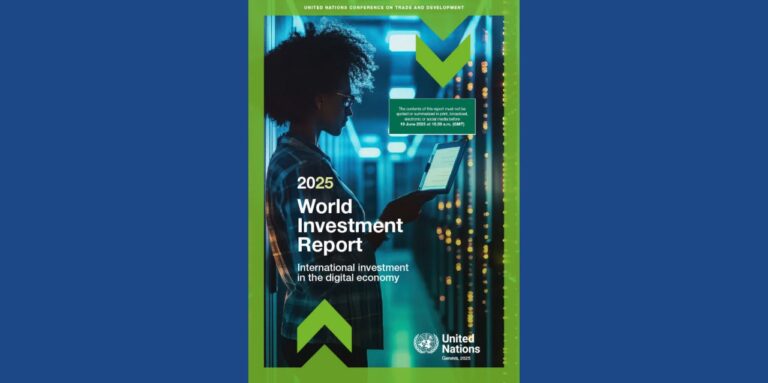
Ethiopia recorded a robust increase in foreign direct investment (FDI) inflows in 2024, despite a challenging global investment climate, according to the newly published World Investment Report 2025 by the United Nations Conference on Trade and Development (UNCTAD)1. The report highlights Ethiopia’s resilience and continued attractiveness to international investors, even as the country faces headwinds in new project announcements.

The data shows that Ethiopia’s inward FDI rose to $3.98 billion in 2024, up from $3.27 billion in 2023—a 21.9% year-on-year increase1. This growth outpaces the East African regional average and stands in stark contrast to the global trend, where FDI flows to developing economies grew by just 3.2% in the same period. Ethiopia’s FDI stock also expanded significantly, reaching $42.5 billion in 2024, up from $38.5 billion the previous year.

“Ethiopia continues to be a leading destination for foreign direct investment in East Africa, reflecting the country’s ongoing economic reforms and efforts to improve the investment climate,” the World Investment Report 2025 states.

However, the report also flags a sharp decline in announced greenfield investment projects—a key indicator of new business ventures and job creation. In 2024, Ethiopia attracted just $801 million in greenfield project announcements, a steep drop from $3.2 billion in 2023, representing a 75% decrease. This mirrors a broader slowdown across East Africa, where announced greenfield investments fell by 80% over the same period.

The report attributes the decline in greenfield projects to global economic uncertainty, tighter financing conditions, and lingering effects of recent geopolitical and supply chain disruptions. “Infrastructure investment is slowing. Industrial investment is under strain. And developing countries—those most in need—are being left behind,” UN Secretary-General António Guterres notes in the report’s preface.

Despite these challenges, Ethiopia’s overall FDI performance remains strong. The country’s share of FDI as a percentage of gross fixed capital formation also improved, underscoring the importance of foreign investment to Ethiopia’s economic development.

UNCTAD urges Ethiopian policymakers to focus on revitalizing new project pipelines and enhancing the enabling environment for both existing and prospective investors. The report emphasizes the need for targeted reforms and international cooperation to sustain investment momentum and foster inclusive growth.

NBE to maintain tight monetary policy as Treasury bond directive ends

0

The National Bank of Ethiopia (NBE) has reaffirmed its commitment to employing various monetary policy tools to maintain a tight monetary stance, despite plans to phase out some previous instruments. The Monetary Policy Committee (MPC) is scheduled to meet before the end of June to discuss a range of economic issues.

As part of its agreement with international partners, including the International Monetary Fund (IMF), the Ethiopian government will lift the Treasury bond directive, which took effect on November 1, 2022, by the end of this month. Additionally, the government aims to remove the cap on private sector credit growth by September 2025.

The credit growth restriction, initially imposed in August 2023, had limited credit expansion to 14% before being adjusted to 18% in January 2025. A key measure, the NBE’s Treasury bond requirement, mandated that banks allocate 20% of their new loan disbursements to government bonds. These two measures have been effective in curbing inflation, which had risen above 30% but has since decreased to around 14%.

While the IMF supports the gradual removal of these measures, it has advised Ethiopia to maintain a tight monetary policy to ensure price stability.

Experts attribute much of the inflationary pressure to direct advances the government previously obtained from the NBE. However, in a significant shift, the government has ceased such borrowing this fiscal year, marking a first in recent history.

In its latest assessment, the IMF praised Ethiopia’s macroeconomic performance, highlighting improvements in inflation control, export growth, and international reserves.

Alvaro Piris, head of the IMF delegation monitoring Ethiopia’s reform program under the Extended Credit Facility, stressed the importance of sustained reforms and tight monetary conditions to stabilize inflation and exchange rate expectations.

Fikadu Digafe, Vice Governor and Chief Economist of the NBE, confirmed the planned removal of the two policy instruments to stimulate market activity.

However, he clarified that their elimination does not signify an end to tight monetary policy. “We will introduce new monetary tools to further reduce inflation,” he stated, although he did not specify what these instruments would be.

Finance Minister Ahmed Shide also emphasized that the government would rely on market-based financing instead of direct advances from the NBE to cover budget deficits.

“We will mobilize funds through taxes and other market sources,” he told Capital last week following his recent budget speech.

Currently, the government is using Treasury bills (T-bills) as its primary financing tool, with plans to expand money market instruments through the newly established Ethiopian Securities Exchange.

The IMF has recommended enhancing the attractiveness of T-bills by allowing broader participation in the bidding process.

Notably, T-bill interest rates have risen to 17%, exceeding both the inflation rate (14%) and the NBE’s policy rate (15%).

Fikadu indicated that the central bank’s policy rate might be reviewed during the upcoming MPC meeting in late June.

As Ethiopia navigates these monetary adjustments, maintaining the momentum of reform will be essential for sustaining economic stability and promoting long-term growth.

Ethio-Djibouti Railway eyes major stake in Damerjog Fuel Facility

0

The Ethio-Djibouti Railway (EDR) has announced its intention to participate in a significant construction project in Djibouti, which includes acquiring a substantial sftake in the Damerjog fuel storage facility.

The company seeks to enhance regional fuel distribution and transportation efficiency by expanding its operations through interconnected ventures, such as terminal and multimodal logistics.

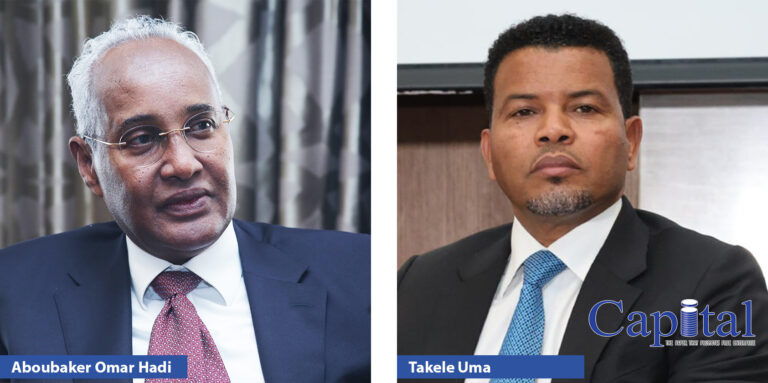
Last week, EDR CEO Takele Uma led a delegation that met with senior officials from the Djibouti Ports and Free Zones Authority (DPFZA), including Chairman Aboubaker Omar Hadi.

The discussions centered on critical issues, such as securing a freight forwarding license for EDR, a joint venture between Ethiopia and Djibouti, and improving infrastructure to facilitate smoother cargo movement between Djibouti’s ports and landlocked Ethiopia, which depends heavily on Djibouti for international trade.

One of EDR’s major proposals is to construct a 17-kilometer railway line from Damerjog Liquid Bulk Port to Nagad, the largest and most distant railway station on the southwestern outskirts of Djibouti City.

This line would specifically enhance fuel transportation by rail, addressing a significant gap in Ethiopia’s logistics network.

The Damerjog Liquid Bulk Port, a modern facility capable of accommodating next-generation oil tankers, is located near the Somaliland border and is part of the Damerjog Industrial Park development, which includes an oil terminal. EDR’s proposed rail link aims to improve the efficiency and reliability of fuel imports and distribution in the region.

A feasibility study conducted by Great Horn Investment Holding (GHIH), a subsidiary of DPFZA, estimates the project’s capital expenditure (CAPEX) at USD 90 million, or USD 5 million per kilometer. Founded in 2016, GHIH specializes in multimodal transport solutions for logistics, aviation, and maritime industries.

During the meeting, EDR also expressed interest in investing in Damerjog’s fuel storage facilities, proposing a 49% ownership stake in the project, which includes infrastructure for jet fuel handling.

Experts emphasize that the Damerjog facility will be vital in ensuring a sustainable fuel supply for the entire region, not just for Ethiopia.

Currently, Ethiopia relies on the Horizon Djibouti Terminal, developed by the UAE in 2005, which has an annual capacity of 4.5 million tons.

 In contrast, the Damerjog Liquid Bulk Port, which is nearing completion as part of the USD 4 billion Djibouti Damerjog Industrial Park, is expected to handle 13 million tons annually.

Although the Ethio-Djibouti Railway became operational in 2018, it has not yet transported oil due to the absence of connections between Djibouti’s terminals and Ethiopia’s depots. Consequently, 110 tank wagons purchased for fuel transport remain idle.

To address this issue, EDR is prioritizing a rail link to the Awash Oil Depot, Ethiopia’s primary national fuel terminal located 235 km east of Addis Ababa.

Sources indicate that this connection, just 300 meters from the Ethio-Djibouti Railway, is nearing completion.

“Transporting oil via rail is a top priority for Prime Minister Abiy Ahmed, which is why this line will be finalized shortly,” the sources added.

EDR and DPFZA are exploring the development of joint-venture dry ports at Nagad and Indode Stations, the latter situated on the southeastern outskirts of Addis Ababa. This project will involve collaboration between GHIH and EDR.

During discussions with a delegation from the China Development Bank and the China-Africa Development Fund, DPFZA Chairman Omar Hadi highlighted the need for USD 150 million in financing for two major initiatives: the Nagad-Damerjog railway connection and the establishment of new dry ports in Nagad (200 hectares) and Indode.

Sources indicate that both EDR and DPFZA have agreed to continue discussions to finalize the terms of cooperation, investment structures, and implementation roadmaps.

The USD 4 billion electrified Ethio-Djibouti Railway, in which Djibouti holds a 25% stake, is experiencing increased activity as EDR expands its focus beyond rail transport.

Through its new subsidiary, Global Logistics, EDR is actively entering the multimodal logistics sector, integrating land and maritime transport services to enhance regional trade connectivity.

This strategic expansion highlights EDR’s growing role in improving transportation and energy infrastructure in East Africa, facilitating more efficient trade flows between Ethiopia and Djibouti.