Tuesday, November 24, 2026
Home Blog Page 792

New report reveals enduring stereotypes about Africa in the US and UK

0

A comprehensive new report by Africa No Filter and a team of international researchers has found that negative stereotypes about Africa remain deeply rooted among the general public in the United States and the United Kingdom, shaping not only perceptions but also willingness to engage with African products and cultures. The findings, detailed in the report “Stereotypes about Africa in UK and USA: Their Impact on Engagement with Africa,” highlight the urgent need for more balanced and positive storytelling about the continent.

The report, which surveyed 1,126 representative participants from the US and UK, reveals that when people in these countries think about Africa, their minds are most often drawn to images of nature and wildlife—echoing outdated colonial tropes that overshadow Africa’s societal progress and cultural richness. More troubling, the study found that thoughts about Africa are generally more negative compared to thoughts about Europe, with three key themes dominating the negative stereotypes where respondents associated Africa with droughts, barren landscapes, and other harsh natural conditions, perceptions of political instability, disease, poverty, and corruption were prevalent; and Africa was often seen as lacking rich culture and advanced civilization, especially when contrasted with Europe’s association with cultural heritage and modernity.

These stereotypes, the report notes, are not just abstract ideas—they have real-world consequences. Participants who held more negative views of Africa were less likely to express interest in African products or cultural offerings, indicating that these perceptions can directly impact trade, tourism, and cultural exchange.

The implications of these findings are significant. As the report states, “If negative portrayals create more long-term harm than short-term gains, the economic net outcome might also be more negative than positive.” The research suggests that the persistent focus on poverty, conflict, and hardship in media and aid narratives—though often well-intentioned—may actually undermine Africa’s global image and economic prospects by discouraging deeper engagement and perpetuating a sense of “otherness”.

This dynamic is particularly concerning given the influence of public opinion on broader societal and policy decisions. If average consumers in the Global North see Africa primarily as a place of scarcity and struggle, demand for African goods remains limited, reinforcing a cycle of exclusion and dependency. “Negative perceptions undermine the prospects for equal partnerships and cultural exchange, relegating African countries to the role of perpetual aid recipients rather than equal players on the global stage,” the report warns.

Importantly, the research also points to a solution: positive storytelling. In a follow-up study with 960 US participants, the report found that providing new, positive information about Africa—rather than simply negating negative stereotypes—was effective in shifting perceptions and fostering greater interest in Africa’s products and cultures. This suggests that changing the narrative is not only possible but necessary to promote more meaningful engagement with the continent.

Africa No Filter, the advocacy organization behind the report, emphasizes the need to support storytelling that reflects Africa’s dynamism, innovation, and opportunity. “We exist because many stories about Africa still lazily revolve around the single story of poor leadership, poverty, corruption, disease, and conflict, failing to portray the other more progressive side of Africa and collectively perpetuating the narrative that Africa is broken, dependent and lacks agency,” the organization states in its mission.

The report’s authors, a multidisciplinary team of psychologists and researchers from the UK, US, Germany, and Israel, argue that shifting public perceptions requires more than institutional change—it demands individual engagement and a commitment to sharing diverse, authentic African stories. By bringing creatives and creativity into development, corporate, and policy sectors, and by transforming complex issues into compelling stories, organizations like Africa No Filter hope to foster a deeper understanding and more positive perception of Africa over time.
Ministry of Finance commits to market-based financing, avoids high-powered money

0

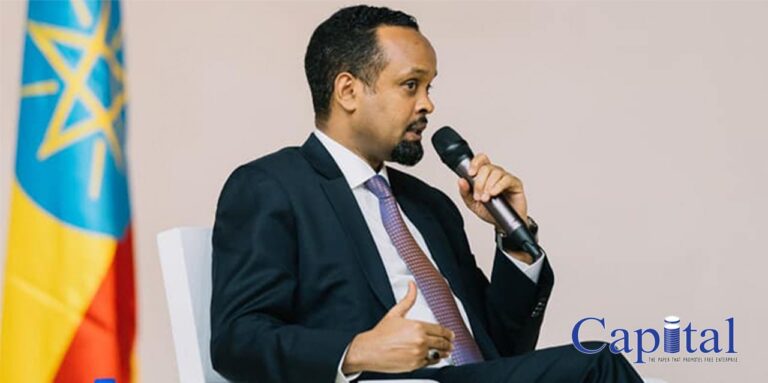
In his budget speech, Ethiopia’s Minister of Finance, Ahmed Shide, outlined the government’s plans for the 2025/26 fiscal year, emphasizing a strong commitment to avoiding high-powered money as a means to cover the budget deficit. The proposed budget totals 1.93 trillion birr, with a deficit of 22%, amounting to 417 billion birr.

Ahmed told Capital that the government plans to finance the deficit exclusively through domestic sources, stating, “Tax revenue and treasury bills will be the only means to cover the budget gap.”

He highlighted a significant change from previous years, noting that the government has not sought direct advances from the National Bank of Ethiopia (NBE)—a major contributor to inflation—in the current fiscal year.

Of the total deficit, 67% (277.5 billion birr) will be financed through domestic sources, while the remaining 33% will come from direct budget support from international partners.

“We have no alternative but to rely on tax revenues and the money market, specifically treasury bills,” Ahmed stressed, clarifying that the government would only consider using an overdraft facility as a last resort.

However, borrowing costs from domestic sources have increased as part of ongoing reforms. International partners have encouraged the government to pursue market-based financing instead of direct advances from the central bank.

To attract more investors, the government has adjusted treasury bill yields to provide positive real returns in relation to inflation.

Since February, T-bill rates have surpassed the central bank’s 15% policy rate, reaching 17% in the most recent auction.

Ahmed noted that avoiding direct advances has helped to limit base money growth this fiscal year.

The NBE’s tight monetary policy has reduced reserve money growth from 24.8% in July 2024 to 17.3% in November, while broad money growth decreased from 24.8% to 19% during the same period.

He attributed this stability to measures such as open market operations and credit ceiling caps.

The International Monetary Fund (IMF) has commended Ethiopia’s commitment to a tight monetary policy and has urged its continuation.

For the upcoming fiscal year, the government aims to raise 1.5 trillion birr from domestic revenue and international grants, with 1.2 trillion birr (81%) expected from local sources and 235 billion birr from grants. Tax revenue is projected to increase by over one-third, reaching 1.1 trillion birr.

Debt servicing remains a significant expenditure, with 463 billion birr (29% of the budget) allocated for repayments, including funds owed to the Commercial Bank of Ethiopia for past public enterprise bailouts.

The budget allocates 1.2 trillion birr (61%) for recurrent expenditures, 412 billion birr (21.6%) for capital projects, and 315 billion birr for regional budget support.

Ahmed’s speech underscores Ethiopia’s shift toward fiscal discipline and market-driven financing, with the aim of curbing inflation and stabilizing the economy.

China deepens economic ties with Africa at 4th China-Africa Economic and Trade Expo in Changsha

0

Changsha, China

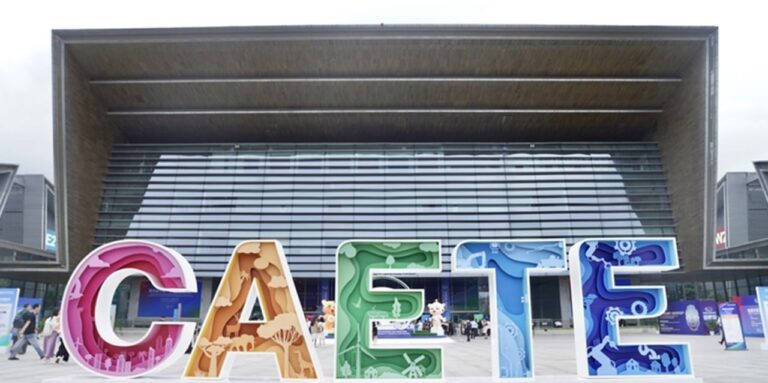
The 4th China-Africa Economic and Trade Expo opened on June 12, 2025, in Changsha, Hunan Province, marking a significant step in strengthening economic cooperation between China and African countries amid shifting global trade dynamics. The four-day event, themed “China and Africa: Together Toward Modernization,” is the largest in the expo’s history and reflects China’s ongoing commitment to deepening ties with the African continent.

Since its debut in 2019, the Expo has grown steadily, with Chinese President Xi Jinping reaffirming its role in advancing China-Africa economic cooperation and fulfilling previous commitments. This year’s event brought together participants from 53 African nations, 11 international organizations, 27 Chinese provinces and municipalities, and over 4,700 enterprises, trade associations, and financial institutions from both continents.

The expansive exhibition covers 100,000 square meters and features pavilions from 26 African countries alongside promotional spaces from 23 Chinese provinces and cities. Businesses from sectors including agriculture, industry, and medical supplies showcased their products, with special highlights such as “African Quality Products” and the China-Africa Fashion Industry segment. These exhibits featured African agricultural and food products, handicrafts, and Chinese electromechanical equipment, underscoring the diversity and depth of bilateral trade.

Simultaneously, 30 economic and trade events are taking place to implement the China-Africa “10 Cooperation Action Plans,” facilitating dialogue and partnerships across infrastructure, innovation, logistics, and new energy sectors.

Ethiopian participants at the Expo expressed optimism about expanding trade with China. Coffee exporters highlighted the growing demand for Ethiopian coffee in the Chinese market, emphasizing the opportunity to introduce the unique quality and flavor of their products to new consumers. “The relationships we are building here will help us reach more customers in China and across Africa,” they said.

Similarly, Ethiopian leather producers showcased their craftsmanship in the African Quality Products segment. “China’s interest in high-quality leather is strong. This is a great chance to collaborate with China’s fashion industry and open new markets,” said Fatuma Abdullahi, an exhibitor.

The Expo also hosted China Broadcasting International Economic and Technological Cooperation Co., Ltd. (CBIC), which invited over 30 African media professionals to China for training, further strengthening media and cultural ties.

The event has already yielded tangible results, with 10 collaborative projects signed, aligned with 175 cooperative action plans. The total value of agreements reached exceeds $11.39 billion, highlighting the substantial economic impact of China-Africa cooperation.

Chinese Foreign Minister Wang Yi, who attended the opening ceremony, reaffirmed China’s steadfast support for Africa’s modernization and development. “No matter how the international landscape may change, China will always stand firmly with Africa, offering strong support and serving as a true friend and sincere brother in Africa’s journey toward development,” Wang said.

The 4th China-Africa Economic and Trade Expo continues through June 15, serving as a vital platform for fostering high-quality development and deepening the China-Africa partnership in an evolving global economic environment.

Experts predict minimal disruption to local banking market

0

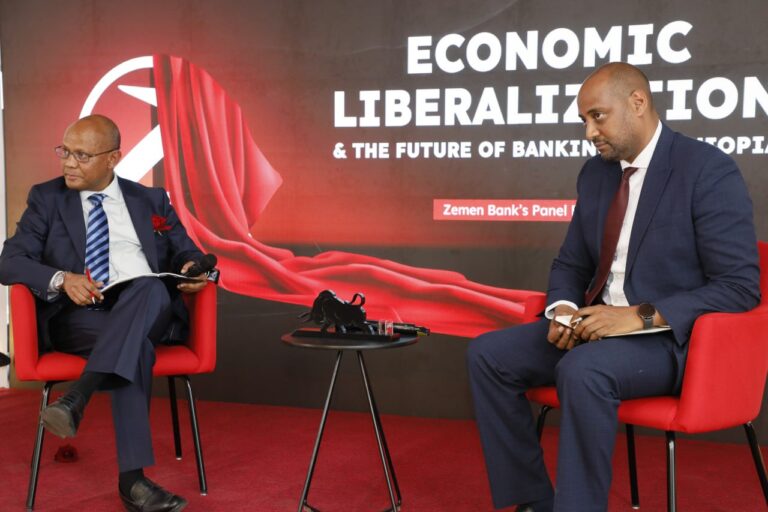
Experts anticipate limited impact from foreign financial firms as Ethiopia opens its market. During a panel discussion hosted by Zemen Bank on the theme ‘Economic Liberalization and the Future of Banking in Ethiopia,’ experts examined the implications of foreign financial firms entering the Ethiopian market. The consensus indicated that while the market will open to competition, the influence of foreign banks is expected to be minimal.

Prominent economist Tewodros Mekonnen emphasized the urgent need for macroeconomic reforms to rectify past policy errors. He explained how government development policies have affected the country’s macroeconomic landscape.

Tewodros pointed out that excessive money printing has undermined the economy, stating, “If we are loose with our money—printing and injecting it without control—we intentionally make it cheap.” He asserted that no amount of patriotism could save a currency if economic policies continued to devalue it.

Regarding foreign exchange liberalization, Tewodros acknowledged public skepticism but argued that reforms are essential to address long-standing mistakes. “We have already been making errors; now is the time to fix them,” he said, stressing that Ethiopia should implement these reforms independently without relying on international organizations.

On the entry of foreign banks, Tewodros, a Senior Country Economist at the International Growth Centre, expressed doubt about their anticipated influence.

“I see it like any other foreign direct investment in Ethiopia,” he explained, noting that foreign banks generally cater to their own investors rather than engage in broad market competition. “Their involvement will likely be limited, and I do not expect them to disrupt Ethiopia’s banking sector.”

He likened the situation to Safaricom’s gradual entry into Ethiopia’s telecom sector, suggesting that foreign banks would require time to adapt. “Local banks already have profitable business streams. Unless something disrupts their operations, their growth will remain healthy.” He predicted no significant economic shifts, only potential improvements in efficiency and product innovation.

Dereje Zebene, President of Zemen Bank, supported this perspective, stating that foreign banks would likely target niche areas such as technology and human capital rather than focus on market volume. “In countries like India, local banks outperformed global players because they could mobilize resources more effectively,” he noted, suggesting that Ethiopian banks could similarly thrive.

Million Kibret, Managing Partner of BDO Ethiopia and the panel moderator, highlighted that foreign banks face due diligence challenges in Ethiopia. “The lack of reliable KYC infrastructure and customer databases is a major hurdle,” he said, predicting that foreign banks would conduct thorough market analyses before entering, indicating that their arrival would not be swift.

Dereje concurred, adding that data reliability is a concern not only for foreign investors but also for local banks, particularly in micro-lending.

Tewodros drew comparisons with Ethiopia’s previous liberalizations, such as the entry of private banks three decades ago and the opening of the telecom sector.

“Just as those changes did not upend the market, foreign banks will not bring about an extraordinary shift.” He highlighted the dominant role of state-owned banks like the Commercial Bank of Ethiopia, which operates under government policy, making it unlikely for foreign banks to capture significant market share.

“Still, as a nation, we must prepare for competition,” he concluded, emphasizing cautious optimism about the evolution of Ethiopia’s financial sector.

The discussion underscored that while Ethiopia’s banking sector is opening to global players, local institutions remain well-positioned to sustain stability and growth.