Sunday, October 18, 2026
Home Blog Page 94

Ethiopian evidence rarely cited in AI answers on humanitarian crises 

0

Study finds country-local sources accounted for only 4.9 percent of ChatGPT citations on Ethiopia-related questions

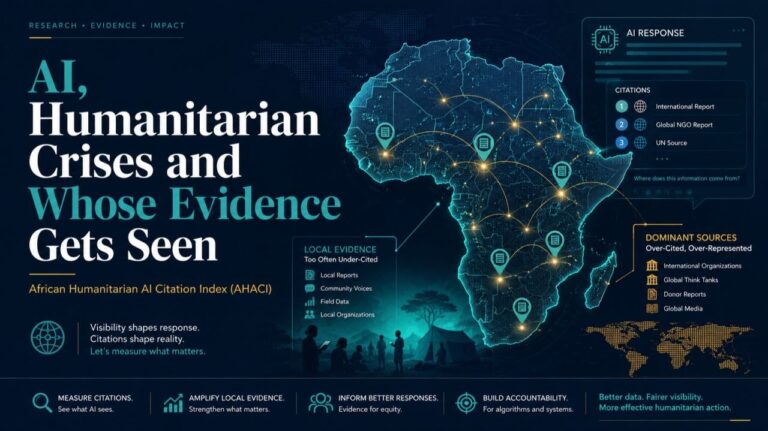
Ethiopian institutions and media organisations remain largely invisible in generative artificial-intelligence answers about the country’s humanitarian crises, according to a new study examining how AI platforms select and cite evidence.

The study, Citation Localisation in Generative AI Answers: Whose Evidence Is Visible in African Humanitarian Crises?, analysed answers generated by Gemini, DeepSeek, ChatGPT and Perplexity in response to humanitarian questions covering 10 African countries, including Ethiopia.

In a complete 90-question ChatGPT analysis, country-local sources accounted for 7.2 percent of all citations. However, the share for Ethiopia was lower: local Ethiopian sources provided four of 81 citations, equivalent to 4.9 percent.

The findings raise questions about whose knowledge becomes visible when journalists, policymakers, donors, researchers and members of the public use AI systems to understand humanitarian conditions in Ethiopia.

The study’s broader cross-platform sample found that country-local producers supplied 5.5 percent of 1,083 answer-linked citations, while African-based organisations accounted for 6.6 percent. UN and multilateral organisations dominated the citation landscape, providing 68.8 percent of the citations.

The complete ChatGPT analysis showed a similar pattern, with UN and multilateral organisations accounting for 70.9 percent of citations.

The study found that AI-generated humanitarian answers typically rely on a small group of major international institutions. Across the full citation corpus, UNICEF received 136 citations, followed by UNHCR with 100, OCHA and Humanitarian Country Team products with 73, OCHA with 64 and IOM with 63.

The five most-cited producers accounted for 40.3 percent of all answer-linked citations, while the top 10 accounted for 58.8 percent.

For Ethiopia, this means that information from international organisations is more likely to appear in AI-generated responses than evidence produced by national ministries, local humanitarian organisations, Ethiopian research institutions or domestic media outlets.

The study cautions that the results do not prove that AI systems are intentionally biased against Ethiopian sources. It also does not claim that local evidence was unavailable. Instead, it measures what sources were visibly cited under a standardised research protocol.

A formal measure of under-citation would require a complete list of all relevant, available and retrievable Ethiopian sources for each question, the study said.

The research found that local sources rarely replaced international sources entirely. Instead, they generally appeared alongside UN or multilateral evidence.

Of the 186 cited observations in the recoverable cross-platform sample, 33 included at least one country-local source. Twenty-eight of those 33 responses—84.8 percent—also cited a UN or multilateral organisation.

Only one response relied exclusively on country-local sources.

The pattern was similar in the ChatGPT analysis. Local-citing answers contained a lower average share of UN citations than responses without local sources, suggesting that local evidence can diversify the information presented by AI systems even when international organisations remain central.

For Ethiopia, the inclusion of local sources could provide additional context on displacement, conflict, food insecurity, humanitarian access, public services and the work of national and community-based responders.

The study points to several reasons why Ethiopian sources may struggle to appear in AI-generated answers.

International organisations often have dedicated information-management teams, stable websites, standardised publication formats, clear metadata and global syndication networks. Ethiopian institutions and local organisations may possess detailed field knowledge but publish less frequently, use less searchable formats or distribute information through channels that AI systems retrieve less consistently.

Language is another factor. All questions in the study were submitted in English. This may favour Ethiopian organisations that publish in English while disadvantaging authoritative material available mainly in Amharic or other Ethiopian languages.

The study also found that intermediary platforms played a significant role in how humanitarian evidence became visible. ReliefWeb hosted 217 of the answer-linked citations, accounting for 20 percent of the entire corpus and 93.9 percent of intermediary-hosted citations.

A domain-only analysis could therefore incorrectly identify ReliefWeb as the original producer of information created by OCHA, UN agencies, Ethiopian institutions, NGOs or other humanitarian actors.

The findings suggest that Ethiopian humanitarian organisations need to invest not only in collecting information, but also in making that information discoverable and attributable.

The study recommends publishing evidence through durable web addresses, accessible HTML pages, consistent organisational names, clear dates, identifiable authorship and machine-readable formats. Such measures could help AI systems and other digital platforms retrieve and attribute Ethiopian evidence more accurately.

International organisations and repositories also have a role to play. When reports are produced with Ethiopian partners or based on data collected by national institutions, metadata and publication pages should clearly preserve the original contributors’ identity.

World Bank urges Africa to shift from trade links to regional production hubs

0

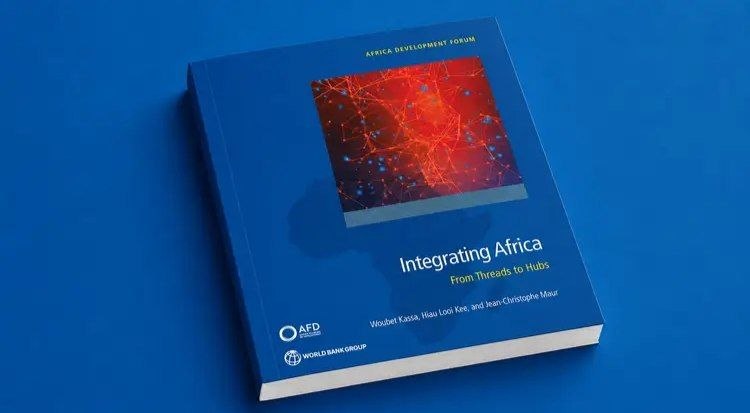
Africa’s next major economic-integration gains will come not simply from lowering tariffs, but from connecting production, services, infrastructure and financial systems across borders, according to a new World Bank report launched in Addis Ababa.

The report, Integrating Africa: From Threads to Hubs, calls for African governments to turn continental commitments, including the African Continental Free Trade Area (AfCFTA), into functioning regional markets and production hubs. It argues that firms must be able to source inputs, manufacture products, obtain finance and sell across borders under predictable and interoperable rules.

Launched at an event co-hosted by the African Union Commission, the United Nations Economic Commission for Africa and the World Bank Group, the report says Africa’s integration agenda should focus on practical reforms that reduce trade costs and make regional value chains commercially viable.

“Africa has a continental free trade agreement. The focus is now implementation,” said Ndiamé Diop, World Bank Vice President for Eastern and Southern Africa. “We are working with the AfCFTA Secretariat, other African institutions, governments, and the private sector to connect 54 economies into an integrated continental market of 1.5 billion people, with regional production hubs that can attract investment and create jobs at scale.”

The World Bank estimates that deeper liberalisation of transport, telecommunications, financial and professional services could increase trade in services within the AfCFTA area by about 60–64 percent by 2035. Such reforms would also support stronger intra-African trade, create better jobs and help countries develop more diversified regional value chains.

Intra-regional trade currently accounts for roughly one-fifth of Sub-Saharan Africa’s exports. The report notes that trade within Africa is generally more diversified and more manufacturing-intensive than exports to global markets, which remain heavily concentrated in raw commodities.

The report argues that regional integration is therefore not only a trade-policy objective but also a structural requirement for industrialisation. It says that individual national markets often lack the scale needed to support competitive manufacturing, while regional markets can widen the range of viable industrial activities and investment opportunities.

Domestic Barriers Remain the Main Challenge

According to the report, approximately 60 percent of Africa’s estimated trade costs are unilateral or “behind-the-border” barriers within countries’ control. These include customs delays, inefficient logistics, transport restrictions, fragmented standards, barriers to services and weak infrastructure.

The finding suggests that governments can secure significant integration gains through domestic reforms without waiting for additional regional negotiations. The World Bank recommends electronic single-window systems, risk-based inspections, more competitive freight markets, simplified rules of origin, stronger standards institutions and more open transport, financial and professional services.

The report places particular emphasis on interoperability—the ability of goods, data, payments, finance and regulatory systems to function smoothly across national borders. It argues that market liberalisation on its own will not be sufficient if firms continue to face incompatible customs procedures, payment systems, transport rules and technical standards.

The World Bank sets out four interconnected priorities: building regional value chains that link production across borders; reducing trade and regulatory frictions; deepening, implementing and enforcing regional trade agreements; and providing regional public goods, including transport corridors, power markets, digital networks and payment systems.

The report also calls for stronger enforcement of AfCFTA commitments, including more credible dispute-settlement arrangements, deeper services and investment provisions, and flexible coalitions of countries able to move faster where broad continental consensus is difficult to achieve.

African Union Commission Deputy Chairperson Selma Malika Haddadi said the agenda requires cooperation among continental institutions, governments, regional economic communities and businesses.

“No institution can deliver Africa’s integration agenda alone,” Haddadi said. “The African Union Commission, UNECA, the World Bank Group, Member States, regional economic communities, and the private sector must work together to translate continental frameworks into practical investments and reforms that make regional integration work for businesses and citizens.”

Rather than judging integration by the number of agreements signed, the report says progress should be measured through outcomes that affect firms and citizens directly. These include shorter border-crossing times, lower logistics costs, more reliable infrastructure, greater recognition of professional qualifications and standards, the resolution of non-tariff barriers, more private investment and wider participation in regional value chains.

The report comes as African economies face a changing global trading environment, including increased fragmentation, erosion of preferential market access and shifts in global value chains. It argues that stronger regional production networks could help African countries build resilience, reduce dependence on commodity exports and capture more value from manufacturing and services.

Critical care access gaps persist: Over half of population outside two-hour surgical radius

0

In East Africa, limited access to emergency medical services remains a significant public health challenge. Recent data reveals that over half of Ethiopia’s population lives more than a two-hour journey from surgical centers.

This substantial geographical barrier is exacerbated by severe infrastructure shortages. For instance, approximately 51 percent of all intensive care unit (ICU) beds and specialist physicians are concentrated solely in the capital city. During a recent discussion on surgical safety, public health leaders, policymakers, and international experts emphasized that urgent medical and surgical interventions are not luxuries but fundamental components of universal health coverage (UHC) and national health security.

Emergency, critical, and operative (ECO) care provides continuous, essential services for patients experiencing acute conditions, from severe postpartum hemorrhage and trauma to acute sepsis in children. While traditionally fragmented across different health sectors, modern public health frameworks now integrate ECO care into a single, unified patient pathway. Dr. Bejoy Nambiar, Health Systems and Policy Advisor at WHO Ethiopia, noted, “Patients do not experience health systems through institutional and fragmented boundaries.” A mother with severe postpartum hemorrhage, for example, requires an unbroken clinical pathway: rapid identification, emergency transport, resuscitation, blood, a skilled anesthesia provider, and surgery.

Timely interventions at primary and district health facilities offer high economic returns. They prevent easily treatable conditions from escalating into expensive tertiary-level care, thereby protecting vulnerable families from catastrophic out-of-pocket costs and bankruptcy.

As Dr. Nambiar highlighted, ECO care is “an essential fiscal policy that shields families from bankruptcy, keeps breadwinners alive, and protects national economic productivity.”

Recognizing this critical need, international health milestones such as World Health Assembly Resolution 72.3 and the broader global strategy for integrated ECO care urge member states to directly incorporate emergency medical care into national policies. Implementing these frameworks ensures that health systems can reliably detect, stabilize, manage, and respond effectively to both everyday emergencies and large-scale public health crises.

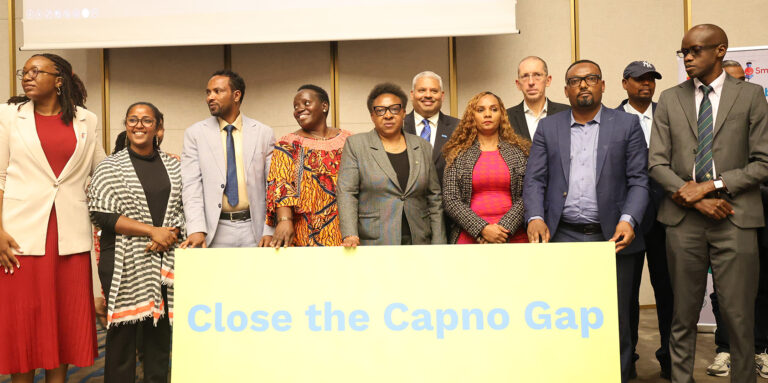
A recent discussion, which included representatives from international health organizations, the Africa CDC, the World Health Organization (WHO), and the Ethiopian Ministry of Health, underscored the wide disparities in basic surgical readiness across low- and middle-income countries.

A key issue central to the discussion was the shortage of capnography, a vital monitoring technology used by anesthetists to prevent catastrophic complications during surgery. According to expert data, one in three operating rooms worldwide lacks any capnography service. Furthermore, preliminary studies in Somalia and other regions indicate that over 65 percent of surgical procedures are performed in facilities without basic equipment.

Ethiopia has a long history of leadership in planning surgical and emergency care within the region. In 2016, years before international frameworks were adopted, the country launched the Saving Lives Through Safe Surgery (SaLTS) roadmap, a pioneering, comprehensive national plan for surgery, obstetric, and anesthesia services. This sustained institutional focus on emergency care has led to emergency medicine becoming an established medical specialty, supported by residency training hubs and dedicated crisis/outbreak response teams.

To bridge rural service delivery gaps and address specialist physician shortages, Ethiopia’s health strategy incorporates four key structural shifts, as outlined by health authorities such as expanding specialist training and integrating digital dispatch and monitoring tools.

Despite these significant structural advancements, considerable operational vulnerabilities persist. Critical shortages in both workforce and materials remain; the country has approximately 0.3 ICU beds and 0.5 surgical, obstetric, and anesthesia physicians per 100,000 population. Furthermore, the majority of citizens requiring essential surgeries still face substantial financial burdens, underscoring that surgical safety is fundamentally a broader health system challenge.

Organizations like Lifebox are actively distributing specialized equipment to frontline facilities, collaborating with the Ministry of Health, professional societies, and academic institutions.

Senait Bitew, Chief Program Officer at Lifebox, explained that the organization was founded “to close the implementation gap studied around surgery and surgical anesthesia safety, and to put safe surgical systems, tools, training, and monitoring into the hands of individual surgical teams where the need is greatest.”

A primary focus of these initiatives is the expansion of capnography, a clinically proven vital monitoring technology crucial for preventing intraoperative deaths during anesthesia. Preliminary findings from studies conducted by Lifebox and its partners reveal striking realities: “One in three operating rooms worldwide has no capnography capability at all,” and regional facility assessments indicate that a high volume of surgical units lack complete equipment readiness. Bitew emphasized that resolving these deficits requires strong ecosystem collaboration, noting that “no single organization or technology can close this gap alone. It takes an ecosystem, and the Ministry of Health sits at the center of this partnership.” To move away from short-term philanthropic dependence, leaders are advocating for structural change. Senait urged stakeholders to “fund these procurements through national budgets,” adding, “otherwise, we cannot always depend on philanthropy.”

The Nile Is not a veto: Ethiopia, Egypt and the end of an old order

0

The Horn of Africa and the Red Sea basin are witnessing a major geopolitical realignment. The issue of maritime trade and security, state sovereignty, energy integration, water governance and regional infrastructure are becoming increasingly intertwined. North-Eastern Africa is, in effect, the scene of a complex diplomatic chess game in which the Nile, the Red Sea, Ethiopia’s quest for diversified maritime access, the GERD and the security concerns of Egypt, Sudan, Ethiopia, Eritrea and Somalia have become inextricably linked.

The evolution of recent developments has made this connection all the more visible. Egypt has escalated its warnings regarding further Ethiopian dams on the Nile. Egyptian Foreign Minister Badr Abdelatty has warned that Egypt will not accept further dams or unilateral measures against its water interests and has reasserted Cairo’s demand for a legally binding framework governing the Nile. Egyptian officials have invoked Egypt’s right to defend its water security, however, and Ethiopia has responded with its insistence upon its sovereign right to develop its natural resources. Water and Energy Minister Habtamu Itefa has rejected the notion that Ethiopia requires another’s permission to develop its Nile resources and has denounced what he described as a colonial mentality towards the upstream states.

These developments highlight the fundamental problem with much of the modern discourse around the Nile, namely the existence of a zero-sum framework in which Ethiopia’s development is presented as a threat to Egypt and Egyptian water-security concerns are portrayed as an attempt to preserve the old order of control. Both arguments rest on elements of truth, but neither offer an adequate framework to govern a shared international river in the 21st Century.

The fundamental fallacy of the zero-sum approach is the portrayal of the Nile as a static quantity of water flowing from an upstream owner’s territory towards downstream consumers. In truth, the Nile is a hydrological system covering different climatic, geographical and ecological zones. The Ethiopian Highlands are particularly important in this system, since the Blue Nile, Atbara and Sobat systems originate in or are significantly fed by the Ethiopian highlands. Studies have estimated that the Ethiopian tributaries contribute more than 85 percent of the Nile’s waters measured at Aswan (although the percentage varies according to season, hydrological year and methodology). This does not mean, however, that Ethiopia therefore owns 85 percent of the Nile – hydrology cannot dictate legal entitlement – just that a physical reality exists that cannot be ignored, namely that downstream Nile security is inseparable from upstream Ethiopian hydrology.

The seasonal nature of Ethiopia’s contribution is equally important, since the Blue Nile and Atbara systems experience dramatic fluctuations associated with the Ethiopian rainy season, while the White Nile provides a more stable contribution during low-flow periods. Effective Nile governance therefore must consider not only annual volumes but also the timing, variability, drought, floods, storage, evaporation, sediment and reservoir operations.

This leads us to one of the most important but frequently misunderstood questions in the debate, namely the issue of evaporation. Lake Nasser, created by the Aswan High Dam, is located in an extremely hot and arid environment. Scientific estimates of annual evaporation rates vary according to methodologies and climate conditions, but the losses are substantial, commonly estimated in the range of roughly 10-16 billion cubic metres per year. This does not make the Aswan High Dam irrational or an “environmental calamity” – far from it, since the dam has provided Egypt with tremendous flood-management, storage and energy benefits. But this demonstrates, however, an important hydrological principle, namely that where water is stored can make a decisive difference. Storage in a hot, arid environment can lead to substantial evaporative losses, while storage in a cooler, higher-altitude environment can have vastly different evaporation characteristics. The GERD is located in the Ethiopian Highlands, in a substantially different environmental and topographic setting than Lake Nasser, with a different reservoir geometry and operational purpose. It would therefore be scientifically simplistic to claim that every cubic metre stored upstream is automatically a cubic metre “saved” downstream. Reservoir evaporation characteristics are determined by surface area, climate, humidity, wind, water temperature and operating levels, but logically the question of whether storing and regulating water in different climatic zones can lead to overall hydrological efficiencies should be raised.

The stronger argument, therefore, is not that upstream storage is inherently good and downstream storage inherently bad – it should be about optimizing the location and operation of storage according to basin-wide efficiency instead of regarding downstream storage as inherently superior to upstream storage.

The GERD itself is frequently portrayed in political commentary as a mechanism through which Ethiopia will “take Nile water from Egypt.” This description, however, obscures the project’s principal purpose, namely that the GERD is fundamentally a hydropower project. Water passing through the turbines generates electricity and then continues downstream. Hydropower generation is therefore fundamentally different from consumptive irrigation use. While reservoir filling and operating decisions can temporarily alter the timing and volume of downstream flows, the question is not so much whether the GERD “uses” Nile water but rather how the dam can be operated so that Ethiopia can generate electricity while downstream countries receive predictable and protected flows, particularly during prolonged drought? That is a technical and diplomatic question capable of negotiation.

The GERD may also have regional benefits, since regulation of seasonal flows can assist in flood management and provide operating benefits downstream while sediment retention can reduce sediment loads entering downstream reservoirs. These should not be exaggerated as automatic outcomes due to their dependency on the actual operating regime and downstream infrastructure, but they demonstrate that the GERD should not be considered merely through the lens of Egypt-Ethiopia confrontation.

The same logic applies to electricity, since Ethiopia’s expanding generation capacity creates the potential for broader regional electricity trade – with Sudan, Kenya, Djibouti, South Sudan and potentially other markets. The GERD, therefore, fits within a wider regional energy strategy, not merely as a water-control instrument.

This leads to a larger conceptual question, namely that instead of asking only, “How much water belongs to each country?” the Nile Basin should increasingly ask, “How can the countries of the basin share the benefits, risks and responsibilities generated by the river?”

International water law has evolved considerably beyond the old notion of absolute territorial control over international rivers. Modern law focuses on equitable and reasonable utilization, participation, cooperation and the obligation to take appropriate measures to prevent significant harm. The UN Convention on the Law of the Non-Navigational Uses of International Watercourses reflects this principle, without establishing a universal rule where a single riparian state possesses exclusive ownership of an international watercourse.

This is important, since the legal debate concerning the Nile is frequently polarized into two competing extremes, namely that of an alleged unlimited Egyptian historical entitlement on the one hand and unlimited Ethiopian territorial sovereignty on the other. Neither provide a sustainable legal or political foundation for the future.

The modern approach requires all riparian states’ interests to be balanced, considering geography, hydrology, climate, ecological conditions, population, economic and social needs, existing and potential uses and the effects of one state’s utilization on others.

The 1929 Anglo-Egyptian arrangements and the 1959 Egypt-Sudan Agreement remain central to the historical dispute. Egypt and Sudan continue to give considerable importance to them, while Ethiopia has consistently rejected the proposition that agreements to which it was not part can establish an exclusive allocation regime binding upon Ethiopia.

History, however, cannot be easily erased. Those agreements form part of the political history of Nile governance and explain Egypt’s profound sensitivity towards changes in upstream control. History also cannot be used to permanently freeze the basin within an institutional framework without the participation of all contemporary riparian states.

The constructive solution is therefore neither to pretend that the old agreements never existed, nor to regard them as an immutable constitution for the entire Nile Basin. It is to create a modern basin-wide framework incorporating the legitimate interests of all riparian countries.

That is why the Cooperative Framework Agreement is important. Its entry into force in October 2024 represented a significant institutional development for Nile Basin cooperation and created a pathway towards a permanent Nile River Basin Commission. Whatever disagreements remain surrounding the CFA, the underlying institutional question is unavoidable, namely that a river shared by multiple sovereign states cannot be governed indefinitely without a permanent basin-wide institution in which upstream and downstream countries participate.

The answer should be no.

The Nile requires a permanent institution capable of coordinating hydrological data, drought planning, flood management, environmental protection, infrastructure development, electricity cooperation, sediment management and dispute resolution. Such an institution should not become an instrument of either upstream or downstream dominance. Rather its purpose should be collective security.

At the same time, an Ethiopian-centered argument should not disregard Egypt’s security concerns. Egypt is overwhelmingly dependent on the Nile for freshwater. Its population, agriculture, cities and economic life are concentrated along a narrow river corridor in an otherwise arid country. Therefore Egyptian concerns about unpredictable reductions in Nile flows are not imaginary.

The recent statements by Foreign Minister Badr Abdelatty demonstrate the seriousness with which Cairo views further upstream developments. His warning against further Ethiopian dams and invocation of Egypt’s right to defend its water security represents a sharpened rhetorical position than ordinary diplomatic protest. Recognizing Egypt’s vulnerability, however, does not logically lead to recognizing an unlimited Egyptian veto over upstream development.

Security must work in both directions.

Egypt requires water security. Ethiopia requires development security. Sudan requires flood, agricultural and water security. The other Nile Basin countries require energy, food, environmental and economic security. Therefore, a sustainable settlement must provide security to all of them simultaneously.

For Ethiopia, the Nile question is inseparable from development. The country possesses enormous hydropower potential and continues to face major electricity-access and economic development challenges. The GERD represents not merely an engineering project, but an expression of Ethiopia’s attempt to transform its natural geography into productive economic infrastructure.

That aspiration should not be confused with a claim to unlimited use. A responsible Ethiopian position must acknowledge that upstream sovereignty carries downstream responsibilities. Equally responsible downstream diplomacy must acknowledge that downstream dependence does not create a permanent right to upstream stagnation.

The objective should be development without significant harm, security without monopoly, and sovereignty with responsibility.

The Nile dispute cannot be entirely separated from the wider geopolitical transformation of the Horn of Africa. Since Eritrea’s independence in 1993, Ethiopia has remained landlocked and heavily dependent on external maritime corridors, particularly Djibouti, for international trade. Ethiopia’s search for diversified maritime access is therefore not simply a question of naval ambition. It is connected with economic resilience, trade costs, logistics and national development.

At the same time, maritime diplomacy must respect the sovereignty of coastal states. The most sustainable model is therefore not one of territorial confrontation but of commercial partnership: long-term port leases, logistics corridors, joint infrastructure investment, port-operating partnerships and mutually beneficial transit arrangements.

Such arrangements could turn the Red Sea and Gulf of Aden from arenas of rivalry into engines of regional integration.

The danger is that separate strategic disputes could start to reinforce one another. If the Nile dispute becomes militarized while maritime access becomes securitized and if Eritrea, Somalia, Sudan, Egypt and Ethiopia increasingly align according to competing security blocs, a water dispute could evolve into a much broader regional confrontation.

This is where the current rhetoric is particularly dangerous. Egypt’s increasingly forceful language about protecting its water security can be interpreted in Addis Ababa as an attempt to constrain Ethiopia’s sovereignty. Ethiopia’s categorical insistence upon its right to develop its resources can simultaneously be interpreted in Cairo as evidence that Ethiopia intends to act with disregard for downstream security. Each side’s defensive narrative can therefore become the other side’s evidence of aggression. That is the classic security dilemma.

The way out is not another round of competing historical claims but a new framework of shared security.

Ethiopia can generate electricity. Sudan can benefit from better flood management and coordinated agricultural planning. Egypt can receive greater predictability of flows and stronger drought-management guarantees. Nile Basin states can cooperate on hydrological data. Regional electricity markets can expand. Infrastructure corridors can connect inland economies with Red Sea ports. Joint investment can create economic interdependence strong enough to make confrontation increasingly expensive.

This is not naïve idealism, but strategic calculation.

The fundamental resource is not simply the water itself, but the economic value generated by predictable cooperation around the water.

A future Nile settlement should therefore guarantee transparency in dam operations; establish jointly agreed drought indicators and emergency procedures; recognize equitable utilization; protect downstream interests without creating an upstream veto; establish benefit-sharing mechanisms; strengthen permanent basin-wide institutions; and connect water diplomacy with electricity, food security, transport, port development and climate adaptation.

The Nile does not have to produce one winner and one loser.

Egypt cannot move the source of the Nile. Ethiopia cannot move Egypt downstream. Sudan cannot escape the river system connecting the two. The other Nile Basin countries cannot be treated as spectators to a dispute between Cairo and Addis Ababa. They have something more powerful than a shared resource: shared hydrological destiny. The task of diplomacy is to transform that interdependence into a source of cooperation.

The August 2026 confrontation between Cairo and Addis Ababa demonstrates that the old zero-sum narrative is powerful. Egypt continues to demand protection against unilateral upstream developments while Ethiopia insists on its sovereign right to develop its water resources. The distance between these positions is considerable.

But the confrontation also clarifies what must change.

The Nile cannot be permanently governed through colonial-era assumptions, unilateral upstream action, downstream vetoes, military deterrence or competing historical narratives. It requires a modern bargain: a bargain where Ethiopia’s right to develop is recognized, Egypt’s water security is protected, Sudan’s interests are respected and the wider Nile Basin participates in determining the river’s future.

The strategic choice before the Horn is therefore not merely between Ethiopian sovereignty and Egyptian security. It is between zero-sum rivalry and shared security.

The Nile can remain a fault line dividing the region.

Or it can become the backbone of a new regional order – where water, energy, infrastructure, maritime connectivity and economic interdependence transform a historic source of confrontation into the foundation for cooperation.

The choice is ultimately political, not hydrological.