The Ministry of Agriculture has approved a direct seed marketing system to address persistent shortages of hybrid maize seed, in a major policy shift aimed at improving the timely supply of improved seed to farmers.
For years, farmers have complained about delays and shortages in hybrid maize seed, which have been linked to weaknesses in the domestic distribution system. The ministry said it began legal and institutional reforms in the 2023/24 fiscal year to fix the problem, including new proclamations and directives that have opened the sector to greater participation by foreign companies and domestic private investors in seed multiplication and distribution.
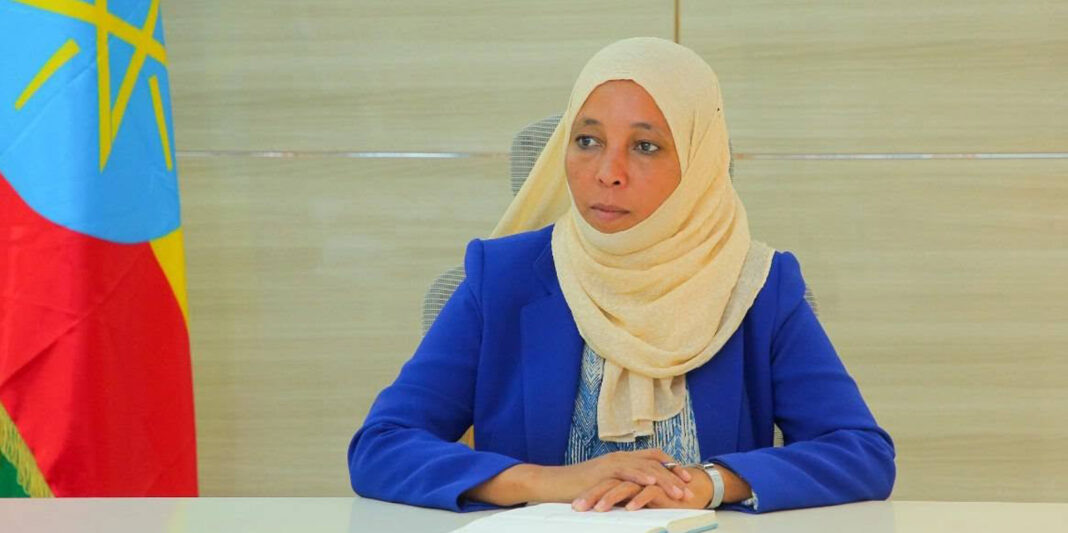
State Minister Sofia Kassa said the new system allows seed producers to sell directly to farmers through licensed agro-dealers of their choice. She said the approach is designed to reduce bureaucracy and ensure that high-yield seed varieties reach farmers on time without disrupting planting schedules.
For the current production season, the ministry plans to supply 2 million quintals of improved seed, of which 1.5 million quintals are expected to reach beneficiary farmers. About 6.8 million quintals of different seed types have already been distributed through regional supply networks, according to the ministry.
Sofia said the logistical problems seen during the 2021/22 and 2022/23 production seasons have been addressed since the 2023/24 fiscal year. She added that the fertilizer supply system has improved significantly, reducing complaints from farmers and agro-pastoral communities.
Looking ahead to the 2027/28 production season, the government plans to procure about 22.9 million quintals of fertilizer, with contracts already signed for 20.9 million quintals. As of June 17, 13.4 million quintals had arrived at the Port of Djibouti, and 12.1 million quintals had been transported to warehouses across Ethiopia. Between 100 and 200 trucks are now carrying up to 10,000 metric tons of fertilizer into the country each day.
Sofia said an additional 7 million quintals carried over from the previous season brought total available supply to 19.1 million quintals. Of this, 10.7 million quintals had been distributed to farmers between mid-November and June 17.
To shield farmers from volatile international fertilizer prices, the government has allocated an 84 billion birr subsidy. Under the program, farmers receive 4,972 birr for every quintal of fertilizer purchased. Sofia said the government absorbed higher costs caused by foreign exchange fluctuations to keep prices uniform nationwide.
The ministry also reported strong crop performance across the summer irrigation, belg and meher seasons. Summer wheat irrigation covered 3.7 million hectares and produced 174.99 million quintals, while the belg season yielded 110.51 million quintals from 4.36 million hectares.
For the upcoming meher season, the ministry plans to cultivate 22.36 million hectares. Land preparation has already been completed on 16 million hectares. If targets are met, total agricultural output is projected to reach 730 million quintals.