
Ethiopian Electric Power (EEP) has confirmed that it may completely terminate electricity supply agreements with Bitcoin mining operations if the severe drought triggered by the current El Niño weather phenomenon intensifies. The state-owned utility is moving aggressively to safeguard domestic consumption and honor regional bilateral electricity export contracts.
Moges Mekonnen, Communication Director at EEP, told Capital that the utility is actively reassessing its power allocations. “If the intensification of El Niño’s impact continues, Ethiopia may reconsider its power sales relationship with data mining operators,” Moges stated, emphasizing that the government is prepared to “take measures up to outright termination.”
According to EEP Chief Executive Officer Ashebir Balcha, the utility has already drastically scaled back electricity delivered to cryptocurrency mining facilities, cutting supply from 98 percent of contracted capacity down to just 23 percent. The phased reductions followed a nearly 20 percent decline in reservoir water inflows across the country’s major hydroelectric dams.
“When we noticed the dry season was approaching, we initially reduced supply to 75 percent,” Ashebir disclosed during a recent corporate performance briefing. “When rainfall failed to improve reservoir levels, we lowered it to 50 percent, and it has now reached 23 percent.”
The potential termination marks a dramatic pivot for a commercial sector that has quickly become a lucrative source of foreign exchange. In the past fiscal year, data mining firms generated more than 50 billion birr (over $300 million), contributing roughly 35 percent of EEP’s total corporate revenue.
Ethiopia currently holds power purchase agreements with 39 crypto-mining companies, 31 of which are fully operational. At full capacity, these facilities consume nearly a third of the nation’s total installed generation capacity of 9,752 megawatts.
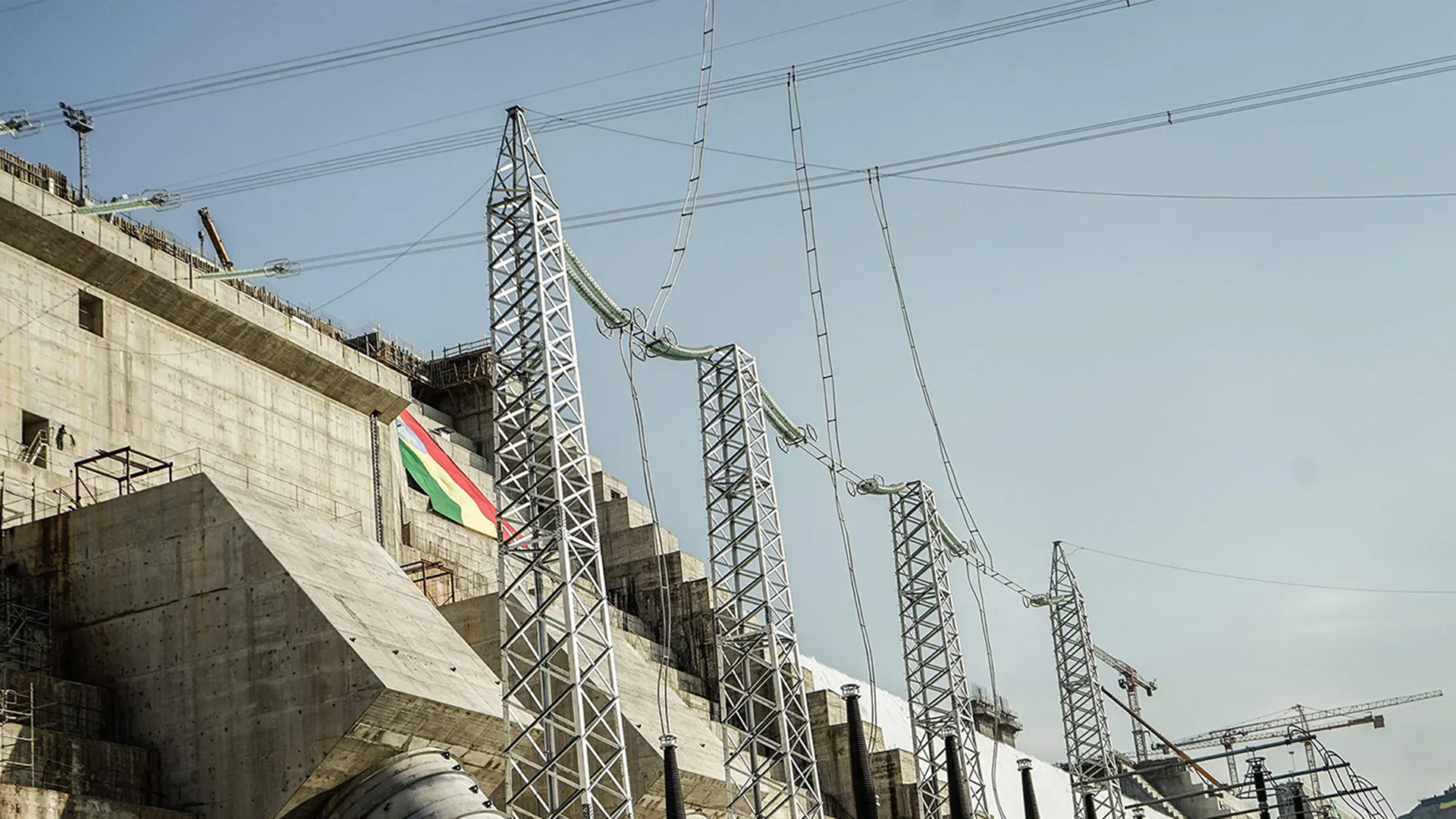
With electricity tariffs priced at an ultra-competitive 3.2 US cents per kilowatt-hour, Ethiopia emerged as a prime destination for international miners seeking low-cost, green energy. However, mining a single Bitcoin requires an estimated 6.4 million kilowatt-hours—equivalent to the annual electricity consumption of approximately 15,000 average Ethiopian households.
The rapid expansion of energy-intensive data centers has sparked debate in a country where nearly half the population still lacks access to electricity. While national power access has expanded from 44 percent to 54 percent over the past seven years as installed generation capacity doubled, mounting climate volatility has laid bare the vulnerabilities of a grid where over 90 percent of power depends directly on river inflows and hydroelectric reservoirs.
According to the Famine Early Warning Systems Network (FEWS NET), key catchment areas across Ethiopia received up to 50 percent less rainfall than historical averages during the June-to-September Kiremt rainy season. The United Nations has warned of severe drought conditions (IPC Phase 3) persisting through early 2027.
Unlike the 2019 power crisis at the Gibe III dam—where water shortages forced nationwide rolling blackouts and prompted Ethiopia to halt power exports to Sudan and halve deliveries to Djibouti—EEP’s current contingency strategy strictly shields sovereign cross-border trade.
“The decision made now is to reduce the volume allocated to data miners without cutting the volume exported to neighboring countries,” Moges explained.
Due to the regional drought impact, EEP has revised its cross-border export revenue target for the 2026/27 fiscal year downward to $279 million, representing an 11 percent decline from the previous year.
Regional power dynamics took center stage this week as energy leaders from across the region convened in Addis Ababa under the Eastern Africa Power Pool (EAPP) framework. The technical consultations revealed contrasting hydrological outlooks: while downstream neighbors Kenya, Uganda, and Burundi project above-average rainfall and potential flooding from October to December, Ethiopia confronts constrained reservoir replenishment and lower generation headroom.
EEP officials noted that commercial power supply agreements signed with data mining operators do not include mandatory supply guarantees or penalty clauses for climate-induced interruptions. This contractual structure gives the state utility the legal flexibility to suspend or terminate service without incurring financial liabilities.
The utility plans a comprehensive technical review in October to measure final reservoir storage at the close of the hydrological calendar. For now, authorities stress that domestic lighting, industrial manufacturing, and regional diplomatic energy commitments will take absolute precedence over digital currency mining.
The current crisis underscores Ethiopia’s broader energy policy dilemma: balancing lucrative export-oriented industrial policy against fundamental electrification goals and climate resilience. Over the past decade, Addis Ababa aggressively courted foreign direct investment in data-intensive industries, leveraging its vast hydropower potential and among the world’s lowest industrial electricity tariffs.
However, the El Niño-induced shortfall has exposed structural fragilities in a generation mix overwhelmingly dependent on large-scale hydroelectric infrastructure. Technical assessments presented at the EAPP forum indicated that sustained below-average rainfall could depress Ethiopia’s effective generating capacity by up to 20 percent, forcing difficult triage decisions among competing demand centers.
Moges emphasized that the utility’s immediate operational priority remains protecting household consumers and strategic manufacturing sectors. “The decision is to reduce the volume given to data miners without decreasing the volume exported to the countries we trade with,” he reiterated. “If we generate better power, it will be possible to create a way to supply power close to their needs.”
Industry analysts warn that prolonged power curtailments could undermine investor confidence in Ethiopia’s nascent digital economy ecosystem. Several large-scale mining operators, including Phoenix Group, had recently expanded facilities to over 130 megawatts based on long-term supply assurances. Further reductions—or outright contract terminations—could trigger capital flight and complicate future renewable energy investment negotiations.
EEP maintains that any final determination on contract continuity will hinge on October reservoir assessments and updated meteorological forecasts. Until then, the utility’s message to miners is clear: national energy security and regional diplomatic obligations will not be compromised for cryptocurrency profits.