Thursday, April 23, 2026
Home Blog Page 11

Ethiopia’s Applied Universities Must Become Engines of Production – Here’s How

0

Last year, a graduate from an applied university in Ethiopia sat in a classroom learning lean manufacturing. He passed his exams. He received his certificate. But he had never once stepped onto a real factory floor. That is not competence. That is certification without capability.

Ethiopia recently took a welcome step by differentiating universities into research, applied, and comprehensive institutions. The idea is sound: not every university should serve the same purpose. But differentiation alone changes nothing. What matters is how these institutions actually work.

And for applied universities, the very institutions expected to produce the skilled technicians, mid-level professionals, and practice-oriented civil servants who will build this country, the current model is failing.

Many remain stubbornly classroom based. They deliver what can only be called theoretical applied education. The contradiction is glaring. We ask these universities to produce “doers” who turn policy into tangible outcomes, yet we train them in lecture halls. The result? Graduates who are certified but not truly competent.

To be fair, there are small signs of hope. At Arba Minch University, a student-managed fish farm has operated for several years. It is modest. But it proves a point: students learn when they produce. Now imagine scaling that idea across the entire applied university system.

A Bold but Practical Idea

If Ethiopia is serious about building a skilled and productive workforce, applied universities must stop simulating work, and start doing real work. Here is the proposal: Allow, and actively encourage, applied universities to own and operate their own industries, commercial farms, and service enterprises.

This is not fantasy. It is already happening elsewhere. Germany’s Fachhochschulen run laboratories alongside Mittelstand firms. Rwanda’s IPRC colleges embed real workshops directly into degree programs. Some Chinese applied universities own small factories.

Ethiopia does not need to invent this model. It only needs the courage to adapt it.

Imagine one applied university that runs:

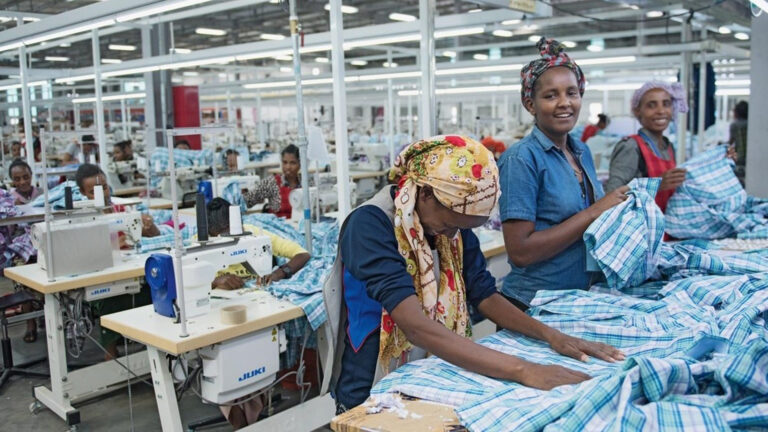
  • Two or three small manufacturing units, garment assembly, metal fabrication, agro-processing
  • One larger industry directly linked to its training programs
  • Commercial farms producing dairy, poultry, horticulture, and honey
  • A service unit repairing equipment for local small businesses

This is not a distant dream. Individual Ethiopian investors already manage multiple businesses and commercial farms. If one person can do it, why not a well-organized university with far greater technical capacity and human resources? The issue is not feasibility. It is vision, governance, and leadership.

Three Ways This Changes Everything

  1.  Real skills through real work: Students would no longer learn from simulations. They would weld actual metal. They would milk actual cows. They would meet actual production deadlines and quality standards. That is not just training. That is transformation.
  2.  Financial sustainability: – University-owned enterprises would generate income, to pay staff, improve facilities, and reduce begging for government budgets. In a resource-constrained country like ours, this is not a luxury. It is a necessity.
  3.  Innovation and research that matters: – These production units become living laboratories. Universities could test new technologies, improve productivity, and develop solutions tailored to local economies. Research would no longer sit on a shelf. It would walk out the factory door.

But What If It Fails?

Let me address the concerns directly.

Some will ask: what if university-run enterprises collapse? What if they distract from teaching? Who takes the financial risk? –  These are fair questions. The answer is not to abandon the idea. The answer is to pilot it carefully. Start with one enterprise per region. Use public-private partnerships. Keep academic budgets completely separate from business accounts. If an enterprise fails, the classroom continues. If it succeeds, everyone wins. That is not recklessness. That is responsible innovation.

Leadership Is the Real Bottleneck

Policy documents alone will not fix this. Transformation requires a different kind of university leader. We need presidents with industry experience, not only academic credentials. We need governing boards that include private sector members with real authority, including veto power over enterprise decisions. We need performance contracts tied not to how many papers are published, but to how many jobs are created and how much income is generated. Short-term thinking and bureaucratic caution have held us back long enough. Leadership must now step forward.

A Concrete Way Forward

Critique is easy. Direction is harder. So here is a specific recommendation. The Ministry of Education has already taken the important first step of differentiating universities. Now take the next step, more challenging but far more consequential.

Select two applied universities for an 18-month pilot. Choose one focused on agriculture and one focused on industry. Give them the legal and financial authority to own and operate one enterprise each.

Measure success with three simple metrics:

  • Each student completes at least 200 work hours per year in real production environments
  • Enterprise income covers at least 15% of departmental operating costs
  • Graduate employment rates are tracked separately from comprehensive universities

If the pilots work, scale them. If they struggle, learn why, and adjust. But do not sit still.

The Bottom Line

Ethiopia stands at a critical moment. The demand for skilled, practical, and innovative professionals is growing faster than our current system can supply. Applied universities are uniquely positioned to meet this demand, but only if we empower them to operate differently.

Moving from theoretical instruction to production-based education is not just an academic reform. It is a structural shift. It changes how knowledge, skills, and economic growth interact. If implemented well, this model could transform applied universities from mere centers of learning into genuine engines of production, innovation, and regional development.

The policy differentiation is done. The harder work now begins giving applied universities permission to build, own, and learn from real enterprises. The graduate in the applied university deserved more than a certificate. He deserved a factory floor. Let us give the next generation exactly that.

Ethiopia Needs a Stand-Alone Consumer Protection Law: The Missing Piece in Reform

0

Ethiopia has made significant strides in modernizing its legal and economic frameworks. The revised Commercial Code and trade competition reforms represent important milestones in fostering a more dynamic economy. However, one vital component is notably missing: a stand-alone consumer protection law. Without this law, the promise of reform risks failing to address the everyday challenges faced by Ethiopian citizens.

The Importance of Consumer Protection

Trust is fundamental to any effective market. Consumers must feel confident that the goods they purchase, the services they utilize, and the financial institutions they depend on are fair, transparent, and accountable. Currently, Ethiopian consumers often experience information asymmetry—where businesses hold significantly more information than buyers—and a frustrating cycle of “passing the buck” between government entities when complaints arise. This situation undermines confidence and leaves citizens vulnerable.

Insights from Kenya

Kenya’s Consumer Protection Act (2012) serves as an effective model. It consolidates protections for goods, services, credit, and banking, empowering consumers with clearly defined rights to refunds, cancellations, and compensation. Most importantly, it establishes a single, accessible framework for redress. In contrast, Ethiopia relies on a fragmented system, with provisions scattered across the Commercial Code, Civil Code, and competition law. This disarray leaves critical gaps in areas such as banking, digital services, and e-commerce.

Evaluating Ethiopia’s Current Approach

Ethiopia has institutions dedicated to consumer protection, and embedding rights within trade law helps address market abuses. However, significant drawbacks exist: enforcement is weak, remedies are slow to implement, and coverage is incomplete. Consumers navigating disputes often find themselves overwhelmed by a maze of overlapping authorities.

While Kenya’s approach faces challenges—such as high compliance costs for businesses and inconsistent enforcement in rural areas—the benefits of clarity, comprehensiveness, and adaptability far outweigh the negatives.

The Case for a Stand-Alone Law in Ethiopia

Adopting a stand-alone consumer protection law in Ethiopia is essential. Such legislation would foster trust in the marketplace by clarifying, enforcing, and making consumer rights accessible to all citizens. It would also mitigate information asymmetry by mandating transparency in contracts, advertising, and financial services, ensuring consumers are not disadvantaged by a lack of knowledge. Furthermore, a unified law would eliminate the current confusion among institutions, where complaints are shuffled between agencies without resolution, by establishing a single, efficient, and accountable redress mechanism. Ultimately, a comprehensive consumer protection framework would align Ethiopia with international best practices, enhancing its credibility in global markets and signaling to investors and citizens that the country is committed to fairness, accountability, and economic justice.

Conclusion

Ethiopia’s reform journey is commendable but still incomplete. A stand-alone consumer protection law is not merely another statute; it represents a social contract between the state, businesses, and citizens. This law would ensure that reforms yield tangible benefits for ordinary Ethiopians, safeguard against exploitation, and cultivate the trust necessary for a thriving economy.

It is time for Ethiopia to address this gap. By implementing a comprehensive consumer protection law, the country can transform its reforms from theoretical frameworks into lived realities—where citizens feel secure, empowered, and respected in the marketplace.

Will Dubai Be the Same Again?

0

Dubai has always sold itself on a simple but powerful promise which is stability in an unstable region. It is a city engineered to transcend geography, an entrepot between East and West, a sanctuary for capital, and a spectacle of modernity rising above desert and politics. Yet the ongoing US–Israel–Iran war is testing a deeper question. Can Dubai remain insulated from the very region it has long sought to rise above?

The answer, increasingly, appears to be no. For decades, Dubai’s success rested on a paradox. It benefited from Middle Eastern geopolitics, oil wealth, strategic location, global trade routes, while simultaneously distancing itself from the volatility that defined them. But this war is not peripheral. It is systemic. It is hitting the arteries that sustain Dubai’s model: energy flows, aviation corridors, investor confidence, and the perception of safety.

The most immediate rupture is physical. The idea that Dubai is untouchable has already been punctured. Missile debris falling onto a corporate office in the city, however minor the damage, carries enormous symbolic weight. It signals that geography still matters, that proximity to conflict cannot be fully engineered away. In a city built on perception, symbolism is reality.

Yet the deeper transformation is economic. Dubai is not just a city; it is a node in global systems. And those systems are under strain. The Strait of Hormuz through which roughly a fifth of the world’s oil passes, is now a chokepoint of uncertainty. Energy prices have surged, supply chains are fragmenting, and global inflationary pressures are rising.

For Dubai, this is not merely an external shock. Its entire economic architecture, aviation, tourism, logistics, and finance, is built on frictionless global movement. When oil spikes and shipping routes destabilize, Dubai’s core advantage begins to erode.

Tourism, one of the city’s most visible success stories, is already taking a hit. Regional travel disruptions are costing hundreds of millions of dollars daily, with fewer passengers passing through key Gulf hubs. Dubai International Airport which is once the world’s busiest for international travel is a barometer of global confidence. When planes stop flying, the illusion of permanence cracks.

Finance is no less vulnerable. Markets in the UAE have already shown volatility, with Dubai’s stock exchange dropping sharply in the early days of the conflict.  Investors, by nature, are forward-looking. And what they now see is not a temporary disruption, but a repricing of risk. The Gulf, once marketed as a “safe haven,” is being re-evaluated as a potential frontline. This is the war’s most enduring consequence: not destruction, but recalibration.

Dubai’s real estate boom fueled by global capital seeking safety and returns depends on confidence more than fundamentals. If that confidence wavers, even slightly, the effects can cascade. The city’s growth model is highly leveraged to perception: safety, neutrality, and inevitability. A sustained conflict challenges all three. But to suggest that Dubai will decline would be an oversimplification. The city has demonstrated remarkable resilience in the past from the 2008 financial crisis to the COVID-19 pandemic. What is more likely is not collapse, but transformation.

In fact, there is a paradox at play. While conflict destabilizes the region, it can also deepen Dubai’s strategic importance. As instability spreads, capital often seeks the “least risky” option nearby. Dubai may lose its aura of invulnerability, but it may still remain the best option in a turbulent neighborhood.

Moreover, Gulf states including the UAE possess significant fiscal buffers. Analysts suggest that while growth may slow, a deep recession is unlikely unless the conflict becomes prolonged and systemic. This gives Dubai time, time to adapt, recalibrate, and reposition.

Yet adaptation will require a shift in identity. Dubai can no longer convincingly present itself as detached from Middle Eastern geopolitics. The war has made clear that the city is embedded in regional security dynamics, whether it acknowledges it or not. Increased alignment with global powers, heightened security measures, and a more cautious investment climate are likely to become the new normal.

In this sense, the real question is not whether Dubai will be “the same again,” but whether it ever truly was what it claimed to be. The myth of Dubai was one of transcendence, a place where globalization had overcome geography. The reality now emerging is more complex. Dubai is not above the region; it is a central part of it. Its fortunes rise and fall with the same forces it once seemed to escape. And yet, this does not diminish the city. If anything, it makes its story more realistic and perhaps more durable.

Cities, like markets, are ultimately judged not by their ability to avoid shocks, but by how they respond to them. Dubai’s next chapter will not be defined by whether it can restore the illusion of invulnerability, but by whether it can operate effectively without it. That may mean slower growth. It may mean more regulation, more scrutiny, and more geopolitical entanglement. It may mean that the era of effortless expansion is over. But it also opens the possibility of a more mature Dubai, less myth, more substance.

The war between the United States, Israel, and Iran is reshaping the Middle East in real time. Borders may not change, but perceptions will. Risk will be priced differently. Alliances will harden. And cities like Dubai once seen as exceptions, will be understood as participants.

The most crucial question here is the following: will Dubai be the same again? No. And it doesn’t need to be. The real test is whether it can remain relevant in a world where stability is no longer assumed, but constantly negotiated.