EUMETSAT’s commitment to the African meteorological community has been matched by delivery. The first PUMA-2025 reception station was installed two years ago; today the full network of 56 stations is in place, and the processing chain that turns MTG data into products ready for forecasters is fully operational.
About 150 meteorologists, scientists and representatives from across the continent are meeting in Eswatini, for the five-day User Forum in Africa, organised by EUMETSAT and the Eswatini Meteorological Service, to share their first operational experience with MTG data.
Weather stations are sparse in many parts of Africa, so satellites are often forecasters’ most complete source of information. MTG delivers a new image of Africa every 10 minutes, compared with every 15 minutes from the previous generation of Meteosat satellites. That means forecasters see fast-changing weather, such as storm development, sooner and in greater detail. MTG also provides lightning observations. These are critical both for alerting communities to extreme weather and for warning where people or infrastructure may be at risk of severe storms and lightning strikes.
African Export-Import Bank (Afreximbank), and the East African Business Council (EABC) have signed the Africa Trade Gateway (ATG) Agency Agreement, connecting the region’s enterprises, including SMEs and major exporters, to the 300-million-strong EAC Common Market, and the wider AfCFTA market of 1.3 billion consumers, through digital trade.
The Agreement was signed recently at the inaugural East Africa CEO & Investment Forum in Nairobi, Kenya, marking a significant milestone in the ongoing collaboration between the two organisations.
The EABC has been actively promoting the digital ecosystem to its members and supporting their onboarding. In so doing, the partnership combines EABC’s regional business network with ATG’s digital trade services to help businesses find verified buyers and suppliers across Africa and beyond, access information on trading partners and connect with finance and payment solutions.
The partnership which carries significance for East Africa and the continent at large, enables the East African Business Council (EABC) join a growing network of trade-supporting institutions across Africa that work together to connect businesses with opportunities beyond their regional markets. Strengthening these connections will help more businesses expand across borders and capitalise on the opportunities created by the African Continental Free Trade Area (AfCFTA).
The United Nations Development Programme (UNDP) and the GSMA have announced a strategic partnership to strengthen Africa’s artificial intelligence ecosystem and accelerate the deployment of African-led AI solutions, including African language AI.
The partnership brings together the GSMA’s mobile industry expertise and networks with UNDP’s development programmes and innovation platforms to support African-led AI innovation. The collaboration will connect local talent with opportunities to develop and deploy solutions that respond to Africa’s priorities, including AI in African languages, helping ensure more people and businesses can benefit from the continent’s digital transformation.
Through the UNDP timbuktoo initiative, which is empowering African innovators to scale development solutions, UNDP and GSMA will collaborate to improve access to compute infrastructure for priority AI pilots and connect African talent to real-world AI applications. The partnership will also support the deployment of locally developed AI solutions and identify pathways for long-term sustainability and scale.
As Ethiopia seeks to strengthen food security and adapt to climate change, debate is growing over the use of genetically modified and gene-edited crops, commercial seeds and synthetic agricultural inputs. Environmental advocates argue that expanding these technologies without strong oversight could put biodiversity, public health and farmers’ control over seeds at risk. They are calling for transparent, independent biosafety assessments and stronger protections for smallholder farmers before new agricultural technologies are introduced.
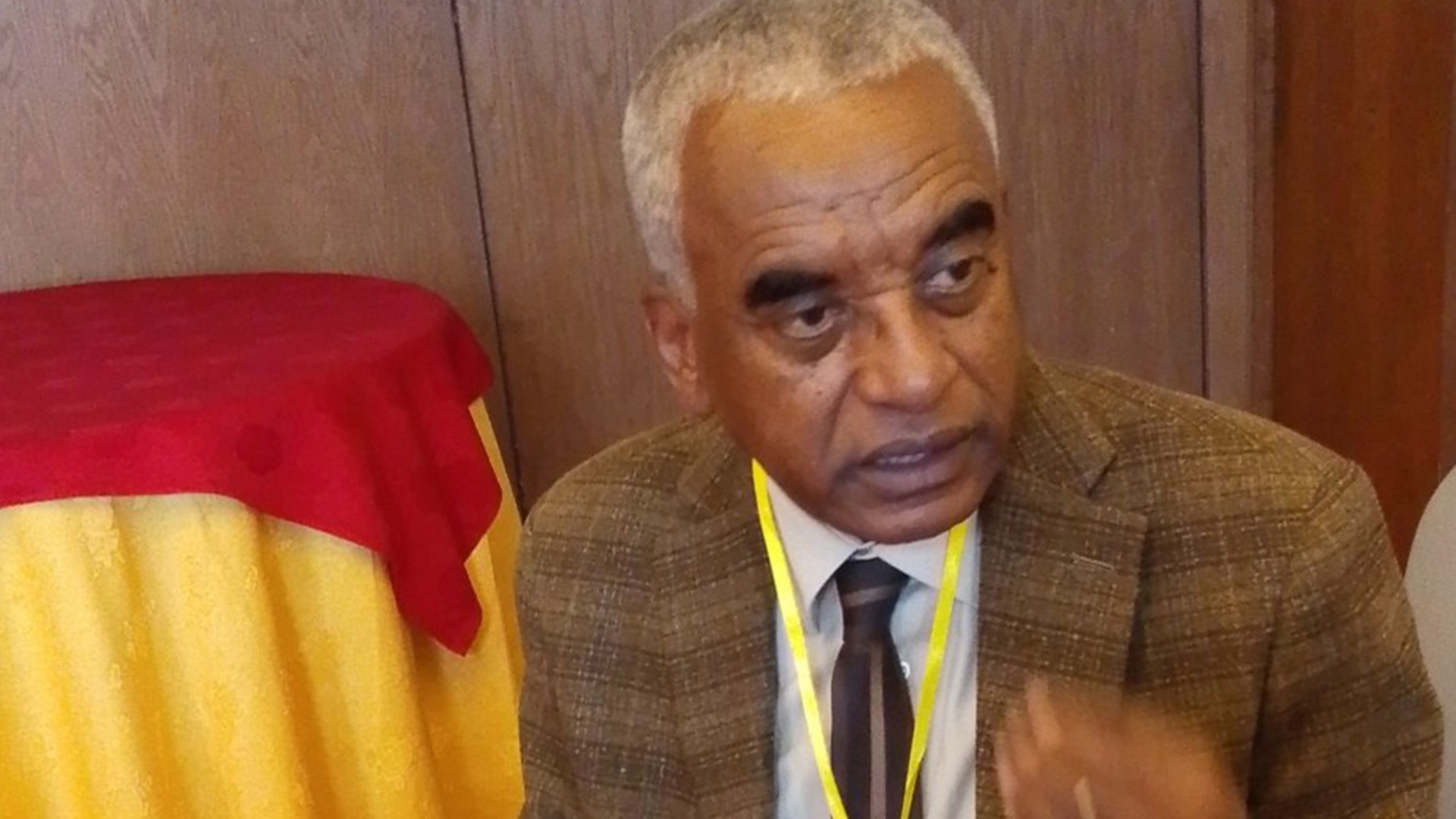
In this interview with Capital’s Eyasu Zekarias, Solomon Kebede, director of MELCA-Ethiopia and chairperson of the National Agroecology Consortium, discusses Ethiopia’s biosafety framework, the potential effects of biotechnology on Indigenous seed systems and the risks of relying on imported seeds and chemical inputs. He says regulation should be based on evidence and the precautionary principle, with safeguards tailored to local farming practices and conditions.
Solomon also makes the case for agroecology, an approach that emphasises soil health, crop diversity, biological pest control and farmer-led seed networks. He describes efforts by civil society groups to support community seed banks, restore Indigenous crop varieties and bring ecological farming practices into national agricultural policy. The discussion explores how Ethiopia can pursue agricultural innovation while protecting farmers’ rights, strengthening local food systems and building resilience to climate and economic shocks. Excerpts;
Capital: To begin, could you introduce MELCA-Ethiopia and outline your organization’s core operational scope?
Solomon Kebede: MELCA-Ethiopia is a civil society organization dedicated to environmental governance, resilient food systems, agroecology, and biosafety. Our work is structured around four primary pillars that connect community action with national policy advocacy.
Our first pillar centers on Environmental Governance. MELCA-Ethiopia has a long legacy in this area; our organization led the field research, community consultations, and official registration processes for three of Ethiopia’s six UNESCO-registered biosphere reserves: Majang, Kafa, and Sheka.
Our second pillar focuses on Biodiversity Conservation Strategies. We protect critical ecosystems by engaging local communities to safeguard Sacred Natural Sites through indigenous governance frameworks. We integrate conservation within traditional stewardship models—such as Guddifacha—pairing cultural heritage with physical soil and water conservation projects.
Third, we drive Policy Advocacy. Previously, Ethiopia lacked a unified network to connect its protected landscapes. We spearheaded the creation of the Ethiopian Biosphere Reserve Network in collaboration with the Ethiopian Biodiversity Institute and Farm Africa. We regularly convene policy dialogue forums to ensure field realities inform national legislation.
Our fourth pillar addresses Food Systems, Agroecology, and Biosafety Monitoring. Through this work, we critically evaluate the prevailing industrial agricultural model, monitor emerging biological technologies, and advocate for ecological farming methods that keep control of seed, soil, and land in the hands of smallholder farmers.
Capital: You mentioned critiquing the current industrial agricultural model. What specific concerns do you have regarding this framework, and how does biosafety fit into the equation?
Solomon: The modern industrial model relies almost exclusively on single-crop monocultures, heavy applications of synthetic agrochemicals, and genetically uniform crop varieties. In doing so, it degrades natural soil health, erodes indigenous biodiversity, undermines farmers’ rights, and introduces unquantified public health risks.
What we need instead is a framework that guarantees the safety of life—which is the fundamental definition of biosafety. Having designed Ethiopia’s initial biosafety management framework during my time at the Environmental Protection Authority (EPA), and having coordinated technical and legal guidelines under the Cartagena Protocol on Biosafety, I am intimately familiar with our regulatory architecture: what is necessary, what works, and where crucial oversights currently exist.
Capital: How do you assess Ethiopia’s current biosafety administration, and what should the primary objectives of biotechnology policy be?
Solomon: Biosafety in Ethiopia should fundamentally mean respecting national biodiversity, protecting smallholder autonomy, and achieving genuine, long-term economic transformation.
Let me be entirely clear: we do not oppose genetic engineering or biotechnology as fields of scientific inquiry. What we oppose are their unmitigated, unmonitored risks. Genetic engineering must not inflict harm on human health, natural ecosystems, local social structures, or indigenous knowledge systems. If agricultural biotechnology is introduced, it must be accompanied by thorough, transparent, fully independent risk assessments and robust, enforceable mitigation frameworks.
Capital: Could you walk us through a concrete example of those risks? How do these issues play out with specific crops currently being evaluated or introduced in Ethiopia?
Solomon: Let’s discuss insect-resistant Bt-maize, which Ethiopia has approved for field introduction. This maize is genetically modified with a trait from the soil bacterium Bacillus thuringiensis, enabling the plant to produce an insecticidal protein that targets pests like the fall armyworm. Introducing such a crop necessitates a rigorous evaluation across three critical dimensions:
First, Health and Nutrition: Does this genetic modification alter the plant’s fundamental nutritional composition? Does the continuous expression of the insecticidal protein introduce hidden secondary metabolites, new allergens, or long-term health risks? Have comprehensive safety evaluations been conducted locally, considering traditional Ethiopian food preparation methods?
Second, Economic Autonomy and Patent Monopolies: Maize is crucial for household food security in Ethiopia. Smallholder farmers traditionally save and share seeds, adapting landraces to various microclimates. However, genetically engineered varieties are protected by corporate patents. Farmers who adopt them are legally prohibited from saving seeds, forcing them to purchase expensive, patented seeds every season. Moreover, these GE varieties do not eliminate the need for chemical inputs; they still require specialized synthetic fertilizers and complementary pesticides to achieve expected yields.
Third, Ecological and Non-Target Impacts: A Bt plant continuously expresses an insecticidal toxin throughout its life cycle, meaning the toxin is present in root exudates, plant debris, and pollen. This constant exposure can harm beneficial non-target organisms, including vital pollinators like honeybees, as well as essential soil microbial communities responsible for natural nutrient cycling.
Capital: Global biotech firms have recently shifted their focus to newer techniques like gene editing, arguing that these methods pose fewer risks than traditional transgenic GMOs. What is your view on this argument?
Solomon: That argument exploits a dangerous regulatory loophole. Proponents claim that because gene editing modifies an organism’s existing genome without necessarily inserting foreign DNA from a different species, these crops should be exempt from standard biosafety reviews and risk assessments. For example, efforts are underway to edit the genome of teff—our national staple crop—to shorten its stem and prevent lodging.
However, molecular biology shows that genomic precision is rarely absolute. Cutting and splicing genetic sequences can cause off-target mutations across the plant’s broader gene pool. These genomic rearrangements can induce secondary structural changes in proteins, leading to the creation of novel compounds.
These unstudied proteins carry unevaluated health risks, including potential toxicity or allergenicity. Bypassing biosafety reviews for gene-edited crops based on an assumption of “substantial equivalence” violates the precautionary principle. Without independent, locally conducted research under Ethiopian dietary conditions, skipping risk assessments exposes our population and environment to unquantified dangers.
Capital: How are biosafety regulations currently enforced during field trials in Ethiopia, and what risks do current testing methods pose to local smallholder farmers?
Solomon: Standard biosafety governance mandates a strict protocol: contained laboratory research, followed by enclosed greenhouse trials, and finally confined field trials with physical and biological containment zones to prevent escape before any commercial release.
In practice, instead of constructing true physical containment barriers for outdoor trial plots, standard research plots have sometimes been enclosed with only basic wire fences. A wire fence cannot contain microscopic pollen, airborne spores, or foraging insects! Pollen is carried across agricultural landscapes by wind, livestock, and bees.
When a genetically modified trait escapes a trial plot and cross-pollinates with a neighboring farmer’s conventional crop, it introduces patented genetic sequences into local landraces. Under international intellectual property regimes, biotech corporations have used such contamination to claim patent infringement against smallholders for “unauthorized use” of proprietary traits. Our regulatory system must prioritize protecting seed sovereignty and farmer autonomy, rather than facilitating market access for patented traits.
Capital: Beyond genetic modification, how has the broader commercial input model impacted local farming practices and indigenous crop varieties across the country?
Solomon: Brewery barley contract farming schemes offer a clear example of how industrial models displace traditional cropping systems. Ethiopia historically cultivated resilient indigenous malt barley varieties, known locally as Bequil. When foreign brewing investments expanded, companies initiated contract farming agreements with smallholders, promising guaranteed markets, credit access, and high yields.
Initially, farmers grew native Bequil barley. However, corporate buyers eventually claimed that local varieties lacked the precise industrial uniformity required for commercial malting and introduced imported European seed lines. Gradually, indigenous Bequil varieties were displaced across entire districts.
To cultivate these imported varieties, farmers were required to purchase package deals of commercial fertilizers, systemic fungicides, and specialized herbicides tied directly to those seed lines. Through cluster farming schemes, farmers incurred seasonal debt to acquire foreign input packages, abandoning their traditional multi-crop rotations.
More critically, when smallholders convert their land entirely to commercial monocultures like brewery barley or wheat, they stop growing traditional food crops such as teff, pulses, oilseeds, and local vegetables. To feed their households, they must then buy basic foodstuffs from volatile urban markets. If a drought, pest outbreak, or price drop affects a single monoculture crop, the farm family is left without food or income. Industrial monoculture erodes household food and nutrition security.
Capital: The debate over agricultural technology often centers on raw yield per hectare. Are we overlooking broader macroeconomic realities and food sovereignty?
Solomon: Absolutely. Global agricultural biotechnology focuses almost exclusively on a narrow set of commercial commodities—primarily maize, wheat, soy, and cotton. However, achieving high tonnage in one or two commodity grains does not equate to nutrition security. True nutrition security requires dietary diversity. Replacing multi-crop farming systems with industrial monocultures directly threatens public health.
Consider our national macroeconomic position. Ethiopia faces foreign currency constraints and trade imbalances. In recent fiscal years, our national trade balance showed a significant deficit, driven heavily by imports of refined petroleum, synthetic fertilizers, and agricultural inputs. We export raw oilseeds only to use scarce foreign currency to import processed cooking oil.
Are we now going to make our agricultural foundation dependent on importing patented seeds and chemical packages every planting season? The same structural risk applies to coffee—our primary export earner. Coffee Berry Disease and climate shifts pose real threats, but if we move toward genetically modifying or patenting Ethiopian coffee varieties, foreign intellectual property holders could control key segments of the coffee value chain. Patenting native biological resources presents a long-term threat to our macroeconomic stability.
Capital: Proponents argue that adopting commercial inputs and biotechnology is essential for modernizing agriculture and tackling issues like child stunting. How do you respond to that perspective?
Solomon: The argument that “other nations adopted industrial input packages, so questioning them means opposing progress” is a dangerous oversimplification. We do not oppose public-interest technology, such as unpatented, open-access breeding innovations developed by public institutions and managed as open assets by farmers.
However, relying on chemical-heavy cluster schemes does not resolve chronic malnutrition. In Ethiopia, chronic child malnutrition (stunting) among children under five remains a persistent challenge, hovering near 39%. Expanding chemical monocultures reduces dietary diversity at the household level, aggravating micronutrient deficiencies.
We must secure seed sovereignty, soil health, and nutrition security simultaneously. This is why MELCA-Ethiopia and our civil society partners actively advocate for agroecology—an ecological approach to agriculture that relies on organic soil regeneration, natural bio-pesticides, polyculture crop rotation, and farmer-led seed networks.
Capital: How are civil society organizations organizing to build practical, field-level alternatives on the ground?
Solomon: Recognizing that individual organizations cannot address systemic challenges alone, MELCA-Ethiopia helped establish a broad national consortium of civil society organizations. We established its bylaws, secured collaborative funding, and built a unified platform—where I serve as board chairperson—to coordinate public advocacy, policy review, and community projects.
Our strategy operates on two parallel tracks: policy engagement and practical field implementation.
On the policy front, we present evidence-based research to parliamentarians, officials at the Ministry of Agriculture, and regional bureaus. Following extensive advocacy by civil society and academic partners, the Ethiopian government formally approved the National Agroecology Strategy—a landmark policy milestone that recognizes ecological farming as an official pillar of national agricultural development.
On the ground, we work directly with rural communities to establish Community Seed Banks, restore threatened indigenous crop varieties, and conduct participatory plant breeding alongside smallholders and local researchers—with women playing a central role in seed selection, preservation, and distribution. We train farmers in vermicomposting, organic soil management, biological pest control, and diversified agro-forestry.
Our objective is for the national agricultural extension system to integrate these ecological practices nationwide. By investing in our local biological wealth, organic soil management, and farmer-led seed systems, Ethiopia can build a self-sufficient, climate-resilient, and sovereign food future.