Monday, May 11, 2026
Home Blog Page 170

Middlemen squeeze East Shewa’s wheat boom as farmers fight for fair prices

0

East Shewa Zone, long Ethiopia’s agricultural powerhouse, has transformed its vast plains into golden wheat fields through farmer clusters and mechanisation. Yet smallholders at the heart of this “wheat revolution” are sounding the alarm: illegal brokers and volatile prices are turning their bumper harvests into financial struggle.

Just three years ago, farmers in districts like Lume and Dugda were leasing land to investors growing high-value vegetables. Today, through the Agricultural Production Commercialization Cluster (ACC) programme backed by the Agricultural Transformation Institute (ATI), they’ve reclaimed their fields. Organised in groups, they’ve pooled land for access to pumps, quality seeds, fertilisers and machinery — cultivating wheat across 373,000 hectares under summer irrigation alone.

“Three years ago, the farmer was a tenant on his own land. Today, he’s the master,” said a local development agent. East Shewa now boasts over 700 tractors and 80 combine harvesters, making it the country’s mechanisation leader. Yet when harvest time arrives, the excitement fades.

Unlicensed middlemen descend on fields, buying in bulk at depressed prices — 58–63 birr per kilo last year — then hoarding to sell at double later. “Market linkage is very difficult,” a development worker told Capital. “Farmers accept broker prices just to repay bank loans.” Without government price guidelines across wheat varieties, small producers bear the cost of inputs, pests and labour while barely covering interest.

Abnet Zegeye, Deputy Head of East Shewa Agriculture, called the wheat push a “national security issue” requiring the entire banking sector’s support, not just Siinqee Bank. Small plots often receive inadequate credit — 200,000–300,000 birr per hectare — insufficient for fuel and equipment maintenance. “Credit must arrive on time, when the season demands it,” he stressed.

Nature adds to the woes. Red-beaked quelea birds — dubbed “winged locusts” — ravage 10,697 hectares of maturing crops. Beshada Shume, a kebele administrator, said farmers guard fields day and night in uniform shifts from October to November, while authorities track flocks via GPS and spray breeding sites. “Protecting 10,000+ hectares is nearly impossible,” he admitted, though preparations for 2025/26 show improvement.

Harvest logistics compound the crisis. Districts with 10,000+ hectares ready simultaneously share just a handful of combine harvesters. Zegeye looks to avocado export chains and youth employment models like “Adey” for inspiration, aiming to save 35 percent of farmer profits for reinvestment. “Agriculture is now a business, not a last resort — but markets must stabilise.”

Experts propose urgent fixes: agricultural unions buying directly at better prices; Agricultural Business Companies (ABCs) under ATI’s ACC II ($128 million budget targeting 6.5 million farmers); and broader bank participation. ATI’s Vision 2040 — which claims $1.7 billion GDP growth since inception — promises rural transformation through roads, electricity, finance and youth jobs (611,000 opportunities, 80% women via $74.5 million Mastercard Foundation funding).

Farmers who’ve embraced mechanisation plead for market protection to match their field gains. Without it, East Shewa’s wheat fields risk becoming another tale of production plenty but profit poverty.

IMF forecasts strong economic growth for Djibouti, Driven by Ethiopia’s Expanding Market

0

An International Monetary Fund (IMF) assessment has highlighted Djibouti’s economic prospects, forecasting sustained growth primarily fueled by the expanding market in neighboring Ethiopia. The report emphasizes a strong economic integration that is expected to protect Djibouti from regional competition while increasing demand for its essential port services.

Ethiopia’s vast and growing market, along with a series of major joint infrastructure projects, are identified as key factors that will enhance demand for Djibouti’s maritime services.

The IMF asserts that this deep economic integration and shared development agenda will safeguard Djibouti from potential revenue losses.

As other regional ports compete for trade, Ethiopia’s rapid growth and the collaboration between the two nations are anticipated to mitigate any revenue reductions resulting from trade diversion.

The IMF mission, led by Esther Pérez Ruiz, concluded its visit to Djibouti this week, highlighting the significance of Ethiopia’s expanding economy—currently the world’s most populous landlocked nation—and the ongoing infrastructure projects as crucial drivers. This collaboration is expected to “mitigate revenue reduction” from potential trade shifts to other regional ports.

For 2025, growth is projected at a robust 6.5%, bolstered by strong port activity and vibrant construction, transportation, and retail sectors. Although growth may slightly moderate from 2024 due to reduced transshipment volumes, the medium-term outlook remains positive, with growth anticipated to stabilize around 6% from 2027 onward, supported by demand from Ethiopia.

Inflation has notably dropped from 2.1% in 2024 to zero in 2025, due to falling food prices. Fiscal discipline is also improving, with the deficit estimated to have narrowed sharply to 0.7% of GDP in 2025, down from 2.7% the previous year, and a balanced budget is expected in 2026.

“Djibouti’s economic outlook faces several risks,” Pérez Ruiz noted, citing rising regional tensions and potential trade diversions. However, she emphasized that “Ethiopia’s rapid growth and ongoing joint infrastructure projects with Djibouti” are likely to counterbalance these challenges.

To ensure long-term stability, the IMF has outlined several policy priorities. Authorities are concentrating on restoring debt sustainability through fiscal consolidation and negotiations with creditors. Key measures include enhancing tax enforcement, reducing exemptions, revising military lease agreements, and securing higher dividend payments from state-owned enterprises.

Maintaining the integrity of the currency board arrangement is crucial, which involves strengthening central bank autonomy and rebuilding foreign exchange reserves. The IMF recommended establishing a clear reimbursement plan to address outstanding government overdrafts, identifying central bank profits, SOE dividends, and military base income as potential reserve-building sources.

The financial sector remains robust, and Djibouti is progressing in its anti-money laundering and counter-terrorism financing frameworks. Looking ahead, the IMF reiterated the objectives of Djibouti’s National Development Plan for 2025–30, highlighting the necessity for increased investment in health and education, along with reforms to enhance the efficiency of state-owned enterprises and the energy sector.

“These steps are essential to fostering employment and developing a more diversified and competitive economy,” the statement concluded.

The IMF mission expressed gratitude to Djiboutian authorities for their cooperation and open dialogue, indicating a commitment to maintain close engagement as the nation navigates its promising yet complex economic path.

Debt risk expected to moderately decline over next two years, says Finance Minister

0

Minister of Finance Ahmed Shide announced that ongoing debt rescheduling negotiations are expected to lower the nation’s debt risk to a moderate level within the next two years. This announcement comes as the diaspora community shows interest in investing in the birr through the financial sector.

Speaking at the ‘Finance Forward Ethiopia’ conference, which reviewed the country’s economic reforms over the past seven years, Ahmed noted that progress is being made in debt restructuring efforts. Ethiopia has been in negotiations with both official and private creditors since it requested a restructuring in 2021.

While the process is not yet finalized, the government reports it is in its final stages. Earlier this year, authorities announced they had reached an agreement in principle with an Ad Hoc Committee of bondholders regarding the principal financial terms for restructuring the 2024 Notes.

Ahmed projected that the current high-risk debt burden will decline to a moderate level within the next two years.

During the conference on Thursday, January 15, attended by Prime Minister Abiy Ahmed, the Finance Minister also highlighted significant growth in tax collection in recent years.

He stated that the tax-to-GDP ratio is expected to increase by four percent in the upcoming year, currently standing at about seven percent—one of the lowest among peer nations.

Ahmed assured that the government will continue to actively promote economic growth in the coming years. “Public investment will continue, while attracting private investment and expanding public-private partnerships will be key to economic prosperity,” he said.

In her presentation, Minister of Revenues Aynalem Niguse outlined successes in tax administration, reporting that electronic filing and e-payment of taxes have risen to 94% and 64%, respectively, up from nearly zero at the end of the previous fiscal year.

Electronic tax clearance now stands at 54%, significantly reducing illicit activities. “Electronic receipt transactions have reached 291 billion birr, facilitating seamless handling of indirect taxes,” she added.

Regarding short-term objectives, National Bank of Ethiopia Governor Eyob Tekalegn announced plans to establish an independent regulatory body for the insurance industry. “Our goals for financial sector development include designing a mortgage policy, establishing a roadmap for interest-free banking, integrating it with monetary policy, and advancing merger and acquisition activities,” he said, highlighting the central bank’s achievements, including a notable reduction of inflation to single digits.

Ethiopian Investment Holdings (EIH) showcased the successes of the sovereign wealth fund, established about four years ago to manage large and strategic public enterprises.

In a compelling presentation, CEO Brook Taye captivated the audience by sharing the turnaround of Ethiopian Electric Power (EEP), which recorded its first-ever profit following major reforms and a debt restructuring initiative.

The state-owned utility, once burdened by massive debt, has seen a turnaround following a government-led intervention that absorbed over half a trillion birr of its liabilities from the Commercial Bank of Ethiopia, alongside a recent tariff adjustment.

Brook announced that EEP generated a profit of 2.1 billion birr in the first half of the current fiscal year, marking a significant improvement in its operational and financial performance. The reforms implemented under EIH have successfully restructured the utility’s operations and addressed its long-standing debt crisis, putting it on a sustainable trajectory.

Brook further mentioned that EIH aims to increase its revenue from 704 billion birr to 6.1 trillion birr within four years. The organization currently manages assets worth 8.2 trillion birr and oversees 36 major projects. He projected that the value of the portfolio’s assets will rise from 12% to 20% of GDP in the coming years.

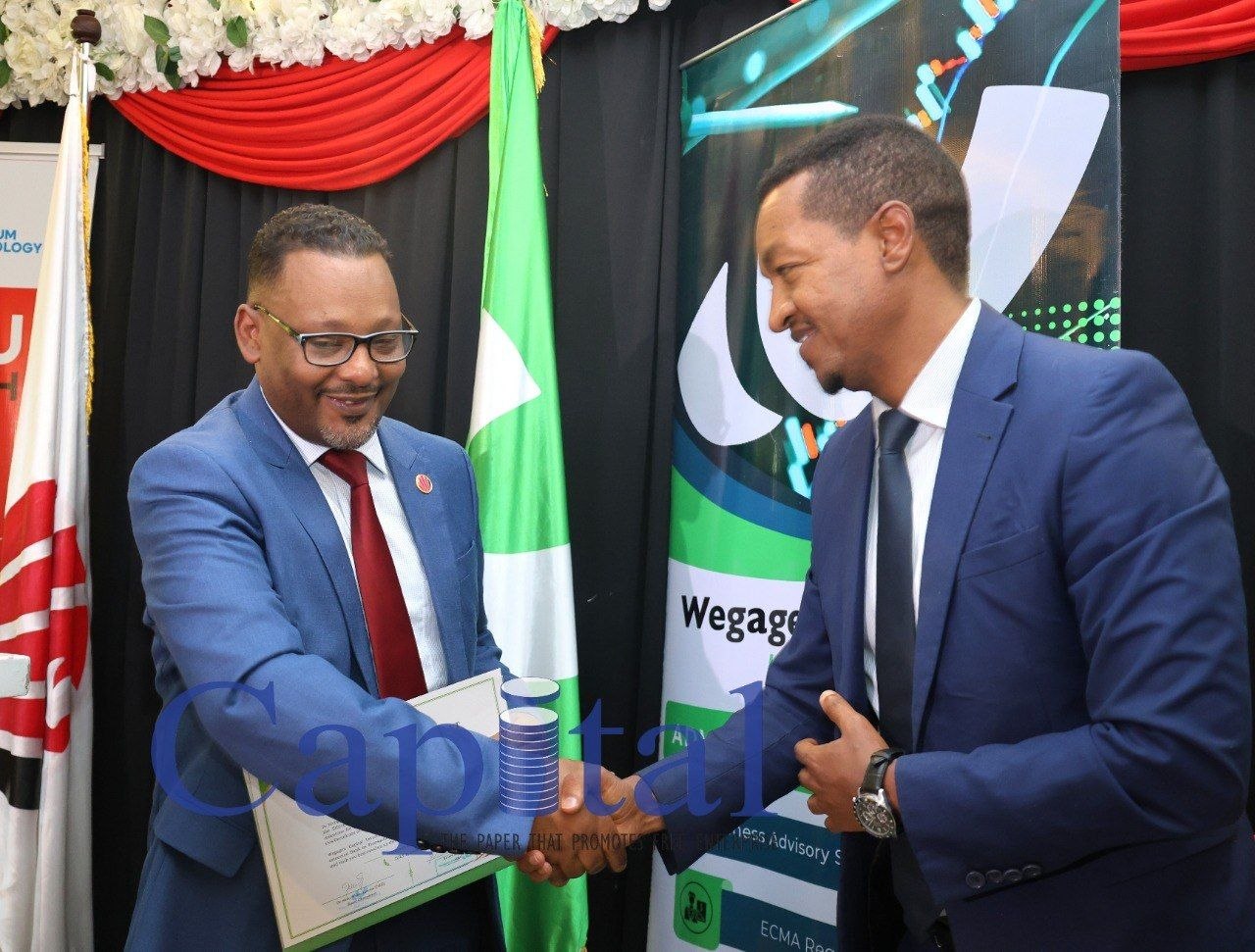
The conference also addressed the establishment of the Ethiopian Capital Market Authority (ECMA) to regulate the secondary market, as well as recent developments in the telecom sector under the Ethiopian Communications Authority.

During the conference, the Prime Minister fielded questions from attendees. A key question was posed by financial sector expert Brutawit Dawit, a former bank executive with extensive experience in both Ethiopia and international financial institutions.

Brutawit, who is currently the CEO of Wegagen Capital Investment Bank—a subsidiary of Wegagen Bank, where she served as CEO for seven years until 2004—noted that many members of the diaspora have been living in Ethiopia for several years.

She inquired when the government would allow Ethiopian-born foreign citizens, who are long-term residents in their country of origin, to invest in the financial sector using the local currency.

While the diaspora has been allowed to invest in Ethiopia’s financial sector as part of economic reforms introduced about seven years ago, Ethiopian-born foreign citizens can currently only acquire shares using foreign currency.

Brutawit emphasized that her request specifically concerns diaspora members residing in Ethiopia, who should be permitted to invest in birr.

In response, Prime Minister Abiy stated that the issue would be considered in the future.

He also noted that, although the diaspora is allowed to import goods using their foreign currency, “we have observed a trend where some obtain foreign currency illegally from local sources for their imports.”

Six billion birr unlocked in farm credit using land certificates

0

The agricultural sector is undergoing a major transformation, with 6 billion birr in loans so far distributed to farmers using land holding certificates as collateral. This marks a significant step toward shifting from subsistence to commercial farming.

For decades, rural producers have been trapped in traditional sharecropping arrangements and cut off from bank credit, despite land being their most valuable asset. Nearly 4 million hectares are still farmed under crop‑sharing, where harvests are split 50–50 between landowners and tenant farmers, a system economists say leaves sharecropped plots about 50 percent less productive than land under fixed‑rent contracts. With tenants receiving only half the returns and unable to pay rent upfront, they have had little incentive or capital to invest in improved seeds, fertiliser or labour.

That is beginning to change. Under a nationwide land registration drive, the government has issued around 32 million land tenure certificates, backed by geospatial data to clarify rights and reduce disputes, which once accounted for up to 75–90 percent of district court cases. Banks and microfinance institutions, including Abay Bank, are now accepting these certificates as collateral, opening formal lending channels to farmers who previously depended on high‑interest informal lenders.

“This transformation allows farmers to invest in machinery and modern inputs as borrowers rather than surviving through extreme frugality,” said Tigistu G/Meskel, Rural Land Administration and Use Executive at the Ministry of Agriculture. He noted that formalising land rights has both eased conflict and “opened financial doors” for rural households.

A new pilot launched on 13 January 2026 in Wolaita Sodo aims to tackle the deeper “puzzle of share agriculture” by directly replacing sharecropping with a safer financial model. The Tenancy Reform and Risk Management (TRRM) project, led by Dr. Solomon Zena of the Policy Studies Institute and Professor Michael Carter of the University of California, introduces agricultural land‑lease loans bundled with insurance.

Under TRRM, tenant farmers can take out eight‑month loans to pay fixed land rent before the planting season, shifting them from crop‑sharing to fixed tenancy. Crucially, the loans are linked to index insurance: if local yields fall below historical averages due to drought, pests or other shocks, the insurance pays out, protecting both the lender and the farmer.

The contract is designed as “no‑regret.” For example, a farmer who borrows 10,500 birr for rent could receive up to 14,460 birr in insurance payout in the event of complete crop failure, covering principal, interest and a small income buffer. “Farmers know they get better yields under permanent rent; our role is to provide the financial tools that make that transition safe and profitable,” said Professor Carter.

According to Solomon Zena, if the TRRM model were scaled across the 4 million hectares currently under sharecropping, the country could generate an extra 40 million quintals of grain, significantly boosting national food security.

The project brings together Abay Bank, Nyala Insurance, rural savings and credit cooperatives (RUSACCOs) and NASA Harvest, with funding from the Bill & Melinda Gates Foundation. Officials and researchers say the early results show how secure land rights, tailored credit and risk‑management tools can start to dismantle the structural constraints that have long held back rural productivity and incomes.