Wednesday, September 30, 2026
Home Blog Page 226

Geopolitical challenges and freight dynamics: Ensuring the future of Ethiopia’s Floriculture

0

The USA-Israel-Iran conflict that erupted on February 28, 2026, has significantly altered the security landscape of the Middle East and Gulf region, creating substantial ripple effects across the Horn of Africa. In this context, Ethiopian Airlines, the national flag carrier, remains pivotal to the success of Ethiopia’s floriculture industry. For over two decades, the airline has established Ethiopia as a preferred source for perishable cargo, offering competitive freight rates, an extensive global network, and superior connectivity compared to regional competitors. This strategic advantage has allowed Ethiopian flowers, herbs, and other horticultural products to access premium markets in Europe and the Middle East with unmatched speed and reliability, thereby sustaining the sector’s international competitiveness.

In response to rising operational costs due to ongoing geopolitical tensions, Ethiopian Airlines has introduced a revised cargo tariff structure for perishable exports under Price Class PEF, effective April 8, 2026, and valid until December 31, 2026. This adjustment includes a uniform 20 percent increase across applicable tariffs for horticultural commodities. While the airline has framed this increase as a necessary response to escalating fuel, insurance, and logistical expenses, its impact is particularly pronounced within the critical weight brackets of +45 kg and +100 kg, even though these tiers typically encompass smaller commercial flower shipments.

Ethiopian cargo rates are structured using a standard tiered weight-break system common in air freight. Under this system, the charge per kilogram decreases progressively as shipment weight increases. The principal tiers include: Minimum charge: A fixed fee applied when the weight-based calculation yields a lower amount; Normal rate: Applicable to the first 45 kg (or the base rate for smaller shipments); +45 kg: Rate per kilogram for shipments weighing between 45 kg and 100 kg; +100 kg: Rate per kilogram for shipments weighing between 100 kg and 300 kg; +300 kg, +500 kg, +1,000 kg, and higher tiers (up to +20,000 kg): Progressive rates for larger shipments, although not all destinations offer rates in every tier.

As an expert in the floriculture sector, I believe this tariff increase poses a significant risk to the already narrow profit margins many Ethiopian producers rely on, potentially jeopardizing the operational viability of numerous enterprises in an intensely competitive global market. The implications of this adjustment are likely to resonate throughout the horticultural value chain, compelling stakeholders to pursue innovation and adaptive strategies to maintain long-term profitability.

Key European gateways, such as Paris (CDG), Frankfurt (FRA), London (LHR), and Brussels (BRU), along with essential Middle Eastern hubs like Dubai (DXB), Abu Dhabi (AUH), Doha (DOH), and Riyadh (RUH), are now subject to these increased per-kilogram charges. Although the revised pricing remains net and includes fuel, insurance, terminal handling, and screening fees, the structural increase comes at a particularly challenging time for the industry.

The National Bank of Ethiopia’s recent floor-price revisions for roses—Highland: USD 4.5711/kg, Midland: USD 4.7631/kg, and Lowland: USD 5.1292/kg—along with adjustments for summer flowers, were based on the assumption of stable freight costs. Exporters now face a difficult choice: either renegotiate higher selling prices with international buyers to meet repatriation requirements or explore alternative routing options to reduce transport expenses. Both options carry significant risks. Increasing prices may lead to a loss of market share, while rerouting could jeopardize the cold-chain integrity and timely delivery that form the foundation of Ethiopia’s competitive edge.

For over twenty years, Ethiopia’s floriculture sector has thrived thanks to a synergistic model that leverages reliable lift capacity from Addis Ababa Bole International Airport, competitive freight incentives from Ethiopian Airlines, and steady access to high-value international markets. This framework has generated substantial foreign exchange earnings and created significant employment opportunities across highland, midland, and lowland production zones. However, the current tariff revision exposes a structural vulnerability: the sector’s heavy reliance on a single dominant carrier at a time when global supply chains are increasingly fragile due to regional geopolitical instability.

Producers facing constrained seasonal cash flows, as well as smallholder growers, are likely to suffer the most if export order volumes decline or quality standards are compromised. The experience of Kenya’s flower industry, which has reported weekly losses of up to USD 1.4 million amid reduced demand and logistical disruptions, serves as a cautionary example.

A strategic and collaborative response is essential. Ethiopian Airlines has shown a strong commitment to national development objectives, as evidenced by significant infrastructure investments like the new cargo facility in Bishoftu. Similarly, the horticulture community has demonstrated resilience in the face of previous external shocks. Therefore, a structured dialogue among Ethiopian Airlines, the Ministry of Agriculture, exporters’ associations, and the National Bank of Ethiopia is imperative.

Practical and actionable solutions are attainable. These include introducing volume-based incentives for certified shipments, offering targeted government freight subsidies during geopolitical volatility, jointly exploring additional freighter capacity, and developing enhanced contractual mechanisms to hedge against currency and fuel price fluctuations—along with other measures that the government committed to during the COVID-19 pandemic. Importers of flowers in Europe and the Middle East, who value the reliability of Ethiopian supply chains, may also be potential partners in sharing the burden of increased logistics costs.

The Ethiopian flower export industry has consistently proven its capacity for innovation and adaptability. Although the current challenge is serious, it also presents an opportunity to strengthen the sector’s long-term sustainability. By viewing the tariff adjustment not as an isolated event but as a catalyst for deeper stakeholder alignment, the industry can protect livelihoods, maintain market positioning, and ensure that Ethiopia remains the preferred global supplier of responsibly cultivated, high-quality floricultural products.

Close monitoring of export volumes, price transmission effects, and buyer feedback in the coming months will be crucial. Developments over the next quarter will determine whether this situation represents a temporary adjustment or a more fundamental shift in the economics of Ethiopian floriculture. As a stakeholder deeply committed to the sector’s continued growth and prosperity, I am confident that a coordinated, data-driven response will enable the industry to navigate current challenges and emerge with a stronger, more diverse, and resilient foundation for the future.

Mismatch in political grafting

0

Ethiopia’s political history can be understood through the lens of political grafting, where successive regimes have sought to overlay new governing frameworks onto the country’s entrenched social, territorial, and cultural structures. Similar to the biological process of grafting, the success of political grafting relies on seamless integration between social roots, cultural elements, and the economic foundations that connect the existing system to the new political structure, ensuring mutual survival.

Ethiopia’s state-building has included three major “grafts”: the Imperial system’s Solomonic dynasty supported by the church; the Derg’s revolutionary Marxist rupture, which emerged from popular uprisings and military discipline; and the EPRDF’s ethnic federalism, which enshrined the right to self-determination, including secession, in the 1995 Constitution.

These three sequences of political grafting represent different governing logics imposed on Ethiopia’s deeply rooted social and territorial structures, each attempting to manage the country’s vast diversity and navigate state-building in its own way.

However, the success of effective political grafting hinges on maintaining the healthy functioning of the connections between these independent systems. This integration must facilitate the smooth flow of essential elements—akin to nutrients and water—between the different political structures.

Therefore, successful political grafting relies on establishing a seamless interconnection that restores continuity between the foundational roots providing stability and the new elements integrated into society. Just as calluses form a protective barrier against irritation, political systems must develop resilience against external pressures that may cause discomfort or unrest within society.

There are times, however, when the upper and root systems of political grafting do not align or exhibit significant differences, leading to a failure in bridging the two systems effectively. This misalignment prevents the flow of essential elements between them and is a common cause of political graft failure.

Applying the biological concept of vascular mismatch—where two living systems fail to form a functional union due to incompatible structures—serves as a practical metaphor for Ethiopia’s turbulent political transitions.

From the monarchical parliamentary system of the Imperial regime (pre-1974) with its centralized, hierarchical, and largely non-ethnic basis, to the revolutionary student movement that was later co-opted by the dictatorial Derg, and finally to the EPRDF’s ethnic federalism introduced in 1991—all represent attempts at different forms of political grafting in Ethiopia.

The Imperial system sought legitimacy through its connection to the church and territory. The dynasty claimed direct descent from Menelik I, the son of King Solomon of Israel and the Queen of Sheba (Makeda). This narrative, preserved in the Kebre Negest (Glory of the Kings), served as the foundational charter of the empire.

A belief emerged within society that the Ethiopian Orthodox Church openly supported the emperor, viewing him as a descendant of Solomon. His rule was regarded not only as political but also sacred, as he was seen as God’s anointed representative on Ethiopian soil. Ethiopia was viewed as the new Zion, housing the Ark of the Covenant, which was allegedly brought to Aksum. The emperor was seen as the guardian of this covenant, and thus, the dynasty’s legitimacy was assumed to be transcendent, not reliant on performance, elections, or ethnic support.

On the other hand, the Derg (1974–1987) served as the transitional phase—the “callus” that formed after the Imperial rootstock was cut and before the EPRDF scion was fully integrated. The sources of its legitimacy were fundamentally different from both its predecessor and successor.

The Derg, formally known as the Coordinating Committee of the Armed Forces, Police, and Territorial Army, lacked a dynastic, ethnic-federal, or electoral mandate. Instead, it derived its legitimacy from four main aspects. First, it claimed authority through Revolutionary Rupture and Popular Uprising, seizing power after months of mass protests, strikes, and rebellions against Emperor Haile Selassie, fuelled by widespread discontent over famine, corruption, and feudal stagnation.

Second, the Derg sought legitimacy by formally adopting Marxism-Leninism, co-opting the revolutionary intent of the civil intellectual community by nationalizing land, banks, private property, and industry. The third source of legitimacy stemmed from its chain of command, which was based not on popular vote or ethnic representation but on military hierarchy. Finally, the Derg’s legitimacy was reinforced by established military obedience to the council, framed as revolutionary discipline. The Derg was unwilling to relinquish its power to a civilian state and instead established the 1987 People’s Democratic Republic of Ethiopia (PDRE) constitution, creating a civilian façade while maintaining a one-party state under the Workers’ Party of Ethiopia, where real power remained with the Derg’s inner military circle, which adopted the title of “comrade” (guad).

In contrast, the EPRDF system derived its legitimacy from ethnic self-determination. When the EPRDF “grafted” its ethnic-based system onto the existing Ethiopian state, it encountered several critical misalignments due to its unorthodox approach. This new framework failed to account for the intermarried social integrity that had previously existed within society.

The core tension in the legitimacy of a system built on ethnic self-determination arose from its imposition on a state whose earlier historical legitimacies—the Solomon monarchy and the Derg’s top-down Marxism—were fundamentally territorial, unitary, and centralist, and had not been particularly successful. The new graft rejected the host’s immune system, leading to chronic structural dismissal.

The EPRDF’s constitution (1995) enshrined the unconditional right to secession for every “nation, nationality, and people,” framing ethnic self-determination as the endpoint of legitimacy. This approach has been criticized for creating a sovereignty paradox, generating tension between the right to self-determination and the integrity of the state. Many view Article 35 of the constitution as inconsistent and a point of contention.

This situation is considered a core constitutional and conceptual paradox within the Ethiopian federal order established by the 1995 Constitution adopted under the EPRDF. Many believe that ethnic self-determination invites unnecessary conflict among groups that previously coexisted peacefully. The imposition of this concept is seen as benefiting hardliners who seek to exploit divisions. This perception is widespread, with many viewing it as a threat to sovereignty and territorial integrity. The inclusion of Article 35 in the constitution is regarded as a serious flaw that risks damaging the nation’s integrity, triggering conflicts in various regions to this day.

The current government of Ethiopia, led by Prime Minister Abiy Ahmed, has proposed new reforms since 2018 that can be viewed as a sought-after “fourth graft.” These reforms emphasize Medemer (synergy), economic liberalization, and pan-Ethiopian unity aimed at healing the wounds of the EPRDF era. However, Article 39 remains unchanged, contributing to the ongoing fallout from the Tigray War, unrest in Oromia, and grievances from Amhara rebels.

True integration requires significant constitutional changes: realigning ethnic rights with territorial integrity, promoting economic growth through renewable energy and diversification, and fostering genuine unity, or Medemer, that builds resilient social bonds. The Medemer concept aims to heal divisions and implement meaningful reforms, but it requires constitutional support to eliminate risk factors embedded in the existing document. Without this support, Ethiopia risks rejecting the graft amid global geopolitical pressures in the Horn of Africa.

I hope that the new Medemer framework and constructive dialogue can leverage inclusive nationalism and viable constitutional reform to support unity and synergy.

Ethiopia’s public debt needs harmonization with development goals, not reduction

0

Ethiopia has been rebuked by the financial world for missing payments of interest totaling US$99 million and redemption of its debut US$1 billion Eurobond in December 2024, ten years after issue. Leading credit-rating agencies like Fitch and S&P, taking deep offence, have downgraded the government’s external credit rating to “default,” although the latter is very much in the eye of the beholder. But the IMF, too, has dubbed the country’s debt “unsustainable and in distress.” The authorities’ response includes limiting the accumulation of national debt and committing themselves to bringing Ethiopia’s debt distress rating to “moderate” under the watchful eyes of the IMF. Yet it turns out that Ethiopia has not often lacked the basic ability to shoulder its debt burden and our government should not be distracted from focusing on how to harness public debt for development purposes.  

First things first: Why has Ethiopia failed to pay its first and only Eurobond obligations on time?  It is not as if the government has accumulated unmanageable debt, or as if it has been unwilling to pay. Rather, the delayed payment is best regarded as an “excused default,” with some powerful mitigating circumstances. No sooner had the government led by Prime Minister Abiy Ahmed run into the Covid-19 shock than it was dragged in a major, two-year long armed conflict in Tigray. I mean, if pandemic and war do not constitute force majeure, what would? The emergencies severely strained public finances, and surely settling debts is not a priority when you find yourself in a life-threatening exigency. This, however, does not mean to free the EPRDF government officials who were too eager to advertise a high-yielding international bond once Ethiopia was assigned its first credit ratings, only to botch the management of the promised projects, leaving their successors to pick up the pieces.

But the default assumption that Ethiopian governments have been borrowing “too much,” or that Ethiopia has failed to keep its debt levels within reasonable bounds, does not fit the data. The federal government’s financing needs, for a start, have usually been limited by conventional measures. IMF and Ministry-of-Finance data indicate that overall fiscal balance averaged merely -2.4% of GDP, the primary balance -1.9%, between fiscal years 2006/07 and 2023/24 (just before that Eurobond matured and before the value of our foreign currency-denominated debt shot up due to a spectacular currency depreciation originally meant to achieve competitive exchange rate). Yes, federal outstanding debt rose from US$7.5 billion to US$44.7 billion over that period. However, relative to national income or GDP, it averaged a modest 28.4% per year, with no clear-cut trend and 13.9% of GDP accounted for by domestic debt, 14.5% by external debt. Even if we include government-guaranteed liabilities, public sector debt averages 45.6% of GDP, which is still moderate by international standards and obeys generally accepted debt limits.

Nor has the central government issued debt for the most part on imprudent terms. Domestically, the government almost always has borrowed very cheaply, actually at sub-zero real interest rates (admittedly helped by financial repression). And of the total external debt contracted by the government over 2006/07-2023/24, more than 90% was on a concessional basis (factoring in bilateral official development assistances or ODAs), with mostly fixed nominal interest rates averaging barely above 1%. True, commercial loans accounted for a significant 24.4% of the total external public debt annually, but that largely reflects the effect of public-enterprise borrowing backed by the government.

Even more informatively, and contrary to what might be expected from the Eurobond saga, interest payments have not been a major burden on government budget either. During 2006/07-2023/24, for example, interest payments averaged 0.5% of GDP, thrice lower than they did in the first half of the 2000s. Meanwhile, the government spent on average just 4.2% of its annual revenue on interest payments (even though with an overall upward trend), and 8.5% on servicing total public sector debt against the average of 18.1% for low-income countries in 2024. It spent 12.1% of export earnings annually for servicing external debt that includes publicly guaranteed liabilities; in 2024 low-income economies on average spent a record 24.2%.   

What about the risk of a self-reinforcing debt spiral – a case in which rising debt level leads to higher interest payments, piling up even more debt, setting in motion a snowball effect? The authorities need not have worried about it. So long as the nominal interest rate on our sovereign debt is lower than the long-term nominal GDP growth rate, debt will actually shrink relative to the size of the economy over time, becoming less of a burden. And over the past 25 years, the rate of growth in real GDP plus inflation has on average, and in all but two cases, far exceeded yields on Ethiopia’s public debt. Even if government borrowing costs are expected to rise domestically as financial repression wanes and the debt market develops, our long-run growth outlook is also generally strong, at the very least in nominal terms. And this debt dynamics has two implications: (1) Ethiopia can realistically aim to grow its way out of debt (mind: growth lacks quality when it is not inclusive, not because it is debt financed), and (2) it is also able to rollover debt or stabilize debt ratio without having to reduce its primary fiscal deficits.  

So this gives another reason why our government does not have to embark on a substantial – in fact, any – fiscal correction in order to ensure debt sustainability. What is more, if this fiscal correction means lower public infrastructure investment (one immediate measure taken by the government to contain debt vulnerabilities is indeed curtailing the infrastructure investment of some big state-owned enterprises – SOEs), it is essentially borrowing from the future. For it can retard accumulation of productive physical capital and ultimately economic growth, which in turn lowers future public revenues, ironically undermining fiscal solvency.

Of greatest importance from the standpoint of Ethiopia, however, is making good use of the debt it contracts. It has to be said that, until very recently, several of our large-scale public investment projects have been wasteful – due to weak governance and corruption. It suffices to look at the ones that served as a sales pitch for the aforementioned Eurobond – namely, the Grand Ethiopian Renaissance Dam (GERD) hydropower, railway and sugar-industry projects. For all its multi-dimensional benefits, GERD alone was squandering billions of U.S. dollars in terms of incurred as well as opportunity costs before it was given a “kiss of life” by Premier Abiy. But all three projects turned out to have multifaceted problems, from inadequate feasibility studies to administration inefficiency to massive cost overruns and delays. And was it really surprising that the SOEs responsible for these projects were unable to service their debt, to the point of bringing the Commercial Bank of Ethiopia – their largest domestic lender, our “too big to fail” – to the brink of crisis?

That’s not all. According to a 2025 University of Massachusetts report, Ethiopia had been losing on average an astonishing US$1.6 billion per annum through capital flight over the period 1971-2022. This estimated amount is far greater than that needed to pay off our Eurobond debt. And twice the amount roughly matches the total loan disbursements set aside by the IMF for Ethiopia’s four-year stabilization program. Or, if you want, we could build 16 GERDs with the total capital flight (US$83 billion!) during the 52-year period. In fact, there is also an increase in the risk of capital flight that Ethiopia could face in the future: if central bank reserve loss occurs and this creates depreciation fears, continued relaxation of currency controls means that more willing residents will be able to take foreign currencies abroad. But for now the point is that Ethiopia might face no external debt problem if it were able to keep its own funds at home.

Given these, what more can be said of ongoing efforts by the government to ensure debt sustainability? On the domestic front, enhancing public debt management is definitely desirable. Measures to strengthen borrowing justification, governance and viability of SOEs are also welcome. So is the marked improvement observed under Abiynomics in terms of evaluating projects and completing them within designated time periods and costs. On the external front, if the aim is to improve our external debt servicing capacity, expanding and diversifying sources of foreign exchange earnings, especially exports, makes a lot more sense than trying to unduly reduce the external debt-GDP ratio by minifying the numerator. The debt restructuring negotiations with official bilateral creditors under the G20’s initiatives and with private bondholders to secure a comparable treatment, if successful, do alleviate temporary financial crunches, but they do not establish debt sustainability. The same applies to abstention from commercial loans.

In fact, while it is clearly desirable to avoid unadvisedly-contracted commercial external loans and what Léonce Ndikumana and James Boyce called in their 2011 book “odious debts,” when conditions are ripe, credit terms are not too far away from concessional ones – the American economist Jeffrey Sachs says loans with 2-3% real interest rate and 30 to 40-year maturity are no-brainers for Africa’s development projects – and the social and economic returns of an underlying project justify it, Ethiopia should not shy away from knocking on the doors of world credit markets again. If it faces difficulty in borrowing on financial markets, it will not be due to a one-time delay in Eurobond payments.

To recap, contrary to the cliché, the Ethiopian state has not had excessive indebtedness levels or a fundamental problem of fiscal sustainability in recent history. And at this point, the country probably has little to gain from a debt reduction of choice, but a lot to lose. So when societal needs call for it, the federal government can and should continue to use its unique ability to take on debt without having to worry about paying it off. Oh, and it should not overextend itself in terms of chasing the IMF’s “indicative” debt thresholds or Fitch/S&P’s favorable credit ratings, although the harsh realities of global finance and investment mean that these issues cannot be completely ignored. What matters most for Ethiopia today is not enhancing credit reputation, but that its sovereign debt promotes the ultimate goals of development policy.

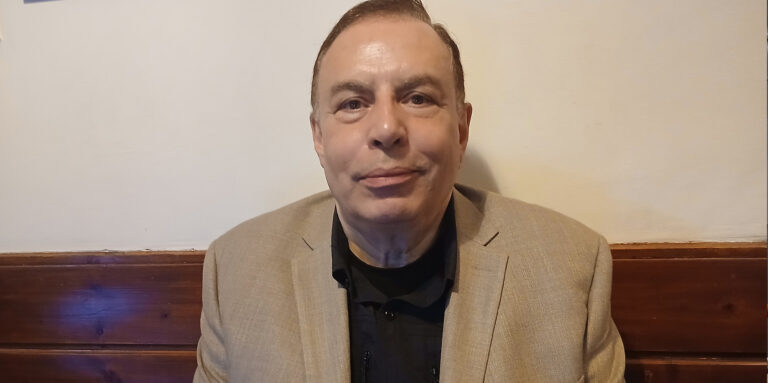
Name: Yohannes Fekadu

0

2. Education: (የት/ት ደረጃ)

    10+2

3. Company name: (የመስሪያ ቤቱ ስም)

   Talia Epoxy

4. Title: (የስራ ድርሻህ)

     Partner

5. Founded in: (መቼ ተመሰረተ)

    2017 EC

6. What it does: (ምንድነው የሚሰራው)

    Manufacturing and selling

7. Headquarters: (ዋና መስሪያ ቤት)

    Akaki Kality

8. Start-up capital: (በምን ያህል ገንዘብ ስራዉን ጀመርሽ/ክ)

100,000 birr    

9. Current capital: (የአሁን ካፒታል )

    Growing

10. Number of employees:(የሰራተኞች ቁጥር)

    4

11. Reason for starting the business: (ለስራው መጀመር ምክንያት)

     To be financially self sufficient

12. Biggest perk of ownership: (የባለቤትነት ጥቅም)

    Freedom

13. Biggest strength: (ጥንካሬህ/ሽ)

    Working together in love, thoughtfulness, and solidarity

14. Biggest challenge: (ተግዳሮት)

    Power outages and shortage of work space

15. Plan: (እቅድ)

    Making our work accessible in all areas

16. First career path: (የመጀመሪያ ስራ)

    None

17. Most interested in meeting: (ማግኘት የምትፈልጊ/ገው ሰው)

    Eyob Mekonnen

18. Most admired person:(የምታደንቂ/ቀው ሰው)

Lionel Messi

19. Stress reducer: (ጭንቀትን የሚያቀልልሽ/ለህ)

    Spiritual Begena songs

20. Favorite book: (የመፅሐፍ ምርጫ)

    Merbebt; Author Alemayehu Wase

21. Favorite pastime: (ማድረግ የሚያስደስትህ)

    Relaxing after work

22. Favorite destination to travel to: (ከኢትዮጵያ ውጪ መሄድ የምትፈልጊ/ገዉ ስፍራ)

    India

23. Favorite automobile: (የመኪና ምርጫ)

None