Thursday, October 15, 2026
Home Blog Page 25

Mobile money wallets set to link with PAPSS, opening access to African markets

0

Ethiopia’s non-bank mobile-money operators and payment-service providers are preparing to integrate with the Pan-African Payment and Settlement System (PAPSS), a development expected to connect domestic digital wallets to a continent-wide cross-border payments network.

The planned integration could give Ethiopian merchants, artisans and small businesses faster access to customers and trading partners across Africa by reducing the cost, time and complexity of sending and receiving payments across borders.

PAPSS was developed by the African Export-Import Bank in collaboration with the African Union and the African Continental Free Trade Area Secretariat. The system was created to address one of Africa’s most persistent trade barriers: cross-border payments within the continent have often been slower, more expensive and more complicated than payments routed through Europe or North America.

For decades, African businesses sending funds from one country to another have had to rely on correspondent banks outside the continent. A payment from one African country to another could pass through financial institutions in Europe or the United States, often requiring conversion into US dollars or euros before being converted again into a local currency.

The process adds transaction fees, foreign-exchange costs and delays that can last for days. It also leaves African trade dependent on foreign financial infrastructure and external regulatory conditions.

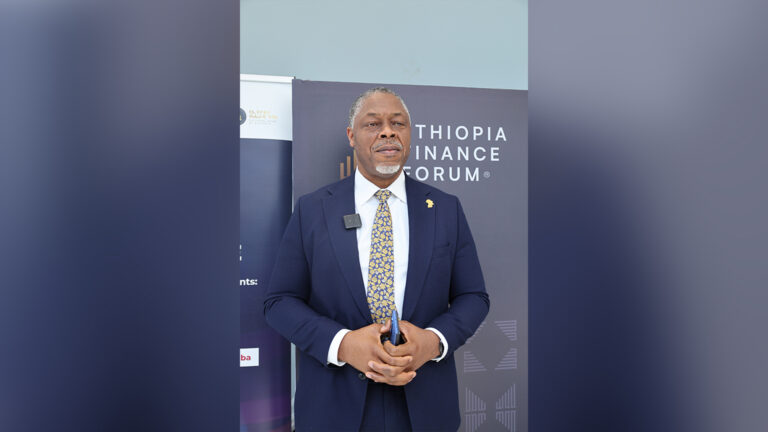
“If a payment touches another country outside this continent, it means that country can control who you pay, who you trade with and how you trade,” PAPSS Chief Executive Mike Ogbalu III told Capital.

PAPSS is designed to bypass those foreign payment corridors. The system allows participating financial institutions to clear and settle cross-border transactions using African currencies, while conducting compliance checks against international sanctions and anti-money-laundering requirements.

Payments are designed to be completed within 120 seconds, with PAPSS stating that its average settlement time is currently around seven seconds. The platform operates continuously, 24 hours a day and 365 days a year.

Ethiopia’s planned participation is significant because its digital-finance ecosystem is increasingly driven by mobile-money platforms rather than conventional bank accounts alone.

Over the past decade, non-bank mobile-wallet services have become a major channel for financial inclusion, enabling millions of people to send money, make purchases, pay bills and receive funds without visiting a bank branch.

Digital transactions in Ethiopia reached an estimated 33 trillion birr during the 2025/26 fiscal year, reflecting the rapid expansion of mobile-money platforms, commercial-bank applications and other digital-payment channels.

Ethio Telecom’s telebirr is the dominant mobile-money operator in the country, with more than 60 million subscribers. Safaricom Ethiopia’s M-Pesa has also expanded rapidly, adding another major competitor to the market.

Both platforms are connected through EthSwitch, Ethiopia’s national payment switch. EthSwitch provides the interoperability infrastructure that links banks, payment-service providers, merchants and other financial institutions across the domestic market.

Its role will be critical if Ethiopian mobile wallets are to connect efficiently with the PAPSS system.

Before integrating with PAPSS, non-bank mobile-wallet providers must receive a formal Letter of No Objection from the National Bank of Ethiopia.

The requirement is intended to ensure that cross-border digital payments comply with national monetary-policy objectives, foreign-exchange regulations, anti-money-laundering standards and financial-stability controls.

The central bank is also working with PAPSS on wider initiatives, including the PAPSS Instant Payment System and the PAPSS African Currency Marketplace. These mechanisms are intended to support faster settlement and currency conversion between participating African markets.

Industry executives told Capital that Ethiopian operators are considering several integration paths. These include direct technical connections with PAPSS, coordination through EthSwitch and partnerships with commercial banks that can provide cross-border clearing and settlement services.

For Ethiopia’s micro, small and medium-sized enterprises, the integration could remove a major obstacle to continental trade.

Many local businesses are effectively restricted to the domestic market because collecting payments from other African countries can be costly and time-consuming. High bank charges, slow settlement, complex foreign-exchange procedures and limited payment links make it difficult for a small exporter or service provider to trade beyond Ethiopia.

Under the proposed arrangement, an artisan in Addis Ababa, a textile producer in Hawassa or a digital-service provider in Dire Dawa could invoice a customer in another African country, accept payment through a participating platform and receive the funds in Ethiopian birr.

“A payment initiated here in Addis Ababa reaches Lagos, Nigeria, in 120 seconds,” Ogbalu said.

PAPSS estimates that its system can reduce transaction costs by between 92% and 95%, cut settlement-processing time by 99.99% and reduce foreign-exchange requirements for commercial banks by as much as 80%.

Researchers urge stronger biosafety rules and independent oversight as Ethiopia prepares for GM crops

0

Ethiopian researchers and civil-society advocates are calling for stronger biosafety regulations and independent scientific oversight as the country moves toward commercial distribution of genetically modified food crops.

They argue that while biotechnology may offer potential benefits, including drought tolerance and pest resistance, Ethiopia’s regulatory framework requires stronger implementation, transparent risk assessment and broader public participation to protect biodiversity, public health, farmers’ rights and national food sovereignty.

Solomon Kebede, Executive Director of MELCA-Ethiopia—a civil-society organisation working on food systems, biodiversity and biosafety—said genetic modification should not be rejected automatically. However, he argued that the technology must be subject to more rigorous evaluation and meaningful safeguards.

“We are not absolute opponents of genetic modification,” Solomon told Capital. “But if it is to be implemented, it must have deep, participatory and robust safeguard and compensation frameworks.”

“The question is whether genetic modification creates negative impacts on human life, the environment, natural resources, social conditions, biodiversity and national sovereignty,” he added.

MELCA-Ethiopia has been involved in biosafety and biodiversity debates for years. The organisation has supported the registration of three of Ethiopia’s six UNESCO biosphere reserves—Sheka Forest, Majang and Anywaa—and has worked on biodiversity conservation and policy advocacy.

Ethiopia’s biosafety framework is based on the Cartagena Protocol on Biosafety, which the country signed in 2000 and ratified in 2003. Ethiopia’s original Biosafety Proclamation No. 655/2009 established the country’s basic regulatory framework for genetically modified organisms.

The law was amended through Proclamation No. 896/2015, which made it easier to regulate confined use, field trials and environmental release of modern biotechnology products while retaining biosafety requirements. The amendment also provided for the creation of a National Biosafety Advisory Committee.

Under the current arrangement, the Environmental Protection Authority is the national body responsible for biosafety matters. The National Biosafety Advisory Committee, established under Council of Ministers Regulation No. 411/2017, advises the government on biosafety issues.

Recent rules have also addressed new technologies, including genome-edited plants and stacked seed varieties. However, Solomon, who said he helped draft the Ethiopian Biosafety Administration Project and coordinated work during the preparation of the proclamation and technical guidelines, argued that implementation has not kept pace with the regulatory framework.

“The legal frameworks exist, but they are not properly implemented,” he said. “Emerging technologies face complex and risk-averse approval processes, while at the same time we lack the capacity to conduct truly independent risk assessments.”

The debate has intensified following Ethiopia’s approval of TELA maize, a genetically engineered maize variety designed to withstand drought and resist major insect pests.

In February 2025, Ethiopia’s National Variety Release Committee approved the commercial release of three TELA maize hybrids for food and feed use. The varieties were developed under a public-private partnership involving the African Agricultural Technology Foundation, Bayer, the Ethiopian Institute of Agricultural Research and other partners.

The approved maize uses stacked genetic traits. MON 87460 is intended to improve drought tolerance through enhanced water-use efficiency, while Bt traits are designed to protect the crop against stem borers and fall armyworm. Sources differ on the specific Bt event identified in the approved lines, with reports referring to MON 810 and MON 89034.

TELA project partners say the technology is licensed royalty-free for participating countries. The project states that local seed companies will be able to produce and sell the hybrids at prevailing market prices without an additional technology royalty being charged to farmers.

However, critics remain concerned about farmers’ long-term dependence on commercial seed systems. Solomon said Ethiopia must closely examine what GM maize could replace and whether its adoption could affect farmers’ ability to save, exchange and replant seed.

“Maize has been a centuries-old strategic food-security crop in Ethiopia,” he said. “When we introduce transgenic maize, what will it replace? Farmers must buy seed every year, and these seeds may require chemical inputs. This can make food security dependent on external sources.”

Reports on the commercial rollout indicate that farmers using the GM variety will need to buy new seed each planting season rather than replanting harvested seed.

Critics are also concerned that patented biotechnology could eventually affect other strategic Ethiopian crops.

A semi-dwarf teff variety developed using CRISPR-Cas9 technology has been researched as a possible solution to lodging, a problem in which plants fall over before harvest. Lodging is estimated to cause significant yield losses in teff production.

Solomon said similar concerns apply to coffee, Ethiopia’s leading export commodity and a major source of foreign currency. Research into biotechnology approaches for resistance to Coffee Berry Disease has raised questions among critics about how intellectual-property rights could affect national control over key crops.

“Look at coffee,” Solomon said. “If we genetically modify our coffee—the backbone of the Ethiopian economy and our primary export market—it could fall under patent control. Imagine the macroeconomic impact of that.”

He also warned against framing food security solely in terms of producing larger quantities of a few staple crops.

“We have a concept of nutritional security that requires consuming diverse foods,” he said. “Replacing our diverse crops—teff, potatoes and vegetables—with a few improved staple crops could affect food diversity.”

Critics argue that Ethiopia’s traditional food systems, based on diverse grains, pulses, vegetables and local seed varieties, provide nutritional value, cultural continuity and resilience against climate shocks. They caution that a narrow focus on maize and wheat production could weaken this diversity.

A legal dispute has emerged over which government institution should regulate biosafety issues. Civil-society organisations have raised concerns about the proposed Plant Protection and Quarantine Bill, which they say could shift certain responsibilities relating to the importation of genetically modified materials and environmental risks associated with exotic species.

Environmental authorities have reportedly warned that reassigning responsibilities to the Ethiopian Agriculture Authority could create legal inconsistencies with Ethiopia’s existing biosafety framework and commitments under the Cartagena Protocol.

MELCA-Ethiopia and other advocates argue that the country should invest more heavily in agroecology, public research and locally developed technologies. They support farming systems that prioritise organic fertilisers, biodiversity conservation, community-led governance and farmers’ rights to use and adapt seed.

“For a long time, we have argued that agroecology and respect for natural ecosystems must be given priority,” Solomon said.

“Our research institutions, extension systems and universities are mostly skewed toward Western science models,” he added. “But a true food system is much broader than production and productivity. It includes the economy, culture, livelihoods, income, health and the macroeconomy.”

Solomon called for greater investment in public technologies developed by Ethiopian universities and research institutions, particularly those that do not bind farmers to foreign patents.

“We must secure our seed sovereignty and nutritional sovereignty ourselves,” he said. “When introducing these systems, we must ask: Does this violate farmers’ rights? Does it affect access and benefit-sharing? Have we destroyed our macroeconomic foundation?”

Two foreign banks apply to enter Ethiopia through greenfield investments

0

The National Bank of Ethiopia (NBE) has confirmed that two foreign banking institutions have formally applied to enter the domestic market through greenfield investments, establishing new operations from the ground up rather than acquiring stakes in existing local banks.

The development is the first clear indication that Ethiopia is beginning to dismantle its five-decade-long restriction on foreign participation in commercial banking.

“Currently, there are two foreign bank applicants whose applications are being processed by the central bank,” said Frezer Ayalew, Director of the Supervision Directorate at the National Bank of Ethiopia.

He said the institutions had chosen the greenfield route, seeking to establish new, fully foreign-owned banking operations in Ethiopia.

Ethiopia’s banking sector had been closed to foreign commercial banks since 1975, when the Derg military regime nationalised the country’s banks following the 1974 revolution. After the fall of the Derg in 1991, Ethiopia authorised private domestic banks in 1994, but the sector remained reserved for Ethiopian citizens. Foreign financial institutions were barred from operating in the country or holding shares in local banks.

That restriction began to loosen with the National Payment System Proclamation issued in 2023, which opened digital-payment services to foreign investment. Safaricom M-Pesa subsequently became the first foreign investor to enter Ethiopia’s mobile financial-services market.

The more significant shift came in December 2024, when Parliament ratified the Banking Business Proclamation No. 1360/2024, ending the nearly 50-year ban on foreign participation in the banking sector.

The law, which took effect in March 2025, allows foreign banks to enter Ethiopia through three main routes: establishing wholly or partially owned subsidiaries, opening branches, or acquiring shares in existing local banks. A fourth option allows foreign banks to open representative offices for liaison, marketing and market research purposes, although such offices are not permitted to conduct core banking transactions.

Although the regulatory framework became operational by June 2025, supported by NBE directives on licensing, renewal requirements and representative offices, no foreign commercial bank had begun operations in Ethiopia as of September 2026.

Frezer said the opening of the financial sector was not merely a regulatory change but a key part of Ethiopia’s broader economic transformation agenda.

“The primary objective of opening Ethiopia’s financial sector to foreign investment and integrating it with the rest of the financial system is to help our financial sector accelerate its transformation and be in a better position to support and contribute to the country’s economic development,” he said.

The central bank has said it is seeking strategic foreign investors with long-term commitments, capital strength and technical expertise, rather than short-term speculative interests.

To prepare the policy framework, the NBE studied the experience of emerging financial markets, including China, India and Vietnam. The regulator said the aim was to balance global best practices with the need to preserve domestic financial stability.

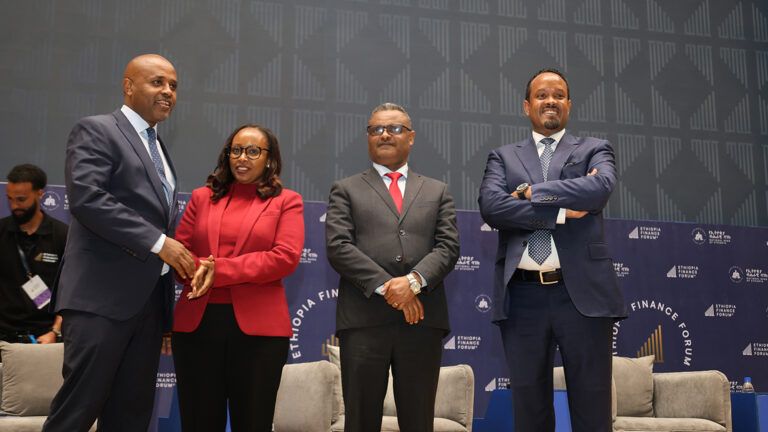
Speaking at the second Financial Sector Forum, held under the theme “Partnering for Growth: The Enabling Environment for Foreign Strategic Investors in Ethiopia’s Financial Sector and Host Country Expectations,” Frezer said international institutions were still conducting market research, risk assessments and internal due diligence before establishing a physical presence.

“When a foreign bank tries to go international and invest in foreign jurisdictions, they must do their homework,” he said. “They are doing the necessary market research, due diligence and so on. That movement is currently underway.”

In addition to the two greenfield applications under review, several international banks are reportedly conducting due diligence on potential equity partnerships with existing domestic financial institutions.

While foreign-bank entry is now legally permitted, the new regulatory framework imposes ownership limits intended to balance sector openness with the protection of domestic financial stability.

Under NBE directives, strategic foreign investors—including reputable international banks, state-owned banking entities and international development-finance institutions—may hold up to 40% of the subscribed capital of a local bank.

Foreign legal entities, such as companies, funds and institutions, are capped at 10%, while foreign individuals may hold between 7% and 10%, subject to NBE guidelines. Total foreign ownership in a single Ethiopian bank may not exceed 49%.

The ownership restrictions have generated debate among potential investors. Kenya’s KCB Group, for example, has indicated that an exemption from strategic-investor limits would make acquisitions more attractive, although any special treatment would require NBE approval under exceptional provisions of the proclamation.

The central bank retains the authority to allow a foreign bank to acquire a domestic bank fully in exceptional circumstances. Such approval may be considered where the target institution is financially sound and reputable, or where an acquisition would help resolve a troubled bank and safeguard financial stability.

Foreign banks establishing subsidiaries or branches must meet a minimum capital requirement of 5 billion birr, fully paid in acceptable foreign currency.

Foreign-owned branches are also subject to governance requirements. Their boards must have at least nine members, with at least one-third of the directors being non-executive Ethiopian citizens.

Frezer said the central bank had developed clear and accessible legal frameworks through consultation with stakeholders. To reinforce policy predictability, the NBE is finalising a comprehensive financial-sector roadmap covering the next five to 10 years.

The regulator has also pledged to ensure fair competition as new entrants arrive. According to the NBE, market leadership should be earned through innovation, service quality, efficiency and sound financial management—not through regulatory favour or market distortion.

In a related development, Nigeria’s United Capital Plc became the first foreign institution to receive an investment-banking licence from the Ethiopian Capital Market Authority in June 2026. The move marked a milestone in the development of Ethiopia’s nascent capital market.

Although the two greenfield applications represent an important step toward foreign-bank entry, considerable work remains before the applicants can begin operations. The licensing process includes reviews of governance, capital adequacy, financial soundness, regulatory compliance and the strategic value each institution would bring to Ethiopia’s financial system.

Frezer declined to provide details on the applicants or indicate when they might receive licences and start operations in Ethiopia.

NCBA target Ethiopia as next major regional expansion markt

0

NCBA Group PLC—a major East African financial services conglomerate, setting its sights on the Ethiopia and Democratic Republic of Congo (DRC) and as its next major frontier markets. This strategic pivot follows the successful completion of a landmark acquisition transaction with South Africa’s Nedbank Group, a deal that positions the Kenyan lender for broader cross-border expansion.

NCBA Group Managing Director John Gachora revealed that the bank is actively evaluating opportunities within the two high-potential markets. Rather than opting to build new operations from scratch, the lender intends to pursue acquisitions as its preferred mode of entry.

“We see ourselves in Ethiopia in a very short time. So we are actually looking for opportunities in those countries,” Gachora stated, emphasizing that the modern banking landscape favors established networks over greenfield ventures. “I do not believe at this point, given where banking is, that green fields work. So if we are actually going to those markets, you can be sure that we still pay for acquisitions.”

The expansion strategy is heavily catalyzed by Nedbank’s agreement to acquire approximately 66 percent of the Kenyan lender in a high-value transaction worth roughly $850 million (Sh110 billion). The deal structure comprises 20 percent in cash and 80 percent in new Nedbank shares. Following approvals from the Central Bank of Kenya in August and other key regional regulators, the transaction paves the way for NCBA to operate as a Nedbank subsidiary while keeping its established brand, executive management, and Nairobi headquarters intact.

This capital injection and expanded capability arrive at an opportune moment as NCBA seeks to capitalize on surging intra-African investment and broader financial-sector consolidation. Currently, NCBA maintains operations in Kenya, Uganda, Tanzania, and Rwanda, alongside digital banking ventures in Ivory Coast and Ghana.

Gachora noted that the broader banking sector must actively address the continent’s structural challenges, pointing out that Africa’s primary hurdle lies in effective financial intermediation rather than a general lack of capital. He highlighted that more than $700 billion in annual financing demand across critical sectors—including infrastructure, climate finance, trade finance, and Micro, Small, and Medium Enterprises (MSMEs)—remains unmet.