Thursday, October 1, 2026
Home Blog Page 253

Ayat SC shareholders express grievances over dividend delay; company cites capital market registration

0

Shareholders of Ayat Share Company, one of Ethiopia’s leading institutions in the real estate and investment sector, are expressing frustration over a delay in annual dividend payments.

Despite reporting significant profits and announcing dividend distributions following the presentation of its 2025/26 budget year report nearly five months ago, no funds have been deposited into shareholders’ bank accounts as of March 2026, intensifying their discontent.

According to the complainants, the company traditionally distributed dividends within two weeks of holding its General Assembly in November.

However, they contend that this year, payments have been halted “without any sufficient reason.” Shareholders report experiencing various social and economic difficulties due to the delayed payments. The company, however, maintains that the delay is not a result of financial incapacity but rather a technical process linked to the country’s new capital market system and its registration requirements.

Over the past few weeks, numerous shareholders have visited the company’s headquarters and utilized various communication channels to demand their payments.

One anonymous complainant stated: “We bought shares thinking they would help us during difficult times. Now, even though a profit was reported and the General Assembly made a decision, we are left pleading for our payments. No one is giving us clear information on the delay. They say the company is growing, but our quality of life is diminishing daily.”

Another shareholder criticized the company’s silence, noting: “We voted at the General Assembly to take our profits a long time ago. But when we go to the office, we are told to ‘come back tomorrow’ or ‘come back in a week.’ A large institution like this should not lose the trust of the people.”

Responding to these grievances, Seid Yimer, Director of Finance and Investment at Ayat, explained to Capital Newspaper that the delay occurred because the share company is preparing to enter the capital market. According to the director, under the new law, any share company must be registered with the Capital Market Authority to conduct share sales or transfers.

Seid further explained that Ayat Share Company has signed a consultancy agreement with Wegagen Capital Investment Bank to assist with this registration and has been preparing a prospectus document. “This prospectus preparation has taken a long time. However, the final document has now been completed and addressed,” he said.

The company clarified that the primary reason for withholding the payments is the mandatory approval from the Capital Market Authority, which is required to issue receipts for shareholders who wish to capitalize (reinvest) their dividends.

The director recalled that during the Annual General Meeting (AGM), 62% of shareholders voted to reinvest their full profits, 21% chose partial reinvestment, and the remaining 17% opted for a cash payment.

Seid explained that the company had to await the Capital Market Authority’s response to reconcile shareholder interests and issue receipts for reinvested dividends. With the Authority’s recent approval, stating, “You may pay those who wish to withdraw,” the distribution process has officially begun. “In a single day alone, we paid out over 10 million Birr to shareholders; payments are now ongoing,” he stated, encouraging shareholders to collect their dividends.

The company’s recent reports indicate significant growth in paid-up capital. It increased from 2.5 billion Birr in 2015 (approximately 2007/8 E.C.) to 4.2 billion Birr by 2025, and has reportedly risen further to 6.49 billion Birr in 2026. Profit margins have shown similar upward trends; Seid highlighted that annual profits, previously around 800 million Birr, have now neared 2 billion Birr.

Ayat Share Company’s operations extend beyond real estate into various other industries. In hospitality, it owns Addis Ababa’s historic Ras Hotel and the Star Hotels in Lalibela.

 Furthermore, the company vertically integrates its construction operations by owning five concrete batching plants, wood and marble factories for producing its own inputs, and some of the country’s largest stone crushing (gravel production) plants.

The director also announced plans to offer an initial 1 billion Birr worth of shares through the capital market, noting that the number of shareholders has grown to approximately 14,000.

He reassured shareholders that despite minor auditing delays, all matters are now finalized, and dividends are actively being distributed.
Fuel subsidy surges to 272 billion birr, exceeding budget cap by 172%

0

The Ethiopian government has dramatically exceeded its planned fuel subsidy for the 2025/26 budget year, spending 272 billion birr instead of the targeted 100 billion birr. This overspending raises concerns that escalating tensions in the Persian Gulf may jeopardize the country’s broader macroeconomic reform agenda.

The 172 percent overrun was revealed by Kassahun Gofe, Minister of Trade and Regional Integration (MoTRI), in a recent social media post. This situation highlights the increasing pressure on public finances, just months into a four-year reform program supported by international partners.

Under the reform framework initiated in the previous budget year, the government had committed to gradually reducing fuel subsidies as part of efforts to modernize public spending and shift towards a fully market-driven economy.

For the 2025/26 fiscal year, which ends on July 7, 2026, the subsidy was capped at 0.6 percent of gross domestic product (GDP), equivalent to a maximum of 100 billion birr.

However, actual subsidy payments have significantly exceeded this limit. According to the Ministry of Finance (MoF), the 0.6 percent allocation was intended to provide temporary liquidity support to the Ethiopian Petroleum Supply Enterprise (EPSE) and alleviate short-term cash flow issues during the transition to full cost-recovery fuel pricing and the reinstatement of statutory fuel taxes.

Under this arrangement, the MoF transfers funds monthly to EPSE to cover cash shortfalls related to foreign exchange liabilities.

In a document published by international partners in late January, the MoF noted that favorable global oil prices had allowed EPSE to reduce its fuel import-related credit liabilities, shorten the average maturity of outstanding letters of credit, and build liquidity buffers. However, that positive outlook has since changed.

The macroeconomic reform, launched in July 2024, aimed to eliminate real exchange rate overvaluation through foreign exchange liberalization. This initiative lifted implicit taxes on exporters—who were previously required to surrender foreign currency at below-market rates—along with implicit subsidies on fuel and fertilizers imported at the official rate.

As part of this overhaul, fuel subsidies were integrated into the federal budget. Fuel taxes totaling 0.8 percent of GDP, previously managed by EPSE and the Road Fund, are now directed to the central budget. The 2025/26 budget includes a temporary fuel subsidy of 0.5 percent of GDP and a permanent Road Fund allocation of 0.1 percent of GDP.

Experts now caution that the government may need to allocate additional budget resources to address unexpected price increases for petroleum products, driven by escalating conflict near the Strait of Hormuz—a crucial transit route for global oil shipments and a key source of Ethiopia’s imports.

Earlier this week, MoTRI confirmed that approximately 180,000 metric tons of petroleum products destined for Ethiopia have been halted due to the conflict in the Gulf.

Ethiopia primarily imports fuel from Kuwait under a special settlement arrangement. However, analysts warn that this disruption may force the government to turn to more expensive spot-market supplies, which could require upfront payments for this critical commodity.

Experts familiar with the reform process noted, “The change in payment method, combined with the price hike, would place an additional burden on the country’s foreign currency position.”

They suggested that this situation might prompt policymakers to reconsider foreign currency sourcing options previously abandoned at the start of economic reforms.

Additionally, experts indicated that the National Bank of Ethiopia (NBE) may suspend its biweekly foreign exchange auction, a mechanism designed to provide dollars to commercial banks and stabilize the market.

“The NBE has not published a forex auction schedule for the fourth quarter of the budget year. An auction was supposed to be held this week, but it did not take place,” they pointed out.

These latest challenges draw parallels with previous disruptions to Ethiopia’s reform trajectory. The original reform program, launched at the end of 2019, was derailed first by the COVID-19 pandemic and later by the conflict in northern Ethiopia.

The government had anticipated that the current phase of reform would succeed by mid-2028, laying the groundwork for a modernized Ethiopian economy.

At the time of publication, efforts to obtain comments from Minister of Finance Ahmed Shide and Minister Kassahun Gofe were unsuccessful.

Three tankers unload in Djibouti, but IMF warns the Horn of Africa remains vulnerable to Gulf Turmoil

0

The International Monetary Fund (IMF) has issued a warning that Eastern African economies remain at significant risk due to their ties to the Gulf, even as three vessels carrying 143,000 metric tons of jet fuel and gasoil have recently docked in Djibouti.

In its analysis released earlier this week, the IMF highlighted that nations in the Horn of Africa—Ethiopia included—are grappling with diminished demand for service exports, logistical challenges, and declining remittances, all stemming from their reliance on trade with Gulf countries.

The IMF also pointed out that ongoing conflicts could impact the global economy in multiple ways, leading to increased prices and slower growth.

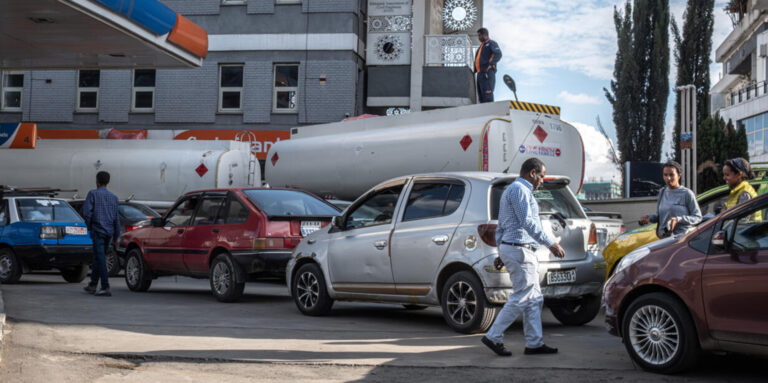
Ethiopia is currently facing noticeable oil shortages, with reports indicating a significant decrease in truck movements due to the fuel crisis. Sources informed Capital that the lack of diesel fuel, essential for transporting perishable goods, poses a more severe threat to the economy than the shortage of gasoline. This situation is resulting in the spoilage of fruits and vegetables and financial losses for suppliers and farmers.

“The nationwide cargo transportation system is on the brink of collapse,” remarked one observer. Trucks are stranded across the country waiting for refueling, hindering the movement of agricultural products from rural areas and manufactured goods from urban centers. “This is inflicting financial damage on the economy,” said an exporter with three decades of experience in import and export services.

The upcoming weeks coincide with a major holiday season, typically characterized by heavy cargo transport and significant passenger movement for Easter festivities. Experts warn that the current fuel crisis will lead to shortages of goods and subsequent price increases.

Transporting essential commodities, such as agricultural inputs for farmers, will also prove challenging, despite the government’s potential procurement efforts via the electric railway system at high costs. This presents a complex challenge for Ethiopia, arising from events occurring thousands of kilometers away.

The export sector is similarly impacted, as agricultural products must be moved from rural areas to processing plants and then to cargo hubs at railway stations.

In its latest analysis published on March 30, the IMF noted that disruptions to fertilizer shipments—one-third of which pass through the Strait of Hormuz—are raising concerns about rising food prices.

“We understand that the railway operator, Ethio Djibouti Railway, can manage containerized cargo at processing sites and transport it to the railway station. But how can it handle truck transport when the fuel shortage is crippling that activity?” an exporter questioned.

He further noted that freight costs are expected to rise due to increased vessel costs from higher fuel prices and war risk insurance premiums, which will ultimately affect foreign currency earnings.

Experts indicate that similar constraints apply to inbound cargo operations.

Meanwhile, transport services provided by some civil servants and public enterprises have ceased operations. The government has issued frequent directives and potential solutions aimed at promoting fuel efficiency.

Experts warn that if conditions do not improve in the Strait of Hormuz, the consequences for the region will only worsen.

The IMF has reported that energy-importing economies in Africa, the Middle East, and Latin America are struggling with increased import bills, compounded by already limited fiscal space and external buffers.

Additionally, regions in the Middle East, Africa, Asia-Pacific, and Latin America are facing further challenges due to rising food and fertilizer prices, along with tighter financial conditions.

Traders have commended the government’s initiatives to diversify fuel imports, expressing optimism that it will source fuel from non-traditional suppliers. Historically, Ethiopia’s primary oil supply route has been through Hormuz.

Between March 28 and April 1, three vessels arrived in Djibouti from various ports in the region and India, delivering a total of 73,000 metric tons of gasoil and 70,000 metric tons of jet fuel.

Sources in Djibouti informed Capital that the ship AL BETROLEYA docked on March 28, carrying 31,544 metric tons of diesel and 17,991 metric tons of jet fuel from Sikka Port in Gujarat, India.

On March 30, a tanker named Brave arrived in Djibouti with 52,000 metric tons of jet fuel from the Port of Duqm in Oman.

On March 31, the vessel Andiamo reached Djibouti from Jeddah, Saudi Arabia, delivering 41,734 metric tons of gasoil.

Experts believe that Ethiopian Airlines, a major source of hard currency for the country, should be able to maintain its international flights without disruption. “The recent influx of jet fuel from diverse sources is encouraging for the airline’s operational continuity,” they noted.

Sources indicate that the government is actively working to secure oil supplies, particularly diesel and jet fuel, from various channels.

The IMF warns that low-income countries are especially vulnerable to food insecurity and may require increased external support, despite a decline in available assistance.

The IMF forecasts that a brief conflict could result in a spike in oil and gas prices before markets stabilize, while a prolonged conflict could keep energy prices high, straining import-dependent countries. “Alternatively, the situation may settle in a middle ground—ongoing tensions, persistent high energy costs, and persistent inflation amid geopolitical uncertainties.”

Furthermore, the IMF highlighted that the conflict is altering supply chains for non-energy and critical inputs, as rerouting tankers and container ships increases freight and insurance costs and extends delivery times.

Gov’t raises fuel prices by 16.6% as subsidy burden reaches 272 billion birr

0


Ethiopia has implemented a fresh round of fuel price increases, citing mounting fiscal pressure from global oil market disruptions and a rapidly growing subsidy burden.

The Ministry of Trade and Regional Integration announced that, effective April 1, 2026, the price of white diesel has risen by 16.6%, marking the second major adjustment within a single month. Diesel, a critical input for transport, agriculture, and construction, now sells at 163.09 birr per liter, up from 139.84 birr.

Despite the upward revision, government officials say the state continues to absorb significant costs to shield consumers from the full impact of international prices. The total fuel subsidy has now reached nearly 272 billion birr.

“Even with the current adjustments, domestic fuel prices remain well below actual market levels,” officials said, attributing the pressure to escalating global oil prices driven by geopolitical tensions.

The latest increase follows a series of price revisions in March, making it the sharpest monthly fuel price surge recorded in Ethiopia. Heavy black diesel prices climbed by 20.4% to 160.68 birr per liter, while gasoline rose by 7.7% to 142.41 birr.

In a bid to protect households and essential public services, the government has introduced differentiated pricing. Large commercial fuel users will now pay 210 birr per liter for white diesel.

Minister of Trade and Regional Integration Kassahun Gofe said the adjustments were driven primarily by disruptions in global supply chains linked to conflict in the Middle East. The closure of the Strait of Hormuz — a key transit route for roughly 20% of global oil supply — has significantly constrained fuel availability.

The Minister disclosed that shipments destined for Ethiopia, including 120,000 metric tons of diesel and 60,000 metric tons of jet fuel, are currently stranded in the Arabian Gulf.

As a result, the government has been forced to turn to the spot market, where procurement costs have surged dramatically. The premium per barrel, previously $9.25 under long-term contracts, has jumped to as high as $92.88 for emergency purchases.

Kassahun noted that the government is still subsidizing fuel heavily, covering about 71 birr per liter of diesel and 32 birr for gasoline. Without these subsidies, diesel prices could reach as high as 234.17 birr per liter.

However, with subsidy costs exceeding 272 billion birr, authorities say maintaining the previous pricing structure is no longer sustainable.

To mitigate supply disruptions, a national task force has been established to oversee fuel distribution. Priority allocation has been given to key sectors, including logistics and freight transport, public transportation, essential services such as healthcare and utilities, mechanized agriculture, export industries, and major public institutions.

Analysts warn that rising diesel costs are likely to have a ripple effect across the economy, increasing transportation expenses and putting upward pressure on food and consumer prices.