Thursday, October 1, 2026
Home Blog Page 254

Ethiopia, China ink deal for RMB trade settlements

0

To strengthen Ethiopia’s financial resilience and further enhance economic ties with China—the country’s leading trade partner—the National Bank of Ethiopia (NBE) has unveiled a new initiative aimed at significantly increasing its foreign exchange reserves of the Chinese Yuan (RMB).

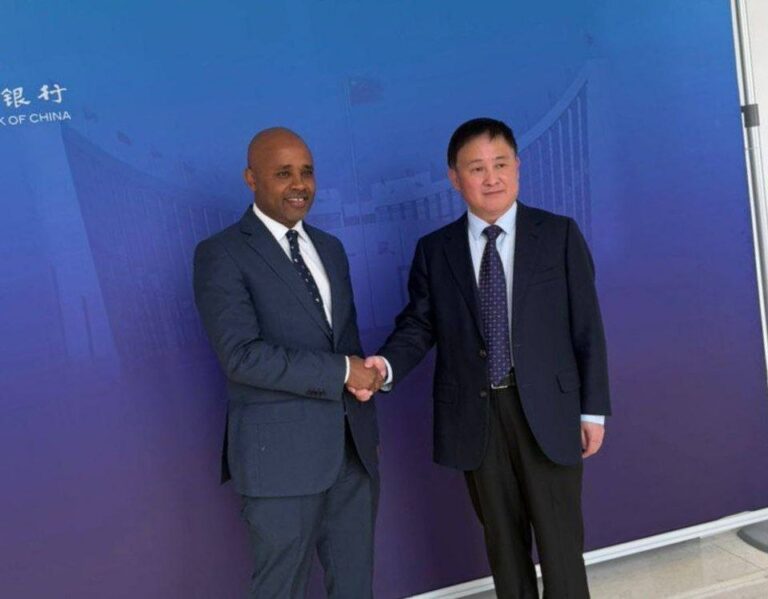
This announcement was made at the conclusion of a high-level bilateral meeting between the Governor of the National Bank of Ethiopia, Eyob Tekalign, and the Governor of the People’s Bank of China (PBOC), Pan Gongsheng.

During the discussion, Governor Eyob Tekalign provided detailed information regarding Ethiopia’s ongoing debt restructuring process under the G20 Common Framework.

The Governor added that the country’s Gross Domestic Product (GDP) growth prospects are promising and highlighted the successes achieved in rebuilding foreign exchange reserves.

He specifically explained to his Chinese counterpart that the measures taken by the government to control inflation are yielding results.

Both parties expressed a strong interest in establishing bilateral currency swap lines and trade finance facilities to streamline commercial activities.

Governor Eyob noted that Ethiopia has a significant opportunity to increase its Renminbi (RMB) reserves by utilizing revenue generated from Ethiopian Airlines and other key export sectors.

It is believed that transitioning to a Renminbi-based trade settlement system will not only create a more favorable environment for Chinese companies operating in Ethiopia but also contribute significantly to the flow of new Foreign Direct Investment (FDI) into the country.

The governors of the two central banks discussed extensively the modernization of cross-border money transfers by integrating the countries’ payment infrastructures.

Pan Gongsheng expressed readiness to support Ethiopian financial institutions in participating in China’s Cross-Border Interbank Payment System (CIPS) and to expand China UnionPay services in Ethiopia.

This is expected to greatly simplify retail and commercial payments between the two nations.

​NEBE Warns of Election Cancellations Over Voter Registration Coercion

0

The National Election Board of Ethiopia (NEBE) has issued a strong warning regarding legal violations observed during the 7th general election voter registration process, stating it may cancel elections in specific constituencies where undue pressure is reported.

The Board noted that while it is working to ensure a free, fair, and credible election, it has received reports of activities that contravene electoral laws and infringe upon citizens’ rights.

These violations include unauthorized door-to-door registration campaigns and pressuring citizens to register against their will by linking the process to unrelated social and administrative services.

The Board explicitly condemned reports indicating that some authorities and employers are threatening citizens with salary deductions, termination of employment, or the denial of social services if they fail to obtain a voter registration card.

In a formal written notice sent to all regional governments and the two city administrations, the NEBE directed executive bodies to cease door-to-door solicitations and end any coercive measures immediately.

The Board emphasized that voter registration is a constitutional right, not a mandatory obligation, and that no entity has the legal authority to force residents or employees to participate in the registration process.

Monitoring the situation closely, the NEBE announced that it will publicly expose institutions and individuals found to be exerting such pressure. Furthermore, the Board warned that if corrective measures are not taken, it will be forced to identify specific polling stations and constituencies where undue influence persists and may take the ultimate step of cancelling the election in those areas.

Bank of China, AfDB review financing framework for Bishoftu Airport

0

The Ethiopian Airlines Group and the Ministry of Finance have held high-level talks with the Bank of China over financing for the planned Bishoftu International Airport, a $12.5 billion project expected to become Africa’s largest aviation hub.


The April 1, 2026 meeting comes as Ethiopia steps up efforts to secure funding for the mega-project, while the African Development Bank (AfDB) continues to lead the financing structure as mandated lead arranger. Officials say the talks are aimed at building a stronger and more sustainable financial package for the airport’s construction.


During the discussions, the Ethiopian delegation briefed Bank of China executives on the project’s technical readiness and its broader economic case. They said the airport is being structured not just as a transport facility, but as an “Airport City” that will include hotels, shopping malls and a high-speed railway link to Addis Ababa

Ethiopia also stressed its efforts to reduce the debt risks that often accompany large infrastructure projects by improving the project’s bankability and long-term financial sustainability.


The Bank of China said it has a strong interest in the project, citing its global experience in airport investments and the strategic value of high-impact infrastructure in Africa. The lender also confirmed that it is holding joint consultations with the African Development Bank, opening the door to closer coordination on loan terms and financing options.


The AfDB has already committed $500 million to the project and is working to mobilize up to $8 billion, making the participation of the Bank of China potentially critical to closing the financing gap.


Ethiopian Airlines Group Chief Executive Officer Mesfin Tasew told Capital Newspaper that Bole International Airport, which currently handles about 25 million passengers, is nearing capacity. He said the first phase of the Bishoftu project, targeted for completion in 2030, will accommodate 60 million passengers a year, with total capacity expected to reach 110 million when fully completed.


Both sides agreed to continue technical and financial consultations in the coming period as Ethiopia pushes ahead with one of its most ambitious infrastructure projects to date.


If the partnership is finalized, the Bishoftu airport could become a major model for financing and delivering large-scale infrastructure in developing countries.

Container Shortage Reported Due to Maritime Transport Disruptions

0

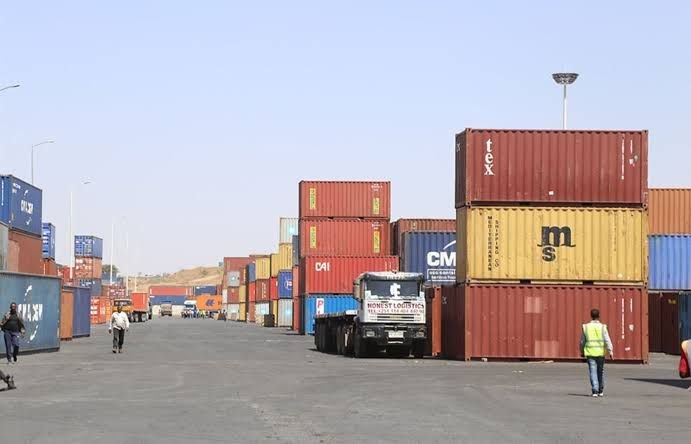
The Ethiopian Maritime Authority (EMA) has announced a shortage in the supply of empty containers for Ethiopia’s export products, citing disruptions in maritime transport caused by the security crisis in the Middle East.

In an official letter sent to the Ethiopian Customs Commission, the Authority indicated that container supplies have become inconsistent because several shipping lines harbor safety concerns regarding voyages to Djibouti.

Yalew Tesfaye, The Authority’s Lead Executive Officer for Logistics Administration, stated in the letter “Due to security risks faced by shipping companies, the number of vessels arriving at Djibouti has decreased, leading to a shortage of the empty containers exporters need to pack and ship their goods.”

It was noted that this problem has emerged specifically during a peak period for coffee exports, which could negatively impact the country’s foreign exchange earnings.

Since this is a season where high volumes of coffee are supplied to the global market and buyer demand is at its peak, the Authority emphasized that the concerted effort of all stakeholders is essential to meet the set export targets.

To address this challenge, a call has been made for the rapid release and distribution of empty containers currently held at domestic dry ports to exporters.

Currently, there are a total of 2,005 twenty-foot and 2,471
forty-foot containers holding import cargo at the Modjo and Kaliti dry ports; importers are expected to clear their goods quickly and return these containers.

The Ethiopian Customs Commission has been requested to provide the necessary monitoring and support to ensure these containers are urgently unstuffed and made available for the export trade.

Furthermore, in accordance with prior directives from the Ministry of Transport and Logistics, a reminder was issued to strengthen controls ensuring that containers entering the country are not returned empty to Djibouti without the explicit verification of shipping agents.

The Authority concluded that to ensure the sustainability of the export sector and protect the country’s economic interests, all relevant parties must work in coordination to resolve the current container shortage.