Thursday, October 1, 2026
Home Blog Page 255

Ethiopia’s MPC Holds Off on Lifting Credit Cap, Citing Global Uncertainty

0

The Monetary Policy Committee (MPC) of the National Bank of Ethiopia (NBE) concluded its latest meeting on Tuesday without issuing a concrete decision on the much-anticipated lifting of the credit cap, opting instead to maintain current policy settings amid rising global economic uncertainty.
In a statement released following the March 31 session, the MPC indicated that it would convene for an extraordinary meeting in less than a month to reassess the situation, driven largely by geopolitical tensions in West Asia.


The committee noted that sustaining the single-digit inflation recorded since December 2025 still requires a continued tight monetary policy stance. It reaffirmed its commitment to using all available instruments to maintain price stability, deciding to keep both the policy rate and the annual credit growth caps unchanged.


However, the MPC highlighted growing concerns over heightened global economic uncertainty fueled by the conflict in the Middle East and its potential spillover effects on the domestic economy. In response, the committee emphasized the need for more frequent reviews of key macroeconomic developments.


The committee agreed to reconvene by late April, or earlier if circumstances warrant, to evaluate whether additional policy measures are required.


Citing the International Monetary Fund’s January 2026 outlook, the MPC noted that global growth was projected at around 3.3 percent for 2026 and 3.2 percent for 2027. But it warned that this outlook is now subject to significant downside risks following a sharp oil price shock tied to escalating Middle East tensions.


“The sharp rise in energy prices is expected to dampen global growth by raising production costs, eroding real incomes, and tightening financial conditions, particularly in oil-importing economies,” the statement read. While baseline projections remain broadly intact, the committee noted that the balance of risks has shifted to the downside, with the severity of the impact depending on the duration and intensity of the conflict and the persistence of high oil prices.
On the domestic front, the MPC underscored that Ethiopia’s external position has shown resilience since the comprehensive economic reforms launched in July 2024. The country’s balance of payments registered a surplus during the first eight months of the 2025/26 fiscal year, driven by significant improvements in exports—particularly coffee and gold—along with growth in private transfers, net service trade, and capital account inflows.

Over 180,000 Metric Tons of Fuel Failed to Arrive Due to Conflict

0

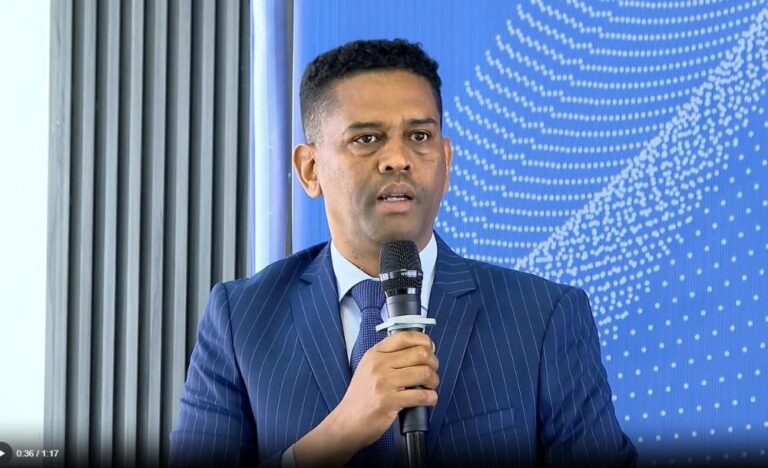
Minister of Trade and Regional Integration (MoTRI) , Kassahun Gofe announced that over 180,000 metric tons of fuel, which Ethiopia intended to import, has failed to reach the country due to the war and instability in the Middle East.

The Minister disclosed this during a briefing regarding new government decisions aimed at mitigating the impact of the ongoing international crisis.

According to Kassahun, Ethiopia’s long-term fuel procurement contracts with Middle Eastern suppliers have been disrupted by the conflict.

As suppliers officially notified the government of their inability to deliver the product, the 180,000 metric tons of fuel currently in the procurement process could not enter the country.

This disruption has placed significant pressure on the domestic fuel supply, specifically causing the daily supply of diesel to drop from 9.2 million liters to 4.5 million liters.

Regarding the impact of the war on global fuel prices, the Minister explained that the price of a barrel of diesel has skyrocketed from $80 before the war to $230 today, while gasoline surged from $70 to $150. Despite these prices tripling on the global market, he noted that the government continues to provide substantial subsidies to protect citizens’ livelihoods.

Currently, the government is subsidizing 95 Birr per liter for diesel and 42 Birr per liter for gasoline. To date, the government has spent approximately 262 billion Birr on fuel subsidies, with a monthly allocation ranging from 15 to 20 billion Birr.

To manage the current supply shortage fairly, a priority allocation system has been implemented effective on today March 31,2026.

Under this directive, priority for fuel supply will be given to fuel-transporting tankers, export-oriented organizations, special national projects, vehicles transporting basic consumer goods, tractors for modernized agriculture, and public transport services.

In terms of enforcement and public cooperation, the Minister revealed that 658 individuals, including officials, have been detained for illegal activities in the fuel trade, and over 720,000 liters of fuel have been seized and confiscated.

Ethiopia,China Reach Final Stage of Strategic Debt Restructuring Negotiations in Beijing

0

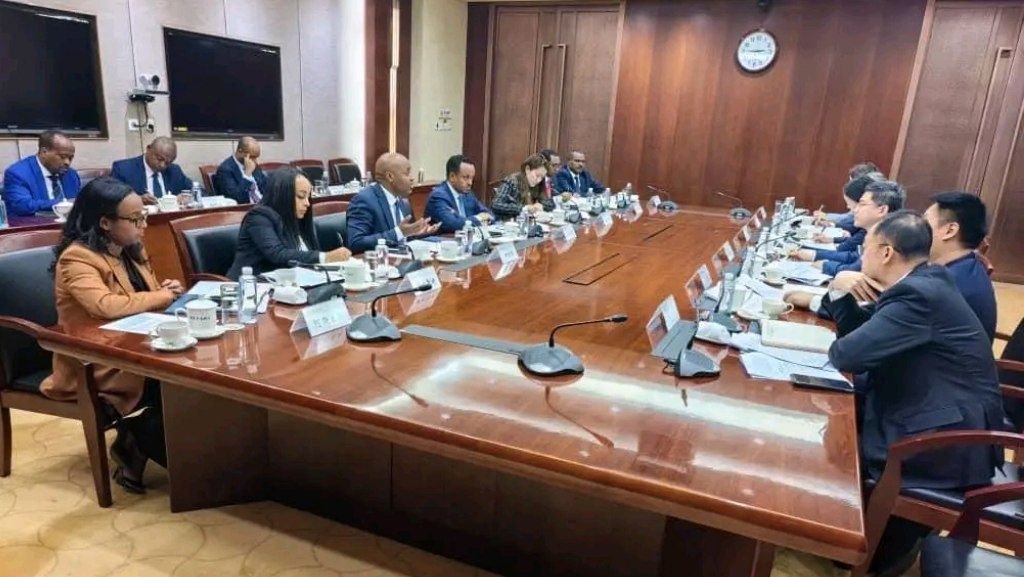
A high-level Ethiopian delegation, led by Finance Minister Ahmed Shide, has commenced strategic discussions in Beijing aimed at finalizing a debt restructuring agreement with Chinese financial institutions. This move is described as a critical milestone in Ethiopia’s journey toward ensuring long-term macroeconomic stability.

The delegation—which includes the Governor of the National Bank of Ethiopia, Eyob Tekalign, and senior officials from the Ministry of Finance and the Ethiopian Airlines Group—announced that it held productive discussions with the Export-Import (Exim) Bank of China, the Industrial and Commercial Bank of China (ICBC), and the China Development Bank (CDB).

Minister Ahmed Shide stated that both parties have reached the final phase of concluding the debt management process, noting that significant progress has been achieved.

“The successful completion of this process will create vital fiscal space, allowing the government to accelerate broader macroeconomic reforms and development initiatives focused on growth,” he remarked.
​The debt restructuring negotiations are being conducted under the G20 Common Framework, a mechanism established to help developing nations with high debt burdens reorganize their obligations.

It is recalled that on March 18, 2026, Minister Ahmed Shide held discussions in Addis Ababa with the Chinese Ambassador Chen Hai and a delegation from the China Exim Bank regarding mutual economic interests.

During that time, the Minister expressed his appreciation for China’s leadership as Co-Chair of the Official Creditor Committee (OCC) and for its constructive support.

As the process approaches its conclusion, he underscored the importance of maintaining momentum and called for China’s continued support in finalizing negotiations with commercial creditors.

The Beijing meetings come at a pivotal moment in Ethiopia’s debt restructuring journey. Following Ethiopia’s inability to meet a $1 billion Eurobond payment in December 2023, the country has been engaged in complex negotiations with bilateral and commercial creditors through the OCC, co-chaired by China and France under the G20 Common Framework.

In January 2026, Ethiopia reached an agreement in principle with bondholders, which intended to reduce the face value of the debt by 15% and exchange it for a new $850 million bond.

However, the OCC determined that the proposed terms did not fully meet the “Comparability of Treatment” principle, which requires commercial creditors to accept losses comparable to those of official bilateral creditors.

Following this assessment, Ethiopia reopened negotiations with commercial creditors.

According to the Committee’s secretariat, the improvement in Ethiopia’s macroeconomic outlook—particularly the higher-than-expected growth in gold and coffee export revenues—meant that including contingent debt instruments could create a significant disparity in benefits between bondholders and official creditors.

The Beijing negotiations began after significant milestones were achieved with other members of the OCC. On March 18, 2026, Ethiopia and Italy signed a bilateral debt restructuring agreement in Rome, which the Ministry of Finance described as a “major milestone for Ethiopia’s economic recovery.”

In February 2026, Ethiopia signed a similar agreement with France, marking the first bilateral debt restructuring agreement concluded under the G20 Common Framework. That deal included a new financing package of €81.5 million to bolster the development partnership between the two nations.