

KEFI Gold & Copper PLC, of the Tulu Kapi Gold Mine project opposes the decision of Ministry of Mines in the termination of its license. Takele Uma, Minister of Mines announced on Wednesday, June 15, that the Ministry has revoked 972 licenses of which the Tulu Kapi Gold mining project has fallen victim.
“The government is applying lots of pressure to proceed, and we can understand that, however, we have been a bit shocked to hear the news of the termination on media to which we had no knowledge about. We did not receive any notification whatsoever which is shocking and disappointing,” said Harry Anagnostaras, executive chairman of KEFI, indicating that KEFI applies conventional industry project finance structures for the development funding.
“These companies did not comply with the terms of their exploration and production licenses despite the repeated warnings given to them,” Takele said.
“KEFI is processing debt from Africa development banks, TDB and AFC, and is capable of demonstrating full funding plans and capacity whenever requested by the government,” said the chairman adding that, “We are spending a lot of money preparing the procurement, and with hard work and diligence too. I think we are the only company working like that especially in the current status of the country.
“So far we have invested 80 million dollars and have made a good discovery and established a world class plant,” said the chairman, adding, “We were prepping for the full project launch for each project as soon all conditions were met in terms of the security situation in the country as it improves. We were planning to start construction in the dry season around October.”
Authorities from the ministry argued that the main issue with KEFI was the finance, to which they did not start their operation on time, in addition to not showing the capability to finance the project and not showing visible progress. “We have been giving them notices for several times and six month ago the ministry gave them the last warning to submit their financial status and ability,” stated the Mines Ministry.
Based on the notice, the Ministry had given KEFI up until the end of July 8. But since the Ministry foresaw that the company would not fulfill its conditions within a few days, they went through with the revocation. However KEFI argues that it is in good condition to fulfill its request
KEFI says it has maintained the full funding syndicate for the project. It plans to sign the funding “Umbrella Agreement” during the month June to demonstrate the full funding commitment, especially to the Ethiopian Ministry of Mines.
“The Ministry did not volunteer to have discussions with us,” explained the exploration firm.
After Wednesday’s announcement, according to sources the Ministry had sent a letter to KEFI to submit their financial report until June 30, indicating that if not adhered to, the termination will continue.
Kefi Gold & Copper PLC – Cyprus-based gold and copper exploration and development-company has projects in Ethiopia and Saudi Arabia.
With a Probable Ore Reserve of 1.05 million ounces and Mineral Resources totaling 1.72 million ounces of gold, KEFI is advancing the Tulu Kapi Gold Project in Western Ethiopia towards development.
The Tulu Kapi Mining Agreement between the Ethiopian Government and KEFI was formalized in April 2015. The terms include a 20-year Mining License, a 5% Government free-carried interest and full permits for the development and operation of Tulu Kapi.
The government became entitled to a 5% free-carry interest in Tulu Kapi upon granting of the Mining License in April 2015. The Exploration Licenses held by KEFI Minerals (Ethiopia) Limited cover an area of approximately 200 square kilometers over and near the Tulu Kapi deposit.
Gold exploration firm on verge of losing license
IMF delegates jet in to discuss reforms, developments
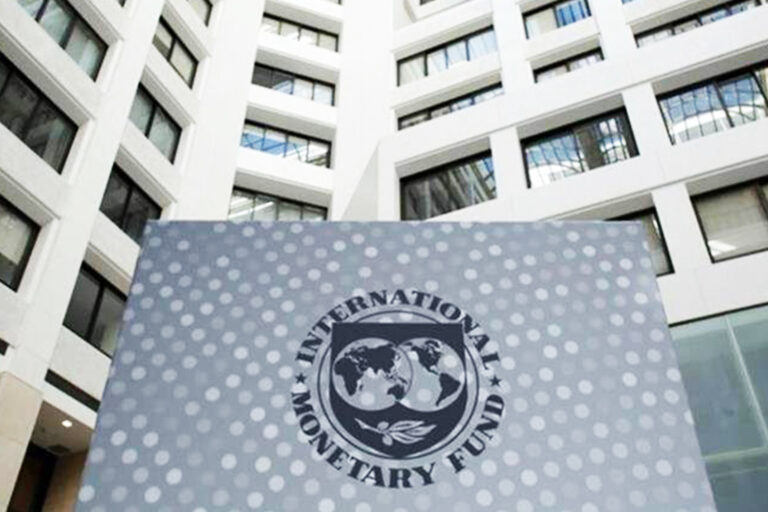
The delegation of the International Monetary Fund (IMF) during their latest visit have disclosed that Ethiopia’s exports and foreign direct investment (FDI) have held up well despite the turbulent economic environment.
A staff team from the IMF, led by Sonali Jain-Chandra, visited Ethiopia for a technical staff visit with the Ethiopian authorities during June 13-17.
In the statement, the international partner stated that the purpose of the staff visit was to discuss the authorities’ reform plans and economic developments, which could provide important input for a future mission to negotiate for a potential new Fund program.
It projected the growth to have fallen to 3.8 percent for 2021/22 fiscal year resulting from the conflict in northern Ethiopia, lower agricultural production, a sharp fall in donor financing and intensifying foreign exchange (FX) shortages, drought, and spillovers from the war in Ukraine. “Inflation has been high and rising, in addition to the rapidly increasing food prices and supply-side constraints,” the statement read.
It can be recalled that owing to the conflict in the northern parts of Ethiopia which was sparked by the TPLF, a former dominant political party in the country, had rendered international partners to pressure the central government including by suspending significant amounts of support that they promised.
IMF said that the Ethiopian economy has been subject to multiple shocks over the past two and a half years, including the COVID-19 pandemic, drought, conflict in the north of Ethiopia, and the war in Ukraine, “this has created significant macroeconomic and humanitarian challenges.”
It added that delivery of a debt treatment for Ethiopia under the G20 Common Framework, as part of a package supported by an IMF program, is essential to reduce debt vulnerabilities.
The authorities reiterated their interest in an IMF program to support their reform agenda.
“The Fund will continue to cooperate closely with the creditor committee to provide technical support to the Common Framework process and is working on steps towards commencing discussions on an IMF program as soon as conditions allow,” it said.
A year ago IMF called for the swift formation of the creditor committee for Ethiopia to enable the timely delivery of the debt operation that Ethiopia requested.
Ethiopia requested in February last year to G20 and Paris Club creditors to benefit from a debt operation under the G20 Common Framework. The authorities’ aim was to create fiscal space for development spending and to lower the risk of debt distress rating to moderate by re-profiling debt service obligations. The formation of the committee is said to help Ethiopia in this regard.
The IMF statement said that despite the economic environment being full of challenges, the country has enabled to attain positive export earnings and FDI.
“However, rising global commodity prices for fuel, food and fertilizer driven, in part, by the war in Ukraine, will increase imports and widen the current account deficit in 2021/22 fiscal year. This, combined with lower external loan disbursements has weakened the external sector and put downward pressure on reserves, which remain inadequate,” it added.
The IMF has also projected the budget deficit to expand while the reform of the Treasury bill market has facilitated substantial increases in the volume of issuances; the lack of external financing has required central bank advances to finance the larger deficit.
It said that the authorities remain committed to improving the efficiency of public investment, oversight and reforms of state-owned enterprises (SOEs) and containing public sector borrowing, consistent with their goal of meeting development objectives while strengthening debt sustainability.
“Progress on implementing roadmaps on FX reforms and modernization of monetary policy should help address FX shortages and reduce inflation. Revenue reforms consistent with ambitious revenue projections in the government’s 10-year plan will support sustainable financing of development needs,” it said.
It projected that continued progress on reforms to shift from public to private sector-led growth as laid out in the Homegrown Economic Reform Plan will contribute to high and sustainable growth over the long term.
On its regular evaluation through Article IV consultation, the IMF unusually did not publish Ethiopia’s last budget year’s economic evolution.
On its economic outlook publication that was issued April, 2022, the monetary fund disclosed that Ethiopia’s growth is expected to slow down from 6.3 percent in the fiscal year that ended 2021 to 3.8 percent in July 2022 because of the intensified military conflict in the first half of the fiscal year, the lingering effects of the pandemic amid low vaccination rates, and the spillovers from the war in Ukraine.
TRUTH IN SOCIETY
Modern states/societies have developed quite a knack for effectively manipulating their sheeple, (human mass) without employing much coercion. If truth be told, modern societies are nothing more than dystopian constructs of the Huxley-ian genre (Adolf Huxley). On the other hand, traditional societies or what still remains of them, tend to stick to the visibly obvious, as they have less resources/tools (both physical & institutional) to pursue refined manipulative technics. As a result, truth/facts are/were upheld without much superficial consternation, unless of course religions or other metaphysical inclinations are/were let loose on the whole society.
At this point in history, it might be more appropriate to label the so-called traditional societies as mere transitional, as they are fixated in pursuing their ‘development’ trajectories based on the beaten track. In contrast to the industrially advanced countries of the West, those in serious transition are more eager to utilize coercion as opposed to subtle persuasion, to have their ways with their sheeple. In other words they are closer to the Orwellian dystopia than is the case in the West! Nonetheless, transitional societies are in a fix, so to speak. Figuring out (on their own) how to handle their existence vis-à-vis the collapsing biosphere, to say nothing about the accelerating demise of the modern world system, (in which they are situated) is overwhelming. Despite the prevailing superficial and cynical rhetoric of the global status quo, there is just no way to alleviate the protracted problems of transitional societies, without honestly appreciating their current and impending predicament within the existing global order. Unless these societies persistently pursue a more sustainable trajectory, outside of the ‘reigning box’, their future is doomed!
The task at hand, globally speaking, should be an overriding preoccupation to conceive and implement a more resilient green economy with a workable social order! Unfortunately, instead of entertaining a new global order that can potentially secure peace and stability; dominant interests have decided to become increasingly bellicose to all and sundry. As problems intensify, the tendency of dominant interests is usually to push the same old ‘growth paradigm’ as a panacea to all the myriad problems humanity. From climate change to nuclear weapons, from financial crisis to mass migration, etc. what is continuously suggested is not an open and honest discussion/debate about the potential solutions to what ails the world, but rather the propagation of lies, more lies and statistics, to use Twain’s description. In this whole callous calculus the sheeple is intentionally put to sleep, so to speak. ‘Scientific Indoctrination’ a la Edward Bernays is now a common feature of all states, strong or otherwise.
The dominant global media/Main Stream Media (MSM), as part and parcel of the ‘deep state’, is fully engaged in the on-going global indoctrination process. Be that as it may, recent findings seem to indicate the global sheeple is finally waking up from its long slumber. No wonder, the ‘deep state’ is deeply disturbed. (Deep state = military-intelligence-industrial-banking-media complex.) When the US President tells (in a round about ways) the obvious truth that the US government actually and regularly kills people (under various pretexts) in many countries, many an indoctrinated audience gets shocked, not because what was said is incorrect, but telling the truth in public has become a sort of crime! This insanity now prevails in many of the nation states of the world. Unless the sheeple is told the truth, or at least is allowed to find out the truth on its own, (when possible) going forward might not be all that harmonious and peaceful. Sticking to the old Bernays’ logic cannot bring amicable solutions to our vexing problems. However effective the old technic has been so far, it might not stand against the formidable contraption of the Internet. Modern informatics has rendered the monopoly of information untenable! Moreover, the sheeple has also become increasingly aware of the futility of the absurd destructive paradigm of the global status quo: ‘non-stop growth on a finite planet possible’!
Admitted or not, in our current scenario, it is not humanity that is sustaining and creating appropriate global values, which still remain the non-negotiable core to sustaining peaceful coexistence. Today, it is capital that has become our true counselor/guide to our various moral undertakings! For example, the sheeple might resolve that burning fossil fuel is suicidal; but the overriding decisions in the matter will be settled by capital and capital alone (in most cases), via its psychopathic minions. Currently, there are only a handful of media organizations dominating the airwaves. In fact, there are only six corporations that account for over 90% of broadcasting in the US, by extension, a good portion of the world. In addition to these, the few state owned media outlets merely follow the template/diktat of the value-setting dominant corporate media! Even though these private media outlets are losing money by the bushel, they keep on operating, because they are already owned by wealthy ‘god fathers’ with deep pockets. After all, media is not a mere business geared towards the sole purpose of making profit. It is a powerful tool to influence (create destructive values; like upholding the ‘values’ of lies, etc.) and unleash distorted views/opinions on the unsuspecting sheeple. The truth is; in the market place, the global sheeple has started to turn off MSM, since their lies have become obvious and suffocating! ‘Fake News’ to use President Trump’s phrasing!
The global sheeple needs community owned media outlets committed to conveying truth and facts as they occur. In late modernity, advertisement money oppressively & effectively muzzles truth/facts in the private media, while state owned ones only choose to follow the party (ruling) line. To have independent and viable media, the state must avail public resources, including money, to organizations that are run independently for the sole benefit of informing and enlightening the public! This should be done without interference in regards to, amongst other things, contents and editorials! After all, being well informed and truthfully so, is another of the modern ‘Commons’ and should not be treated as if it were aspect of special interests. Amongst the major prevailing media outlets in the world, only ‘Russia Today’ is closest to the ideal of independent media. Other countries, must try to come up with their own media that are fully dedicated to ‘truth telling.’ This is especially important in countries where the sheeple is still very sheeple-ish (innocent of the hidden workings of the modern world system) like in Africa. Beware; indoctrination instigates insurrection!
FLYING BACK HIGHER
Marie Owens Thomsen is International Air Transport Association (IATA’s) Chief Economist. During IATA’s 78th Annual General Meeting held in Doha, Qatar from June 20 to 21, Marie presented her Economic Outlook report to the assembly saying that the expected airline industry net loss of $9.7 billion this year is “a phenomenal result even if it’s still in the red,” given the historic challenges faced since 2020.
Marie has spent most of her 30-year professional life in various Chief Economist roles for both investment banks and private banks, including HSBC in London, Merrill Lynch in Paris, and Indosuez in Geneva. Outside of the financial sector, Marie worked for IKEA, and she also founded and managed her own company in the equine industry. As a macro economist, Marie seeks to promote a global economy that is prosperous, inclusive, and sustainable, and one in which the air transport sector can flourish and realize its full potential so as to deliver better economic outcomes for all. Capital caught up with her to talk about her report and the airline industry’s future. Excerpts;
Capital: Your report said it is a shocking bounce, why is that?
Marie Owens Thomsen: Well, in every way if we look at the traffic numbers they obviously basically went to zero during the COVID pandemic and that has happened momentarily in the past. For instance, the 9/11 situation was perceived very much as a US problem, not a global problem. But of course when that happened I don’t think the terrorists had even understood what would happen next which is that there was no insurance for airplanes all of a sudden and without insurance we cannot fly.
9/11 halted domestic traffic in the US and that was a really big crisis for the industry, but it was contained to the US. So the COVID-19 crisis has had this peculiarity that it has halted traffic, to varying degrees for sure, but nevertheless, pretty much globally, all of us together have been affected as a whole. Traffic just stopped and never has this transpired to such a huge degree. This has cost us about two years of business.
And as we’ve said, we now think that we will perhaps come back to 2019 level of activity by 2024, which I think is an impressive performance given the severity of the crisis. I hope that everybody will have learned that you cannot just halt economic activity and then think that you can turn it right back on like turning on the light in your house. Thus, although steady, we are on the bounce back track.
Capital: In your report, you said that insurance is mentioned as one of the challenges. How would you describe that?
Marie: Well, for instance, as mentioned 9/11 and the current insurance problem we have is very much related of course to the situation and to the war between Russia and Ukraine. That war has led approximately to 500 airplanes to be stranded in Russia, and those who own them cannot recuperate them.
So we haven’t even started dealing with this insurance problem and historically speaking we have never seen that situation ever before either and insurance companies have not planned for such a hit. They planned for something much smaller.
Therefore, the insurance premiums which have already been paid are insufficient for the insurance companies to face these potential claims, and premiums will have to go up.
I cannot see how anything else could ensue. Now, insurance costs are a small part of all aviation costs. But given that we are hoping to eke out a little bit of a profit the increased insurance costs could be something that prevents us from realizing that profit, hence the inclusion as a challenge.
Capital: Climate change costs and infrastructure costs are rising, this is going have a ripple effect on the Airlines, what are your thoughts on these?
Marie: Absolutely, not only airlines but also other significantly related sectors, in addition to Airlines too. For example the Bangladesh airport is being closed which is a testament of how real those costs are. And of course the industry is struggling to become profitable and with the global situation as the whole, challenges affect the whole of the value chain. I think that’s going to be a challenge on how we can find the money to improve the infrastructure in our whole value chain to such an extent that we can feel confident about the future.
I think there’s a great risk of many airlines airports being affected by climate change, and route disruptions also because of climate change. So the whole value chain is going to be impacted by those increased costs as well going forward. And that’s before we sort of start talking about how much it’s going to cost to go from fossil fuel to sustainable aviation fuel. But nevertheless, I think when you spread all of those costs out over the number of passengers and the horizon whether that’s 2030 or 2050 we as an industry have said that we want to be net zero by 2050. So when you spread the costs out over all our passengers and all those years, I still think that that’s really not the main issue.
The main issue, in my humble opinion, is to get people to coalesce around the same desire to actually make this happen. In a fair way, I would say this is not a Western problem, it is not a southern problem either, but it is indeed a collective one. And we have to find a way of distributing these costs in the best and fairest way possible. That’s really important.
Capital: You mentioned the high inflation rates and low interest rates will help the airline industry, how do you see that panning out?
Marie: So it’s true. This is something that we talk a lot about in economics, nominal or real. So nominal is the price you see and real is the price you see minus the rate of inflation.
For example, if we have 10% inflation daily today thus we pay the additional 10. And if its 11% the next time, we pay the 11 so our purchasing power is diminished because of inflation, which is bad. But the real value then of our debt is also diminished in exactly the same way.
If I have 10% inflation, on whatever horizon and I have borrowed 100, I will only pay back 90 in real terms. So high inflation, and as long as the nominal interest rate is reasonably low you’re actually paid for borrowing money in real terms, thus you still have to have enough nominal earnings. Because if you don’t have any cash, yet you’re going to be in trouble. But as long as you have sufficient cash it remains the case in today’s economy that borrowing is a good thing.
It’s savings that’s being penalized by the rate of inflation. If you got money in your bank account a year from now it’s going to be worth less because of the rate of inflation, but when you borrowed money, then that debt is also going to be smaller. So this is a borrower’s world, not the savers world.
Capital: What is your evaluation of African airlines?
Marie: Well, the situation is obviously complex. But if you look at throughout economic history, economic performance has been very strongly correlated with connectivity. So for millennia, we were all poor because we only had our legs and our horses and our camels to transport us.
And then we had a big improvement in economic performance when people started to build boats and start sailing. And then eventually, we had a big improvement thanks to railroads. And then if you look at the long term chart of GDP per capita you see how the pace increases with the pace of connectivity. So that then translated to global aviation in the Second World War.
So Africa is obviously a continent that struggles with connectivity. And the poorest countries in the world are in Africa, and many of them are landlocked countries, really struggling with connectivity. And I think that, this is a two way project, I would argue for Africa, that governments in Africa should try to promote aviation. And aviation should of course try to orient itself a bit more intra-Africa and I would love to see intra African trade flow increase. It’s a bit absurd to me that many African nations trade more with Europeans or Americans or Chinese than they do amongst themselves. That’s an outlier where in the world economy where everyone else trades more with their neighbors. Why is this not happening in Africa? I think these are issues that are holding the continent back. Otherwise, it’s obviously a fabulous continent with lots of resources. And if we improve connectivity in Africa it would not only benefit airlines obviously, but it could change the outcome for the people living in Africa.
