Tuesday, October 6, 2026
Home Blog Page 3290

Understanding the burden of foodborne disease to ensure food safety in Ethiopia

0

By Beamlak Tesfaye and Theodore Knight-Jones

More than half a billion people fall ill every year from the food they eat around the world. As a result, ensuring food safety remains a major challenge in both developing and developed countries.

As we celebrate the World Food Safety Day on 7 June 2021, it is important to highlight the importance of understanding the burden of foodborne disease and how it affects us. Foodborne diseases -those diseases contracted from consuming contaminated food and drinks-affect us in many ways. Commonly resulting in vomiting or diarrhea, the consequences can often be far more severe. In fact, foodborne diseases result in almost half a million deaths a year globally, particularly affecting children.

As well as deaths and illness, foodborne disease has a massive financial impact on households and the wider national economy, with many people unable to work while they are sick, and often having to spend money on treatment. Africa bears the largest per capita burden from foodborne disease: Every year, more than 91 million people fall ill and 137,000 lose their lives, a toll comparable to the continent’s losses from major infectious diseases such as malaria, tuberculosis, and HIV/AIDS.

Although global and regional estimates of disease burden are useful the availability of reliable country-level estimates is essential to guide efforts to improve the situation, including for increasing public awareness and mobilizing political commitment and resources to combat foodborne diseases.

“Urban Food Markets in Africa – incentivizing food safety using a pull-push approach” is a research project led by the International Livestock Research Institute (ILRI), funded by the Bill and Melinda Gates Foundation, the UK Government Department for Foreign, Commonwealth and Development Office, and the CGIAR Agriculture for Nutrition and Health research programme.

The project works with partners to provide estimates of the incidence of key foodborne diseases in Ethiopia and provide a better understanding of the cost of foodborne disease, how these diseases manifest and how they can be controlled. It also develops and tests a novel but simple, and practical approach to improving food safety. This includes increasing consumer knowledge of what food is safe to purchase and through that use consumer demand for safer food to drive improvement in the safety of foods for sale in food markets. Support will also be provided to food traders to improve food safety, and training will be provided to government specialists, and regulators working in food safety.

The project’s ongoing activities in relation to estimating the burden of foodborne disease include:

  • Producing national estimates of the burden of certain foodborne diseases for Ethiopia. The result will be out shortly. This includes estimating risks and burden of foodborne disease for key germs from chicken and tomatoes.
  • The cost-effectiveness of different food safety control measures is also being assessed to produce a list of feasible and affordable interventions to reduce food safety risks.
  • The project will conduct food surveys to measure food contamination levels with germs and pesticides.

Food safety is one of the key elements of ILRI’s research portfolio. Our approach to food safety is risk-based, generating evidence and food safety solutions, identifying threats, and building the capacity of both policymakers and the public to tackle these threats.



Letesenbet Gidey breaks 2-day-old world record in 10,000m

0

Ethiopian Letesenbet Gidey lowered the women’s 10,000m world record, two days after Sifan Hassan broke it on the same track in Hengelo, Netherlands.
Gidey, who on Oct. 7 broke the 5000m world record, clocked 29:01.03 at the Ethiopian Olympic Trials (yes, the Ethiopian Trials are being held in the Netherlands). She took 5.79 seconds off Hassan’s record from Sunday.
Hassan, an Ethiopian-born Dutchwoman, brought the record down 10.63 seconds from Ethiopian Almaz Ayana‘s winning time at the 2016 Rio Olympics.
In total, 30.75 seconds have been taken off the world record since Rio. Before that, the dubious record of 29:31.78 set by Chinese Wang Junxia had stood since 1993.
All four men’s and women’s 5000m and 10,000m world records have been broken over the last 10 months. Runners have benefited from technology — new spikes and pacing lights on the track.
In 2019, Gidey took the 10,000m silver at the world championships. In 2020, she took 4.5 seconds off countrywoman Tirunesh Dibaba‘s 12-year-old 5000m world record.
Gidey, 23, was previously briefly expelled from school for refusing to run in physical education classes.
“I expected to run a world record,” said the 23-year-old Gidey, who was aided by Wavelight Technology and became the first woman to hold both the 5,000m and 10,000m world records since Norway’s Ingrid Kristiansen from 1986-1993.
“What a special night, I am so proud that after the 5,000 metres world record I am now the 10,000 metres world record holder as well. In this Olympic year it is the perfect preparation (for next month’s Tokyo Games).”

Maybe second chance for EPL relegated sides

0

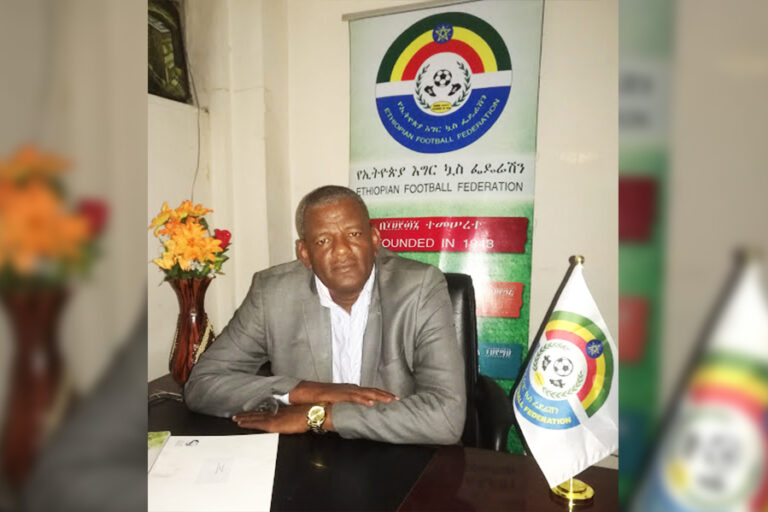
With the three premier league clubs from Tigray: Mekele Ketema, Sehul Shere and Adigrat University are not yet decided to join back the top tier in the coming new season, the six teams; the three relegated sides along with Super League runner-ups; Ethio Electric, Hambericho-Durame and Kolfe-Keranyo appear to get a green light from Ethiopian Football Federation to kick off their preparation campaign ahead of the play-off in three weeks’ time. The top three finishers may join the 13 Premier League sides including those promoted to the top tier at the end of the current season.
Though the rumored progress appears to be a plan (B) situation for the federation, critics considered a wise move for it will save everyone from the chaotic situation. “If the three Tigray teams join back the season, it is only about wasting some extra budget for the three runner-ups and three relegated sides. But if they declined it could mean a late premier league season start and huge financial loss,” suggested one critic.
Maybe things could be easier for the three relegated teams: Wolkite Ketema, Jimma AbaJifar and Adama Ketema than those Super League group second spot finishers since they are better structured with strong financial resources.
Kifle Boltena’s Ethio-Electric finished the season in second spot just four points behind group winner Mekelakeya while Hambericho-Durame finished runner-up of group (B) where Addis Ababa Ketema won the top spot seven points clear. Addis Ababa Ketema. Kolfe-Keranyo Sub-City is the third team to join the play-off for it finished second from group (C) where unbeaten side ArbaMinch Ketema won the promotion race.
The one round play-off is expected to take place in Hawassa stadium with the fixture expected to be a marathon.

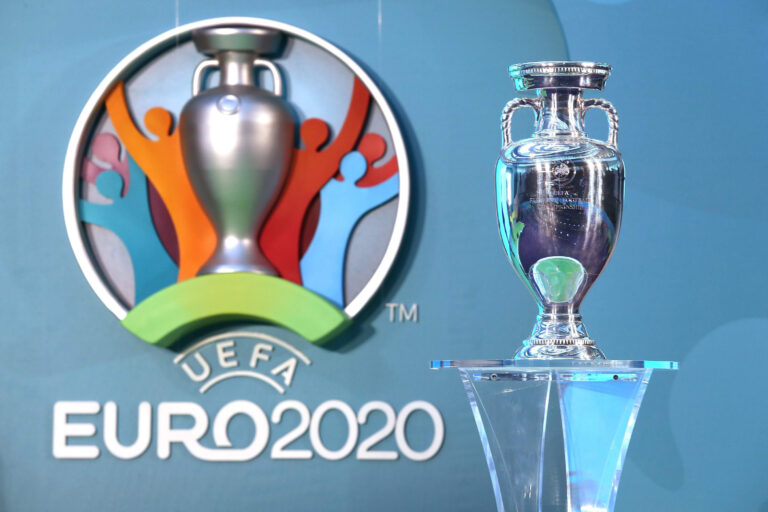
UEFA 2020 European Championship favorites

0

Euro 2020 is underway and continues through July 11, and there are plenty of angles to consider before making your bets. Here’s an overview of the favorites.
France (+480 to win): The 2018 World Cup champions certainly got no favors from the draw, as they’re grouped with defending Euro champion Portugal and a Germany. But eight of the 11 starters who brought a second world title to France are back for more this year, and there’s a chance this team might actually be better than the world champion from three years ago.
England (+540): Harry Kane is back after leading the 2018 World Cup in goals and helping the Three Lions to their highest finish in 28 years. But this isn’t a particularly seasoned English team, and Group D is sneaky tough.
Belgium (+750): If you believe FIFA’s world rankings, the Belgians are the world’s best team entering the tournament, a position they’ve held since their third-place finish at the World Cup in 2018. But there are questions about the health of stars Kevin De Bruyne, and Axel Witsel,
Portugal (+800): The defending Euro champions still have Cristiano Ronaldo, who’s still getting it done at age 36, and a stalwart defense that might be the best in the entire tournament.
Germany (+900): It’s the swan song for Manager Joachim Low, who will step down after the tournament. Recent results include a 6-0 thumping by Spain in November and a stunning 2-1 loss to North Macedonia on March 31..
Italy (+900): Playing their first three games at home, it would be a tremendous shock if the Italians didn’t at least win Group A, which also includes Turkey, Wales and Switzerland.
Spain (+900): Manager Luis Enrique has shaken things up by leaving legendary center-back Sergio Ramos off his final roster. But the team’s final preparations hit a rocky patch when captain Sergio Busquets tested positive for coronavirus on Sunday, meaning he could miss much of the group stage while in isolation.