Wednesday, November 25, 2026
Home Blog Page 3794

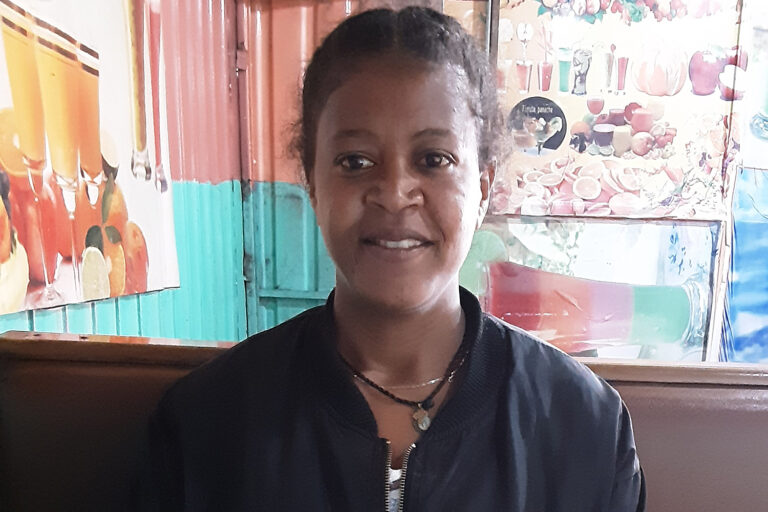
Moti Teshager

0

Name: Moti Teshager

Education: 8th grade

Company name: Moti Kitchen

Title: Owner

Founded in: 2020

What it does: fast foods

HQ: Addis Ababa

Number of employees: one

Startup Capital: 200 birr

Current capital: 9,000 birr

Reasons for starting the business: To have an income

The biggest perk of ownership: Working hard

Biggest strength: Hard worker

Biggest challenging: Work place

Plan: To open a big hotel

First career: None

Most interested in meeting: No one

Most admired person: No one

Stress reducer: Praying

Favorite past time: Playing with my child

Favorite book: The Bible

Favorite destination: Where ever there is a church

Favorite automobile: Anything that has four wheels

Making peace a priority

0

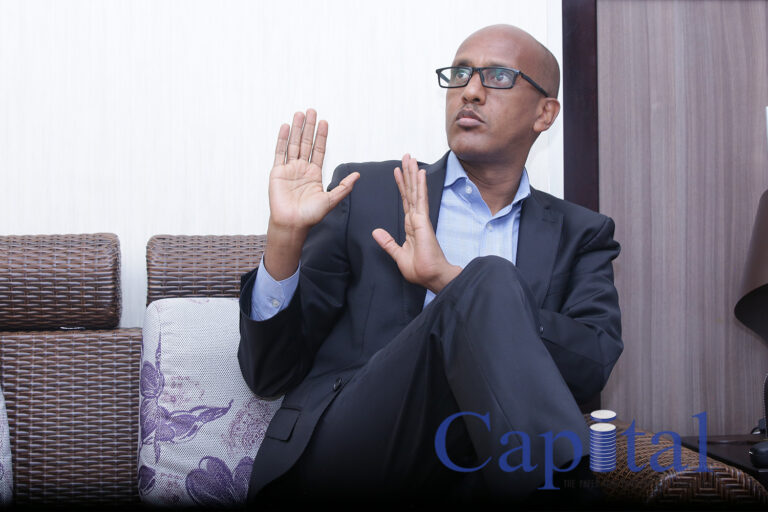
Somali Region is in the path of marvelous changes since the political reform was introduced in the country some two years back. For this massive change the leadership of the region took the lion’s share. This new political administration in the region is led by MustefeMuhumed Omer, Deputy President of the Regions and one of the youngest and well accepted leaders in the country. Mustefe was exiled from his home country in 2007 fearing for his life. Because of his active political participation his family members including his youngest brother were killed and abused by security forces in the region. Before he came at the change leadership Mustefe was deputy head of UN mission at Abu Dhabi, UAE. Capital has sat down with the Deputy President of the region to talk about the changes in the region. Excerpts; 


Capital: Since you came to the leadershipof Somali region what areas are you focusing and what did you achieve?

MustefeMuhumed: We received almost a failed region. So we have focused on reforming the government structure and the security apparatus in a way to be responsible for law and serve the public. To have a political stability we have facilitated dialogue in the society and others who have claims in the political space.

Besides the stated issues, developmental and social issues have also got the attention by the new administration. In the social development the education sector has got a priority since it was one of the least developed area in the past. Water, health, road and job creation are also the other pillars in the social development.

In the education sector in the past one year we have constructed 540 schools, which is very unique for the region and of these 77 are high schools. Since we came we were engaged in the development of 11 hospitals, of which three are new, expansion on five, and the rest are upgrading projects from lower health centers to hospitals. In the health sector 200 more ambulances are added that are crucial for the region that does have a poor road network. We hope it will improve maternal death.

In the past billions of birr is allocated for water sector development but they were not considering the population concentration. For insistence Jigjiga has over half a million dwellers but the water sector development was very poor. So we refocused on the water project and develop to fill the demand in towns like Jigjiga, Gode, Degehabur and Qebridehar.

Now we have allocated 2 billion birr for water projects relaying on the actual demand and focusing on towns.

Currently we are constructing over 1,000km gravel road in all over the region, and in the four main towns 24 km asphalt road is under construction.

In the job creation 200,000 new jobs have been created for the youth in the region. 35,000 of them are at the formal system of public offices.

Regarding agricultural development 13.8 million quintalswas harvested in the past season that is half of the demand for the region. In the agriculture sector the region will get more achievement but lack of technology barred to useus our full capacity. 

In agricultural mechanization to use our potential we are discussing with the federal government. For instance in relation with COVID 19 we have targeted to produce additional 166,000 quintals.

Capital: What are you doing to improve agricultural mechanization?

Mustefe: In the last budget year we have bought 86 tractors and 580 water pumps, which is a good move, but as you know we could not allocate our entire budget to the sector. We need a lot of machines that needs huge investment since the region is very wide. In this budget year we have similar plan to supply more tractors and other agricultural inputs. We expect more in this budget year.

Capital: In what level is the federal government supporting you?

Mustefe: There is a possibility that the federal government will support us. Last year there was no such kind of support. Now we are talking with Ministry of Agriculture due to that we may get support from the federal government.

Capital: A delegation you led that includes Somali region elders was in Addis Ababa to express sorrow for the assassination of singer HachaluHundenssa. At the same time your region was not stable in the past. How do you see the situation in your region and what is your view about the current situation?

Mustefe: Peace in our region is restored. By the way in our region it might not be the assassination of high profile people like Hachalu to curb the political change process, but in the past two years there are sabotages in our region to create clan based conflicts and instability in towns. These sabotages more or less distracted the pace of our move in our development. Since our region is wide and share long boarders with Somalia some attacks were happening by external powers and those who want the region to be unstable. Those who oppose the current reform are focusing on our region but they will not win. We have strongly worked in the reform, in the security and the capacity of the security system so due to that excluding minor incidents they will be no more danger in the region.

Capital: There are claims that some part of elements that work for the former president of the region Abdi Ille are still active and even some of his network enabled to enter in your administration. At the same time the network of the core group in the former federal government pressured your administration. What is your comment?

Mustefe: We have succeeded to dismantle the network of Abdi Ille in the region entirely. For that matter the region’s political structure belongs to clans that help us to neutralize them. Now the current problem is that the network is working from Addis Ababa to create confusion in the region and in relation between the region and federal government, and try to paralyze the regional power. In this area there were gap that we narrowed with discussion with federal government.

The former federal government leaders, who were removed because of the reform, are engaged in propaganda war as if we are not from that society that we just came for the sake of others interest. Those, who were indirectly ruling the region by Abdi Ille to suppress the public in the past are now unable to go behind the reform. But we and the people in the region will continue on our development path. There is no power that will challenge the region.

Capital: In the past there were claims that a group in the federal government imposed Abdi and manipulate the region. What is the situation now? Is there federal government involvement in your region against the constitution? 

Mustefe: The relation of the federal and regional government is based on the constitution. According to the constitution, there are areas that the federal government can involve. We are also now part of the national party, Prosperity Party, which may create areas to work together. We are working with federal government on national agenda as per the constitution. Now one of the big changes is that the federal government is not trying to involve in the region and we will not also accept that.As a regional cabinet and regional Prosperity Party the regional government is working freely.

But before the reform the military leaders based in Harar had been doing whatever they want in Somali region. Those, who are now engaged on the allegation of the current federal government, have been assigned incapable and socially rejected individuals in the last 27 years to lead and terrorize the people and the region.

Capital: How is your government’s capacity to restore the region’s peace and abandoned the rampant corruption for the last three decades? How is the process of confiscating the property that was illegally accumulated by individuals?

Mustefe: Regarding corruption we are now focused on changing the attitude in the region. Confiscating properties that was illegally earned by regional political leaders and their chain is under process in collaboration with the Federal Attorney General. By chance most of the regional leaders, who abused the region’s resource are arrested and some disappeared from the country. The case is under legal processes.

We have given ourselves as an example to change the public in the region to fight corruption. In the past particularly in the last ten years before we came to power the word corruption is not known in the region, although it is endemic not only in the region but in the country. It was dangerous talking about corruption, even though the former regional president and his family abused the region’s resource.

For the past two years we have registered significant change in this regards. The regional auditor general report indicated that we are in good progress. Independent and strong regulatory bodies and leadership is crucial to get adequate result in the area. We are also working to create that. Now the region’s leadership will not tolerate a corrupt leader,and that is why we removed 7 cabinet members and about 40 woreda leaders that are now facing prosecution.

Detecting corruption fully may take time since strong leadership and institutions are required.

Giving public money for families and others that were common in the past have now been fully stopped, but improving the contract administration still has a gap. At the same time changes at lower staff is also expected to be done under the civil service reform.

Capital: Creating strong and developmental investors is one of the gaps in Somali region. What are you doing to change this?

Mustefe: The business community is responsible for working capital formation and use the opportunity to be investor not only in the region but as a nation.

As a government we are trying our best to leave the economy for the business community in the aim to separate the politics and economy that was a major challenge in the previous leadership.

In the past the government leaders controlled the political leadership and the business at the same time. Abdi Ille was engaged from bottled water business to khat trade, from dollar business to businesses like imported foods besides controlling public contract.

It has made the private sector incapable to come as a strong competitor, which is now free.

In the investment sector better environment is created and property right has now been recognized that will allow investors to invest in the region confidently. We are working with investors to invest in the region that has massive potential. The other point we raised is expanding access to finance that might be filled by forming a bank. If they form a bank they may fund their projects easily. Currently the region’s investors don’t have similar access like other investors because of religious issue and institutional systematic discrimination.

But now they have opportunities and we also seen some changes. For instance the construction industry, development of hotels and agricultural investment including green house based cash crop development is growing in the region and we are also creating friendly environment.

Capital: Regarding tax collection your region is expected to perform well. What is your performance in mobilizing the public revenue?

Mustefe: -previously the tax collection was very poor. At AbdiIlle’s time it was arbitrary that was imposed on very small business that supposed to be relived. But those that have relation with the government and have huge activity and laundering millions of birr were not taxed. We reviewed this.

In the 2018/19 budget year we have achieved 75 percent of the target and in the past budget year 3.8 billion birr was expected to be collected and the actual performance is 82 percent or 3.1 billion birr.

We have conducted an assessment in the tax collection and identified that there is a potential to earn more than five billion birr but capacity enhancement is needed to achieve it. For the current budget year the region has targeted to collect 4 billion birr. In the past two years we focused on regional security and stability now the tax area will be the other point, which is fuel to support regional developmental projects.

Capital: How is the interest of investors from other parts of the country?

Mustefe: We invited investors to invest mainly in the service sector. Besides that we have been working to facilitate a telethon to undertake organized campaign to attract investors, while the coming of corona virus forced us to hold it.  We expect investors’ engagement from other part of the country soon.

How to bring Africa’s artifacts back home from Europe’s museums

0

By Josette Bailey & Sylvester Ogbechie

Restitution and repatriation of sub-Saharan African art and cultural heritage in museums and private collections is an area of increasing global focus and debate.

Many of these works are in Western museums and were acquired by European countries from their former colonies particularly through armed pillage, military expeditions, missionary collections, and/or taken without sufficient documentation of consent or adequate compensation. Racist attitudes that underpinned colonialism have, for the most part, not changed, and this makes the debate contentious.

In November 2018, president Emmanuel Macron asked for a groundbreaking 258-page report during his tenure on the restitution of African art (The Sarr-Savoy Report), since major museums in the United Kingdom and France (the two major colonial powers) were not addressing the issue. The report was a positive step in the right direction; it is the first time a European leader acknowledged there was something wrong with Western institutions holding plundered works hostage. However, little concrete action has been taken since by France or the international museum sector since the report’s release.

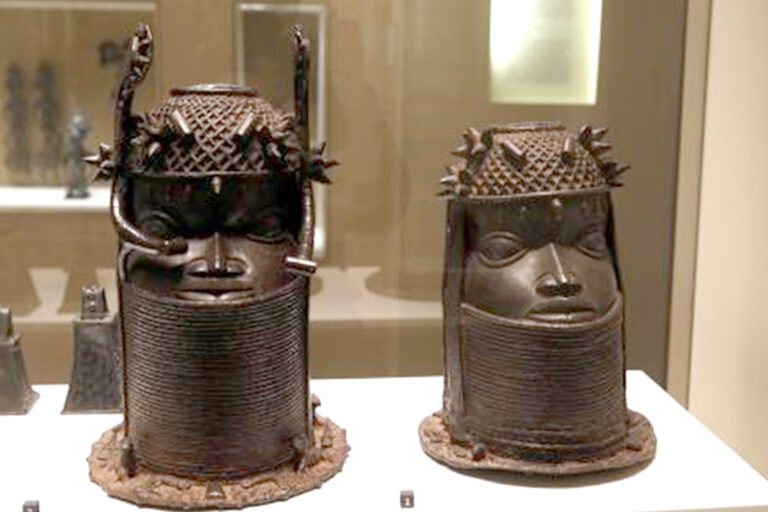
Macron promised to return objects looted from their African homelands, starting with 26 artifacts from the Kingdom of Dahomey, now Republic of Benin, taken by colonial military leader Alfred AmédéeDodds in 1890.  However, they have still not been sent back. The French culture minister reportedly asked heritage professionals at a recent symposium in Paris “not to focus on the sole issue of restitution”, but to instead emphasize cultural cooperation with Africa.

At present, there are questions as to whether the UK‘s efforts to address ongoing calls for repatriation of stolen artifacts will meet or exceed the bar set by France and Germany who have devoted considerable government resources and even more time developing their own guidelines.

The British Museum has remained intransigent about the issue of repatriation and has equally refused to pay restitution to the African countries whose artifacts are held in bondage. It has, however, entered into discussions with the Benin Dialogue Group (BDG), this is the Benin kingdom founded in the 12th century in southern Nigeria. The BDG, which includes museum representatives from Germany, the UK, the Netherlands, Austria and Sweden with partners from Nigeria, the Edo state government and representatives of the Royal Court of Benin with support of the National Commission for Museums and Monuments, Nigeria (NCMM) that was established in 2010 to craft a solution to this problem.

One realizes the prospect of colonial restitution is more complicated than anticipated.  The response from Western museums and the BDG has been disparate, ranging from examples of unconditional restitution and repatriations to a lace of engagement with African communities.  However, museum reps propose to loan items to African museums, which is insufficient.  Christie’s and Sotheby’s ongoing auctions of historical African art are controversial as these artifacts could be candidates for repatriation to their countries of origin. This sidesteps the real issue of restoring full legal ownership and intellectual property rights of these artworks to their countries of origin.

Debates have also ignited among Western museum professionals who fear returning African objects are a sign that their precious collections would be gutted. This fear is unfounded since there are hundreds of thousands of objects from sub-Saharan Africa in these collections, of which only a fraction is on display at any time.

Many European museums and collections are currently protected by assertions of “inalienable and imprescriptible” right, prohibiting them from permanently handing over accessioned objects.  UK museums do not have a single, agreed upon protocol for dealing with repatriation requests.  The British Museum Act of 1962 prohibits an institution from disposing of objects in its collection except in very limited circumstances, and any effort to repatriate objects would require government action.

No permanent historical African artifacts should be kept in Western museums and collections while Africans have none of their own.  Otherwise, Western museums will continue to condone the ongoing plunder of Africa of the past five hundred years, which aside from colonialism include the theft of African bodies for the gruesome Transatlantic Slave Trade. We should note that Western countries have also not offered any restitution for the suffering imposed on Africans by slavery, even though Britain paid its aristocracy reparations in exchange for giving up their slaves.

What is to be done? African consultants with specific areas of expertise such as intellectual property rights lawyers and consultants, renowned African art historians, art conservators, and architects should be hired to create guidelines and for advice.

In the case of Nigeria, members of the Royal Court of Benin, Edo state and the NCMM are currently advising the BDG on how cultural patrimony from the Benin kingdom and Nigeria that are scattered around the world should be restituted and repatriated. They should secure the unconditional transfer of the intellectual property rights of its cultural patrimony to the rightful owners of said objects and offer a fresh perspective on how to address the legal complexities that govern the issues of return and restitution (e.g., license agreements for reproductions, royalties on artifacts awaiting repatriation, etc.). They should also obtain and review inventories from Western museums to identify artworks, cultural, and human artifacts that should be returned to the Royal Court of Benin.

Above all, any further discussion of this issue must secure Africans’ ownership of the intellectual property rights of their cultural patrimony as a future source of income in the digital economy, work with relevant institutions to ensure appropriate funding is available to successfully preserve and safeguard African artifacts that are to be repatriated. The discussions should also ensure any new museum built in Africa to house these works meets or exceeds prescriptions of the Alliance of Museum and/or International Museum standards.

The narrative for African artifacts remaining in possession of Western museums must also be redefined by providing insights from an African perspective.  Africans should be able to see cultural artifacts of their own heritage in their own cultural contexts.  Restitution and repatriation of the artifacts and cultural heritage would allow Africans to participate in interpreting their meaning.  Without these steps, the debate will continue to lack concrete results.

(Quartz)

How women can power the green transition

0

The shift to sustainable energy gives societies a chance to tackle systemic gender discrimination. Fortunately, governments, firms, universities, and NGOs increasingly recognize the need to make the green transition more diverse and inclusive.

By IRENE GINER-REICHL

The world needs to shift from the current fossil-fuel-based energy system to carbon neutrality. Most obviously, this will require countries to roll out renewable energy and integrate it into the electricity grid, boost energy efficiency, upgrade infrastructure, and refine the governance of electricity and energy markets. Less apparent, success will require that women are able to contribute to the transition on an equal footing with men.

The worse economic fundamentals and forecasts become, the more mysterious stock-market outcomes in the US appear. At a time when genuine news suggests that equity prices should be tanking, not hitting record highs, explanations based on crowd psychology, the virality of ideas, and the dynamics of narrative epidemics can shed some light.

Energy transitions will differ depending on countries’ development priorities, the proportion of the population with access to power grids, the current energy mix, and projected demand. Some transitions may involve simply retrofitting old, unsustainable assets in order to reduce carbon dioxide emissions, while others may be part of a multifaceted development strategy for societal transformation, including gender equality and inclusion. But all countries should commit to creating jobs and leaving no one behind.

Although the available data vary considerably, women probably represent – at most – one-third of the global sustainable energy workforce. And their share typically is much lower in the so-called STEM professions (science, technology, engineering, and mathematics) and in executive positions. Unsurprisingly, awareness of gender dynamics in the workplace also tends to be low. Moreover, policies that could help redress the current imbalance in the sector – such as flextime, parental leave, return-to-work schemes, bias-free recruitment and promotion, and gender-balanced boards and panels – are scarce.

These barriers to the full participation of women are, first and foremost, an infringement of human rights, in particular women’s right to full and equal participation in the life of their communities. Governments therefore have a duty to eliminate discrimination against women and establish frameworks to help empower them and enable their advancement.

In addition, the under-representation of women deprives energy transitions of diverse talent, and thus impedes the transformational change required to achieve global climate targets and the United Nations Sustainable Development Goals. Conversely, the equal participation of women in the workforce is demonstrably good for business, the economy, social development, and the environment.

These findings are not new. In its 2012 World Development Report, for example, the World Bank emphasized that gender equality not only is a core development objective in its own right, but also enhances an economy’s productivity and improves future generations’ prospects. And during the 2009 global economic downturn, a global survey by the consulting firm McKinsey & Company concluded that women leaders represent “a competitive edge in and after the crisis.” Likewise, having a higher percentage of women in decision-making positions increases innovation and profitability, decreases risk, and enhances sustainability practices.

Green-energy transitions provide opportunities to tackle systemic gender discrimination and enable societies to reap the benefits of a more diverse workforce. That is partly because sustainable energy is a new and fast-growing field: the number of people employed worldwide in the sector is expected to increase from an estimated 11 million today to over 42 million in 2050. In addition, the scope of the transitions calls for a diverse range of skills, including civil engineering, environmental science, marketing, teaching, and community action.

The good news is that governments, firms, and universities around the world are implementing a wide variety of strategies to make the green transition more diverse and inclusive. For example, Rwanda’s 2003 constitution sets a mandatory minimum female quota of 30% for all decision-making bodies, including those related to sustainable development and energy. The mandatory quota sent a powerful signal to society and was more than doubly filled in both the 2013 and 2018 parliamentary elections, in which women won more than 60% of the seats.

In the business world, Turkish firm Polat Energy recently took out a $44 million “gender loan” to finance the construction of Turkey’s largest wind farm. The loan terms will improve if the company demonstrates further progress toward gender equality relative to an initial baseline.

Elsewhere in the energy sector, Wind Denmark has gone beyond the country’s already generous parental leave policy for both women and men, while Scottish Power is championing a “return to work” program. Likewise, wind turbine manufacturer Siemens Gamesa promotes flexible work arrangements and transparent pay-gap analysis, leading the United Kingdom’s government to certify recently that the company’s female employees in the UK earn 95% of what their male colleagues do.

Academic institutions and NGOs are also playing their part. The Australian university UNSW Sydney has reported a 78% increase in female first-year engineering enrollments since it launched its Women in Engineering Program in 2014. And the Global Women’s Network for the Energy Transition, an international NGO that offers networking, mentoring, and training programs for women working in the energy sector, recently published a study on how to make sustainable energy more gender-diverse.

Energy transitions are essential to limit global warming and build a more sustainable future. Achieving them is in everyone’s interest. As countries everywhere embark on “building back better” after COVID-19, energy transition strategies should be a key element in any stimulus package. And they will be far more likely to succeed if women play a central role.