

Toshiba Energy Systems & Solutions Corporation (hereinafter “Toshiba ESS”) today announced that the company, Toyota Tsusho Corporation and Turkish engineering company Egesim Energy Electro-Mechanic Construction Contracting Co., Ltd. have received an order of engineering, procurement and construction for Aluto Langano Geothermal Wellhead Power System in central Ethiopia, which is developed by the Ethiopian Electric Power (hereinafter “EEP”). Toshiba ESS will be in charge of supplying the steam turbine and the generator.
This project will proceed under the Grant Aid scheme of the Japan International Cooperation Agency (JICA).
Aluto Langano Geothermal Wellhead Power System is a 5 MW small scale geothermal power plant where EEP plans to commence commercial operations in August 2021. Toshiba ESS will deliver its small scale geothermal power generation system at this power plant.
The small scale geothermal power generation system that has been developed by Toshiba ESS generates power from geothermal resources with outputs ranging from 1 MW to 20 MW. Capable of being installed within a short period for early operation and it is a portable power generation system that can effectively utilize a small number of drilled wells.
Ethiopia is Africa’s second most populous nation with a population of over 100 million. Although the country is growing economically, its electrification rate stands at 30%* and the country therefore faces the need to increase its power facilities.
Ethiopia possesses an equivalent of roughly 10,000 MW* of geothermal potential resources and the country is planning to develop new geothermal power plants totaling a capacity of roughly 2,500 MW* by the year 2030.
Toshiba Wins Order in Ethiopia for Small Scale Geothermal Power Generation System for Wellhead
EIB confirms €3 billion of new investment across Africa in 2019
Last year, the European Investment Bank (EIB) provided €3 billion of new financing that will support €10.7 billion of transformational investment across Africa.
“Africa is a key priority for the European Union and the European Investment Bank. The European Investment Bank is committed to working with African partners to accelerate and expand new investment that delivers sustainable development, tackles the climate emergency, creates jobs and improves lives across Africa. The €3 billion of new investment in Africa supported by the EU bank in 2019 builds on 57 years of engagement across 52 African countries. In recent months, the EIB has launched pioneering new initiatives to accelerate new investment essential to enabling women to fully participate in economic activity under the pioneering SheInvest programme, to ensure African innovation companies can expand and to combine our financial understanding with philanthropy to tackle malaria. said Werner Hoyer, European Investment Bank President.
The EU bank’s engagement in Africa will enhance economic opportunities, accelerate sustainable development, ensure access to finance, communications, clean water and clean energy for millions of people across the continent, and be reinforced with European Union engagement and policy priorities.
“The impact of EIB engagement in Africa is enhanced by our unique global technical, sector and financial experience, the expertise of EIB teams in our nine African offices and close cooperation with local project partners,” added President Hoyer.
African Union Executive Council endorses African Development Bank President Adesina for second term
The Executive Council of the African Union has supported Dr. Akinwumi Adesina’s candidacy for a second term as President of the African Development Bank.
The decision was taken during the thirty-sixth Ordinary Session of the AU Executive Council, held during the AU Summit in Addis Ababa, Ethiopia, 6-7 February 2020.
Adesina was elected to his first term as President by the Bank’s Board of Governors at its Annual Meetings in Abidjan on 28 May 2015. He is the eighth President of the African Development Bank Group and the first Nigerian in the post.
During his first term, the Bank’s shareholders approved a landmark $115 billion capital increase in late October. The increase in the capital base, from $93 billion to $208 billion, signaled strong support from the Board of Governors in the continent’s foremost financial institution.
Adesina is a renowned development economist who has held a number of high-profile international positions, including with the Rockefeller Foundation, and as Nigeria’s Minister of Agriculture and Rural Development from 2011 to 2015.
The African Union Executive Council comprises 55 ministers of foreign affairs representing the member states of the African Union.
In December 2019, the Economic Community of West African States (ECOWAS) also endorsed Adesina for a second term as Bank chief. The election will again take place at the Bank’s Annual Meetings in May in Abidjan.
WHO Director-General’s opening remarks at the media briefing on COVID-19
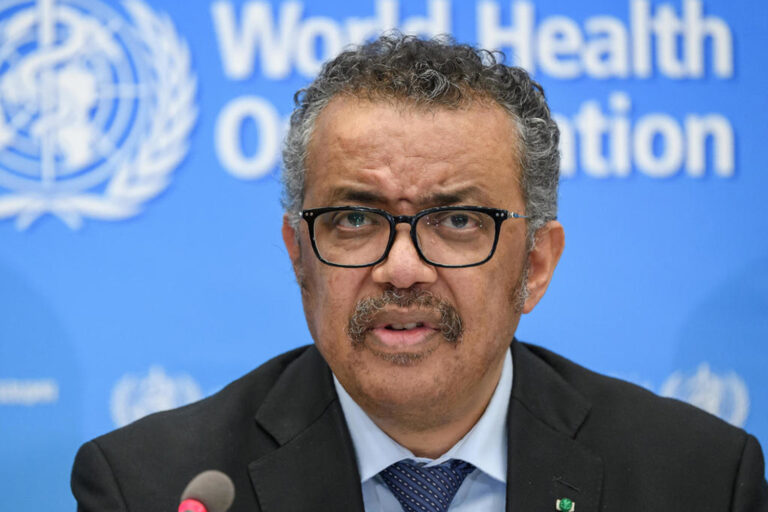
The World Health Organization officials said Friday February 28, they are increasing the risk assessment of the coronavirus, which has spread to at least to 49 countries in a matter of weeks, to “very high” at a global level.
Outside China as of Friday morning, 4,351 cases across at least 49 countries have been confirmed, including 67 deaths, WHO Director-General Tedros Adhanom Ghebreyesus said. About two dozen countries have reported only one case. He said most cases of COVID-19 can still be traced to known contacts or clusters of cases and there isn’t any “evidence as yet that the virus is spreading freely in communities.” That’s one reason why WHO hasn’t declared the outbreak a pandemic, Tedros said.
Denmark, Estonia, Lithuania, Netherlands and Nigeria all reported their first cases on Thursday, Tedros said. All these cases have links to Italy, he added.
Tedros reiterated that the virus could still turn into a pandemic. He urged against fear and panic, adding, “our greatest enemy right now is not the virus itself. It’s fear, rumors and stigma.” Below is the full text of his speech.
Good afternoon to everyone online and in the room.
First, as usual, the numbers:
In the past 24 hours, China reported 329 cases – the lowest in more than a month.
As of 6am Geneva time this morning, China has reported a total of 78,959 cases of COVID-19 to WHO, including 2791 deaths.
Outside China, there are now 4351 cases in 49 countries, and 67 deaths.
Since yesterday, Denmark, Estonia, Lithuania, Netherlands and Nigeria have all reported their first cases. All these cases have links to Italy.
24 cases have been exported from Italy to 14 countries, and 97 cases have been exported from Iran to 11 countries.
The continued increase in the number of cases, and the number of affected countries over the last few days, are clearly of concern.
Our epidemiologists have been monitoring these developments continuously, and we have now increased our assessment of the risk of spread and the risk of impact of COVID-19 to very high at a global level.
What we see at the moment are linked epidemics of COVID-19 in several countries, but most cases can still be traced to known contacts or clusters of cases. We do not see evidence as yet that the virus is spreading freely in communities.
As long as that’s the case, we still have a chance of containing this virus, if robust action is taken to detect cases early, isolate and care for patients and trace contacts.
As I said yesterday, there are different scenarios in different countries, and different scenarios within the same country.
The key to containing this virus is to break the chains of transmission.
Yesterday I spoke about the things countries must do to prepare for cases and prevent onward transmission.
The report of the WHO-China Joint Mission has now published its report, which is available in English on the WHO website, and will also be posted in Chinese on the National Health Commission website.
The report includes a wealth of information, and 22 recommendations for China, for affected and unaffected countries, for the international community, and the general public.
It calls for all countries to educate their populations, to expand surveillance, to find, isolate and care for every case, to trace every contact, and to take an all-of-government and all-of-society approach – this is not a job for the health ministry alone.
At the same time, work is also progressing on vaccines and therapeutics.
More than 20 vaccines are in development globally, and several therapeutics are in clinical trials. We expect the first results in a few weeks.
But we don’t need to wait for vaccines and therapeutics. There are things every individual can do to protect themselves and others today.
Your risk depends on where you live, your age and general health. WHO can provide general guidance. You should also follow your national guidance and consult local health professionals.
But there are 10 basic things that you should know.
First, as we keep saying, clean your hands regularly with an alcohol-based hand rub, or wash them with soap and water.
Touching your face after touching contaminated surfaces or sick people is one of the ways the virus can be transmitted. By cleaning your hands, you can reduce your risk.
Second, clean surfaces regularly with disinfectant – for example kitchen benches and work desks.
Third, educate yourself about COVID-19. Make sure your information comes from reliable sources – your local or national public health agency, the WHO website, or your local health professional. Everyone should know the symptoms – for most people, it starts with a fever and a dry cough, not a runny nose. Most people will have mild disease and get better without needing any special care.
Fourth, avoid traveling if you have a fever or cough, and if you become sick while on a flight, inform the crew immediately. Once you get home, make contact with a health professional and tell them about where you have been.
Fifth, if you cough or sneeze, do it into your sleeve, or use a tissue. Dispose of the tissue immediately into a closed rubbish bin, and then clean your hands.
Sixth, if you are over 60 years old, or if you have an underlying condition like cardiovascular disease, a respiratory condition or diabetes, you have a higher risk of developing severe disease. You may wish to take extra precautions to avoid crowded areas, or places where you might interact with people who are sick.
Seventh, for everyone, if you feel unwell, stay at home and call your doctor or local health professional. He or she will ask some questions about your symptoms, where you have been and who you have had contact with.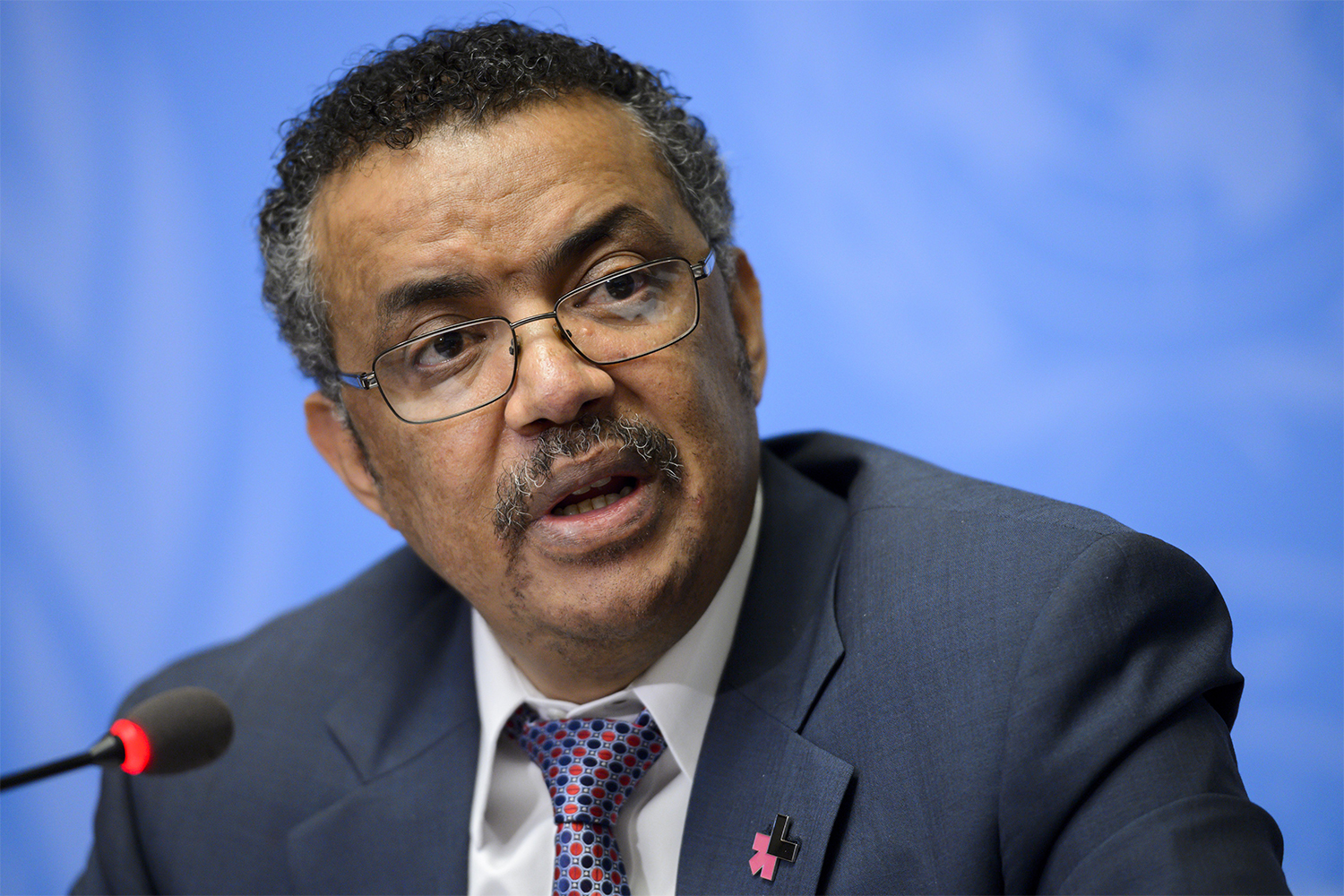
This will help to make sure you get the right advice, are directed to the right health facility, and will prevent you from infecting others.
Eighth, if you are sick, stay at home, and eat and sleep separately from your family, use different utensils and cutlery to eat.
Ninth, if you develop shortness of breath, call your doctor and seek care immediately.
And tenth, it’s normal and understandable to feel anxious, especially if you live in a country or community that has been affected. Find out what you can do in your community. Discuss how to stay safe with your workplace, school or place of worship.
Together, we are powerful. Containment starts with you.
Our greatest enemy right now is not the virus itself. It’s fear, rumours and stigma.
And our greatest assets are facts, reason and solidarity.
I thank you.
