Sunday, June 7, 2026
Home Blog Page 713

The Interplay Between Contraband Trade and the Army: A Complex Dynamic

0

Contraband trade, smuggling and the illegal movement of goods, has long been a challenge for governments worldwide. From illicit drugs and weapons to rare commodities and human trafficking, contraband undermines national economies, destabilizes regions, and fuels criminal enterprises. The military, as a critical state actor, plays a dual role in this narrative. Often positioned at the forefront of securing borders and maintaining stability, armies can act as both adversaries to and enablers of illicit trade.

This interplay is shaped by factors such as corruption, weak governance, and the strategic exploitation of power. In some contexts, the military becomes complicit in contraband trade. This complicity may stem from systemic issues within the armed forces or the broader environment in which they operate.

In underfunded or poorly paid armies, corruption can take root. Soldiers and officers might accept bribes to overlook contraband activities or actively participate in smuggling operations. Economic desperation in war-torn regions often exacerbates this dynamic, as military personnel seek alternative sources of income.

Armies stationed along borders, trade routes, or in conflict zones have direct access to areas critical for smuggling operations. In some cases, military checkpoints, ostensibly designed to curb contraband, are used to tax or facilitate the movement of illicit goods.

In regions where military units hold significant sway, they may establish protection rackets for contraband traders. For a price, smugglers gain safe passage, while the army profits from the trade it is tasked to suppress. This dynamic has been documented in areas ranging from conflict zones in Africa to drug trafficking corridors in Latin America.

On the other side of the spectrum, armies are frequently deployed to curb contraband trade, especially when it poses significant threats to national security or governance. The military is often the primary enforcer at borders, tasked with intercepting smuggled goods and preventing their entry. This is particularly evident in countries combating drug trafficking, such as Mexico, where the army has been deployed to address the narcotics crisis.

In regions where contraband trade finances insurgent groups or organized crime, the military is essential in dismantling these networks. For instance, in Afghanistan, U.S. and allied forces targeted opium production, a significant revenue source for the Taliban. In fragile states, contraband trade often thrives due to weak governance. The military’s role in establishing control and rebuilding state institutions can help reduce the prevalence of smuggling.

The relationship between contraband trade and the army becomes particularly complex in conflict zones and areas with limited state authority. Here, the lines between suppression and participation are blurred. In regions like the Democratic Republic of Congo (DRC), the military has been implicated in the illicit trade of minerals such as gold and diamonds. These resources fuel both local and international markets, prolonging conflicts and enriching a small elite while the broader population suffers.

In many cases, contraband trade serves as a lifeline for insurgent groups. For example, in South America, guerrilla groups like the FARC used drug trafficking to finance their operations. While militaries are deployed to combat these groups, individual units may exploit the trade for personal gain, further complicating the situation. In areas where the military operates with little oversight, contraband trade often becomes intertwined with their operations. Whether through direct involvement or turning a blind eye, weak accountability mechanisms create an environment ripe for exploitation.

The interplay between the army and contraband trade is not limited to any one region or type of conflict. Examples abound from across the globe. In countries like Colombia and Mexico, the military’s role in combating drug cartels has been complicated by accusations of corruption and collusion with traffickers. In Sierra Leone and Liberia, “blood diamonds” were smuggled with the involvement of military actors during the height of civil wars. Similarly, in the DRC, the army has been implicated in the illicit mineral trade. Smuggling routes in Afghanistan and Syria are critical for the trade in narcotics and weapons, often involving military personnel on all sides of the conflict.

The Interplay between Contraband Trade and the Army has several implications. Military involvement in contraband trade erodes public trust in state institutions and undermines the rule of law. This dynamic can create a vicious cycle where corruption and illegality become entrenched. Contraband trade disrupts legitimate markets, reduces government revenue, and often benefits only a small elite. This deprives nations of resources needed for development and exacerbates inequality. The funding of insurgent groups and criminal organizations through contraband trade perpetuates violence and instability. Military complicity further complicates efforts to restore order and peace.

To mitigate the negative impacts of the interplay between contraband trade and the army, governments and international organizations must take a multi-faceted approach which includes strengthen oversight and Accountability: Independent monitoring and transparency in military operations are critical to curbing corruption. Ensuring fair wages and benefits can reduce the economic pressures that lead to complicity in contraband trade. Military, law enforcement, and intelligence agencies must collaborate to address the complex networks of contraband trade. Efforts to combat contraband trade must include broader strategies for economic development, governance reform, and conflict resolution.

To conclud, the interplay between contraband trade and the army reveals the complexities of governance and security in modern states. While militaries are essential to combating smuggling and stabilizing fragile regions, their involvement in contraband trade, whether through corruption or complicity, can undermine these efforts. Addressing this dual role requires systemic reforms, international cooperation, and a focus on strengthening state institutions. Only then can the cycle of exploitation and instability be broken.

CRIME EVERYWHERE

0

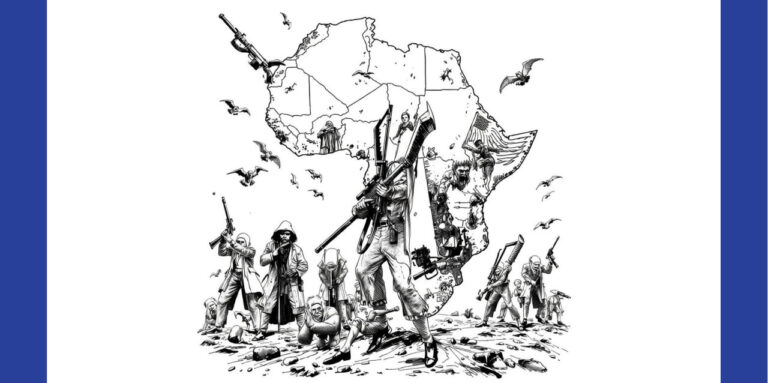
In late modernity widespread crimes have become one of the major preoccupations of nation states. To be sure, states themselves commit plenty of hideous crimes and they do so by leveraging their monopolistic position on ‘legal violence’. They conduct covert and overt operations routinely, with the help of specialized institutions created for the purpose. Well-organized non-state actors, with subversive political agenda, are also visible in our world system. These include the likes of ISIS, etc. These violently operating entities are customarily called ‘terrorist’ organizations. At times, the labeling can be quite arbitrary, depending on the position of the declarer in the prevailing hierarchical interstate system. For example, the USA recently declared the ‘Iranian Republican Guard’ a terrorist organization, even though it is a bona fide arm of the Iranian state!
Disgruntled and sick individuals bent on committing mass murders are also in the ascendance, not only in the USA, where it is more or less an everyday affair. Unfortunately, the root cause behind such atrocities is one topic not to be discussed in polite company. To some extent, mass shooting is a mere upgrade on the background homicide rate, facilitated by the ever-increasing sophistication of killing weapons. In many countries where homicide is relatively high, mass murders follow suit. Mexico is another example. The mass shootings that are happening in the USA is of a different breed. By and large, it has no perceptible purpose, except mere satisfaction that accrues to the criminally inclined from the very act of killing other human beings! Whatever the reasons that propel one to commit such socially (may be not psychologically) puzzling crime, the availability of weapons to all and sundry, is certainly another major culprit behind the scene. But the question still remains: what lies behind the increasing number of people who are determined to committing very cold-hearted crimes, particularly in such rich nations?
At least in the case of the traditional crime syndicates, the major reason behind their criminal activities is quite clear. Here, the message is: ‘don’t stand on our way; if you do, we will get rid of you’! While these entities seem to be receding in the west, (core countries of the world system) they are gaining significant grounds in South America, Africa and Asia. To a large extent, these are entities obsessed with making quick and beaucoup money, using all kinds of means, legal or otherwise. When a state fails to have a convincing integrity system with transparent, accountable and participatory mode of governance, the tendency amongst the impatient sheeple (human mass) is to take matters in its own hands. Moreover, in such societies the large majority gradually develops stoic apathy, with unappetizing consequences that are bound to be detrimental to the future of the country!
Those who do not use extreme violence, but are essentially in the same camp with that of the traditional organized crime (fixated on making fast/plenty of money) are running the world financial systems, by extension, the global economy! They do so, mostly by manipulating existing laws and buying influence; like bribing lawmakers, corrupt judges as well as elements of the executive organ. Thanks to the states, these quietly operating criminal syndicates have already setup intergovernmental institutions to protect their various cartels that span the whole world. The most these accomplished manipulators get for their callous crimes is a slap on the wrist, so it seems. If truth be told, the globalization we gullibly/ignorantly talk about is essentially the making of these concocted institutions at the service of these ‘legal criminals’. These people masterminded the financial crisis of 2008, which has destroyed the lives of millions. Soon there will be more devastating crises to come! To add insult to injury, these white-collar criminals have been rewarded for their evil deeds. Policies like QE (quantitative easing) is tailor made to make these criminals even richer.
In Africa it is mostly those affiliated with the ruling elites that commit such intricately massive crimes. As in the core countries, these individuals also revert to physical force/violence, if and when they deem situations demand it! Amongst the various means of criminal accumulation pursued by the Africa’s parasitic elites, we can mention government tenders, transfer of state assets to cronies under various pretexts, including privatization, favoring cronies in the state’s procurement processes, the facilitation of massive bank credit, relative to the underlying, usually front/phony business operations, etc., etc. However, there is always a catch in our context. It is; unlike the strong states of the industrially advanced countries, popular resentments in the weak states of Africa usually result in accelerated mass uprisings, to be followed by generalized destabilization. Unfortunately, ‘It Is Our Turn To Eat’ (Michela Wrong) remains a powerful guiding light to the perennially parasitic African polity. Nonetheless and at the end of the day, ignorance and corruption, fuelled by the ideology of identity politics, will bring neither lasting peace nor sustained prosperity! The cul-de-sac ideology of identity politics only incentivizes comprehensive mal-governance. Elections after elections have not given a glimmer of hope, let alone deliver salvation, to the majority of Africans. This old ‘rinse and repeat’ tactic only benefits the few at the expense of the many. Yet, this dead-end cycle to nowhere continues, until it doesn’t, resulting in state collapse. How many African countries are on the verge of becoming ‘failed states’, mostly on the account of criminal transgression and apparent intransigence on the part of the ruling elites? Refreshingly, traditional antidotes might make a comeback.

This was first published in September 2019.

Africa’s casual gamers drive multi-billion-dollar payday for developers on and off the continent

0

Developers and companies including those overseas are finding ways to monetise Africa’s gamer base through innovative payment systems, ads, and partnerships.

By Seth Onyango, bird story agency

Gamepreneurs across Africa are converting millions of casual players into paying customers as the continent’s gaming market looks on track to hit double-digit growth.

Figures from Indian-headquartered research firm Astute Analytica show the market will swell north of US$10.81 billion by 2033 at an annual growth rate of 19.96% during the forecast period 2025–2033.

This year, the gaming market within the region is projected to exceed US$2.1 billion in revenue with notable markets such as Nigeria and South Africa worth US$249 million and US$236 million respectively.

Developers are driving this growth with smart payment models, hyper-localised games, and partnerships that align with Africa’s unique market dynamics.

Mobile payment systems like M-Pesa, Airtel Money, and MoMo will continue to improve monetisation by making small, seamless transactions possible for players without traditional banking access over the next decade.

Developers are also slashing reliance on credit cards, instead using carrier billing to roll purchases into mobile phone credit.

Xsolla, a global payment provider, estimates these methods have tapped into over 440 million users, giving developers unprecedented access to Africa’s growing gaming audience.

Game studios are tailoring content to fit the continent’s realities, focusing on hyper-casual games designed for quick, repeat play on older devices and in low-data environments.

These titles address the challenges of patchy connectivity and power interruptions, turning everyday moments—like a short commute or a blackout—into gaming opportunities.

In 2023, the e-sports start-up Gamr reported 300,000+ players across 24 African nations, highlighting connectivity as a key growth barrier.

Most developers hope emphasising accessibility and retention will help capture a fragmented but highly engaged market.

Meanwhile, ads for play have gained traction in Africa, driving additional revenue streams for developers who are moving beyond intrusive banners and embedding ads directly into gameplay.

This strategy taps into Africa’s youthful, mobile-first audience while delivering measurable returns for advertisers.

With the esports market gaining momentum, sponsorship dollars are also flowing into tournaments hosted by platforms like Carry1st.

These remote competitions, run through smartphones, are cutting costs and reaching gamers across the continent, driving deeper engagement.

Localised content is giving African developers an edge. Studios like Maliyo Games in Nigeria and Usiku Games in Kenya are creating games that resonate with players through themes rooted in folklore, urban life, and cultural humour.

These not only build player loyalty but also outperform generic global imports in retention and revenue, according to PwC’s African Entertainment Outlook.

Spotty internet and high data costs haven’t slowed growth, thanks to lightweight game designs optimised for low-spec devices.

As of 2023, nearly 74% of the African population used mobile broadband, mostly powered by 3G and 4G technologies with the advancement of 5G also on the rise in countries such as South Africa, Nigeria and Kenya.

“For example, more than 164 million people in Nigeria are internet subscribers over 45.3 million South African citizens with internet subscriptions. This will allow gamers to utilize multiplayer games, e-sport platforms, and cloud gaming services that require a steady and continuous supply of strong internet,” Astute Analytica said.

Some studios are experimenting with alternative reward systems, offering tangible perks like mobile data or discounts for in-game achievements.

By prioritizing microtransactions, data-efficient games, and culturally relevant content, developers are crafting a market model uniquely suited to local needs.

Over the next decade, mobile gaming will lead the charge, reflecting Africa’s mobile-first economy and offering scalable solutions for revenue generation, according to the research firm..

Along with online gaming, cloud gaming also stands to gain from the improvement in internet infrastructure.

“Just as there is an estimated 1.2 million African gamers using cloud-based gaming services in 2023, it is about time that Microsoft’s Xbox Cloud Gaming and Nvidia’s GeForce Now amass a significant user base, which seems to be the case that is slowly developing,” Astute Analytica said.

Coca-Cola launches Addis Ababa Bicycle Race at Mexico Square

0

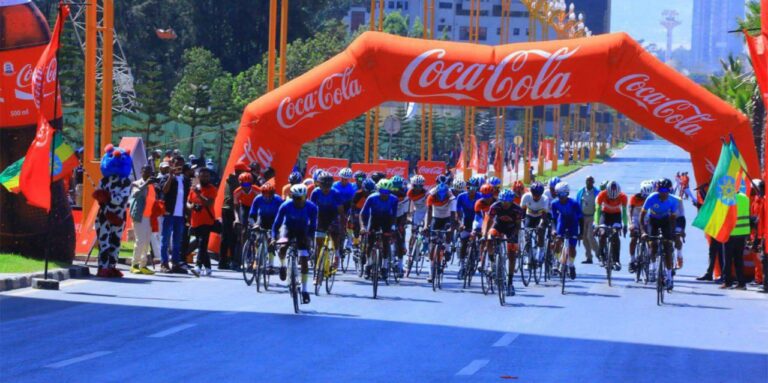
The Coca-Cola-sponsored Addis Ababa Bicycle Race officially commenced at Mexico Square, marking a significant event in the city’s sporting calendar. Organized in collaboration with the Addis Ababa Cycling Federation, the competition aims to promote cycling as a sustainable mode of transportation and encourage healthy lifestyles among residents.

The bicycle race, which will run for one month, features both amateur and professional cyclists competing across various categories. Participants include local clubs, seasoned cyclists, and newcomers eager to showcase their skills and passion for cycling. The event is designed not only to foster competitive spirit but also to build community engagement through sport.

During the opening ceremony, prominent figures from the cycling community and representatives from Coca-Cola expressed their enthusiasm for the event. They emphasized the importance of cycling in promoting fitness and environmental sustainability. “This initiative is a great opportunity for us to come together as a community and celebrate our love for cycling,” said a representative from Coca-Cola.

The race has attracted significant interest from local cyclists, with many expressing excitement about participating in a well-organized event that showcases their skills. “This is a fantastic platform for us to compete and represent our clubs,” said one enthusiastic participant. The event also aims to inspire younger generations to take up cycling as a sport and a means of transportation.

The Addis Ababa Cycling Federation hopes that this race will pave the way for more cycling events in the future, contributing to a culture of fitness and healthy living in the capital. As the race progresses, organizers expect increased participation and community support, further solidifying cycling’s place in Addis Ababa’s sporting landscape.

The Coca-Cola-sponsored Addis Ababa Bicycle Race is set to become an annual highlight, promoting not only competitive cycling but also community spirit and environmental awareness among residents.