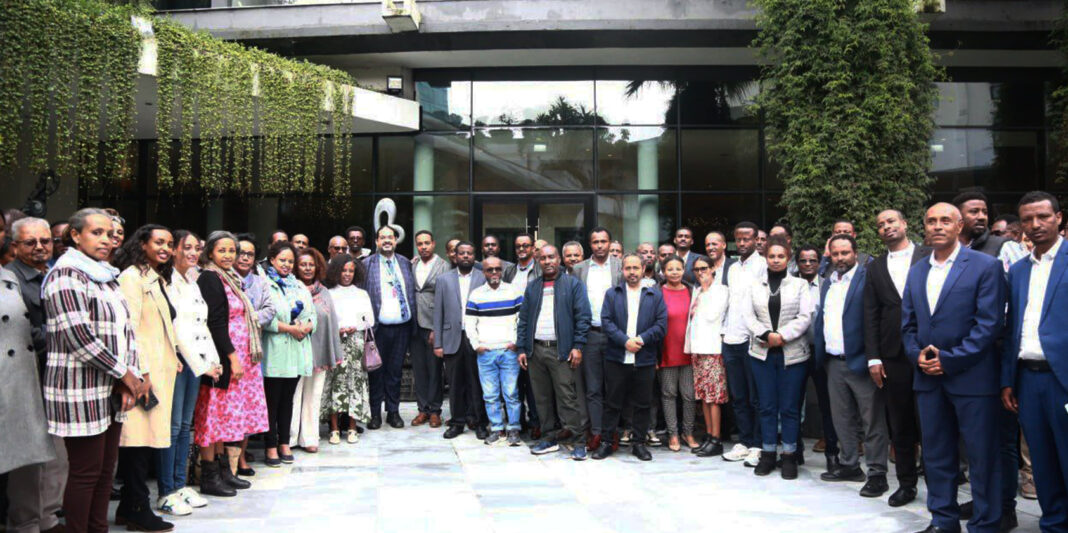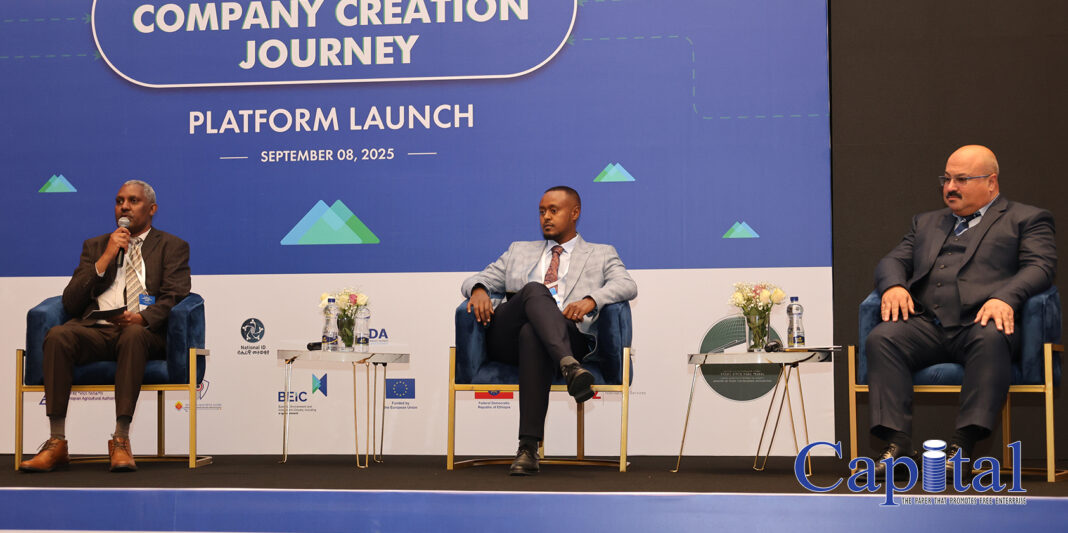
The Ministry of Trade and Regional Integration (MoTRI) has unveiled a cutting-edge digital platform called the Integrated Company Registration Process (ICCJ), designed to simplify business registration and licensing nationwide. The launch event was held on September 8, 2025, at the Skylight Hotel.
Funded by the European Union and developed in partnership with the German Agency for International Cooperation (GIZ), the ICCJ serves as a “one-stop-shop” for entrepreneurs and investors. The platform integrates services from key government bodies, including the Ministry of Revenue, the Federal Documents Verification and Registration Agency (DARA), vocational qualification institutions, and the National Identification Service.
This seamless digital coordination has slashed the average time for business registration and licensing from five days to just one, significantly speeding up the process.
State Minister Abdulhakim Mulu of MoTRI emphasized the system’s transformative impact: “Previously, institutions struggled to create a unified identity system for residents. We are now working with the National Weather Service to solve this challenge. This platform enhances management with convenience, transparency, and accountability.”
A standout feature of ICCJ is its integration with ETH-Switch, the national payment system. This enables businesses to settle registration fees, tax screenings, and other payments electronically via banks using ATM and debit cards or the new national QR payment system, ETQR. This integration is expected to streamline payments, reduce cash handling, curb financial malpractice, and improve government revenue collection.
ICCJ is a core element of Ethiopia’s “Digital Ethiopia 2025” strategy, which aims to harness technology to improve public services, boost international competitiveness, and create a favorable environment for both domestic and foreign investment.
Beyond efficiency gains, the system also builds a digital footprint that could help financial institutions develop credit scoring models for small and medium-sized enterprises (SMEs), potentially unlocking unsecured financing opportunities in the future.