Ethiopia’s insurance industry is approaching what could become its most significant regulatory reform in decades. Under a draft proclamation expected to be enacted this year, insurance supervision would shift from the National Bank of Ethiopia (NBE) to an independent regulatory authority.
For a sector long sheltered from foreign capital and overshadowed by the banking industry, the draft proclamation signals a major transformation. Developed with World Bank support, the proposed reform could bring the most consequential structural change the Ethiopian insurance market has seen in recent history.
A central feature of the draft is the removal of the long-standing practice of composite licensing, which allows insurance companies to offer both life and non-life, or general, insurance under a single corporate structure.
Under the proposed framework, new entrants would no longer be granted composite licences. Entities seeking to provide life insurance would need to register independently and obtain a life-insurance licence, while companies specialising in general insurance would be required to obtain separate general-insurance licences.
The reform is intended to address structural weaknesses in the life-insurance segment, enforce risk-based capital requirements and improve protection for policyholders as the country’s economy and asset base expand.
A central pillar of the draft proclamation is the proposed establishment of the Ethiopian Insurance Regulatory Authority (EIRA) as an independent legal entity with perpetual succession.
While accountable to the Ministry of Finance, the proposed authority would have operational independence and broad powers to license, supervise and regulate insurance companies and intermediaries. The proposal responds to a long-standing demand from insurance-industry operators for a dedicated regulator.
Historically, most Ethiopian insurers have operated under a composite structure. All insurers, including the state-owned Ethiopian Insurance Corporation, have provided life and non-life insurance through the same corporate entity.
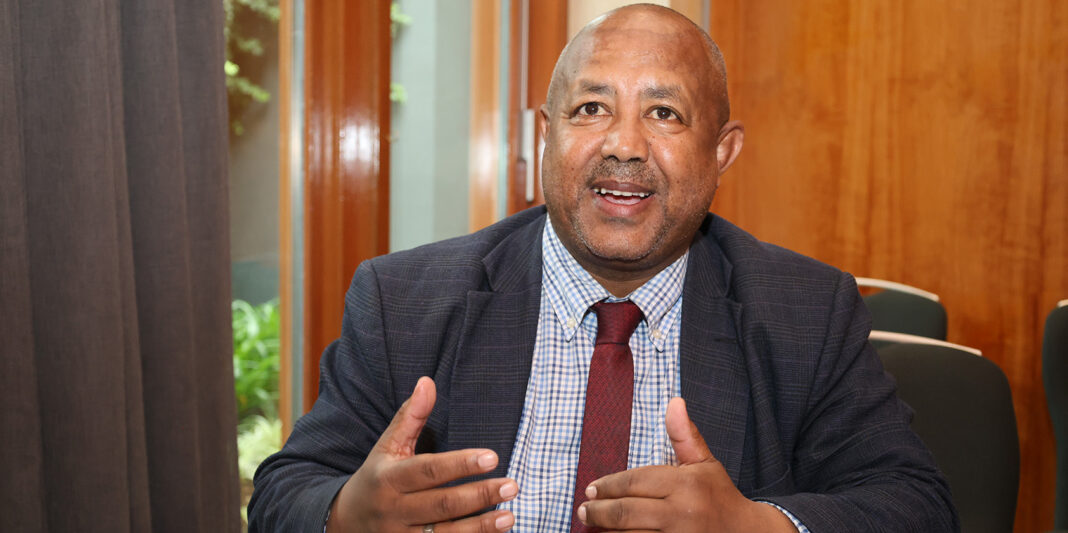
Asseged Gebremedhin, an insurance-sector executive and consultant, said the composite structure has contributed to limited focus on life insurance, compared with more profitable general-insurance segments such as property, motor and marine insurance.
“Under the composite model, life insurance received limited attention compared with the more lucrative general-insurance business lines,” Asseged told Capital. “As a result, life-insurance penetration in Ethiopia has remained very low.”
By requiring separate licences for new operators, the proposed framework aims to encourage dedicated life-insurance businesses, build specialised expertise, support product innovation and ensure more targeted allocation of capital and resources.
Over time, industry participants expect the transition to expand access to insurance, diversify coverage options and increase the sector’s contribution to gross domestic product.
The separation of licences comes as the NBE has increased minimum paid-up capital requirements for insurers.
Under earlier directives, composite insurers were required to maintain paid-up capital of 75 million birr, comprising 60 million birr for general insurance and 15 million birr for life insurance.
Subsequent revisions raised the minimum requirement for composite operations to 500 million birr, including 400 million birr for general insurance and 100 million birr for life insurance.
Asseged said insurers are now operating under a multi-year transition period that runs through 2028 to meet the revised paid-up capital requirements.
“More than 70 percent of existing insurers have either met or are close to meeting the required capital threshold,” he said, adding that new entrants are also working toward compliance.
According to NBE data for the fiscal year ending in June 2025, the insurance sector improved its liquidity position as total assets increased by 29.3 percent to 84.9 billion birr. General insurance accounted for 93.5 percent of total assets.
The sector’s capital also expanded by 30.4 percent, driven partly by the NBE directive requiring insurers to raise their paid-up capital by June 2027.
Gross written premiums reached 41.1 billion birr during the year, a 43.1 percent increase from the preceding year. General insurance generated 38 billion birr, or 92.5 percent of total premiums, while long-term insurance and Shariah-compliant Takaful operations accounted for 3.1 billion birr, or 7.5 percent.
The figures underline the industry’s continued dependence on general insurance. Recent sector estimates have placed insurance penetration at around 0.27 to 0.3 percent of GDP, while life insurance accounts for less than 10 percent of gross written premiums. The draft proclamation also provides for the partial opening of the insurance sector to foreign investors.
Foreign insurers would be allowed to establish partially or fully owned subsidiaries, acquire shares in local insurance companies or open representative offices. However, the draft sets limits on foreign ownership.
Direct equity participation by a strategic foreign investor would be capped at 40 percent. Non-strategic foreign individuals and entities would be limited to 7 percent and 10 percent, respectively. Total foreign ownership in a single insurance company could not exceed 49 percent of subscribed shares.
Initial investments would be required in foreign currency, while dividends could be reinvested in Ethiopian birr.
Industry observers say foreign participation could introduce additional capital, technical expertise, specialised products, technology and stronger risk-management practices. However, domestic insurers will also face greater competition and pressure to improve governance, service quality and operational efficiency.
Asseged said domestic insurers should not resist the opening of the market.
“Strong domestic insurers will actively seek strategic alliances under 60–40 or 51–49 ownership structures,” he said. “Mergers, acquisitions, joint ventures, strategic alliances and conglomeration are not simply viable options; they are necessary paths forward.”
The proposed law also seeks to strengthen policyholder protection through the creation of a formal Policyholders’ Protection Fund and a resolution framework for distressed insurers.
The framework would require recovery planning and give the proposed regulator powers to establish “bridge insurers” to assume critical functions of failing insurance companies, protecting policyholders and reducing broader market disruption.
The draft also raises corporate-governance standards. Insurance companies would be required to appoint independent directors and maintain dedicated risk-management, compliance and internal-audit units.
Administrative penalties would apply to violations of capital-adequacy rules, while operating an insurance business without a licence could carry criminal penalties of between 10 and 15 years’ imprisonment.
The draft further proposes a regulatory sandbox, a controlled environment in which insurers and technology companies could test innovative products and services under regulatory supervision before wider rollout.
The sandbox could support the development of digital insurance products, micro-insurance, inclusive insurance and alternative models such as Takaful.
Industry experts say the new framework reflects a broader shift in government policy from restrictive privatisation toward gradual financial-market liberalisation.
If adopted, the proclamation could fundamentally change how insurance companies operate, compete and raise capital. The immediate challenge will be ensuring that the transition is managed carefully so that stronger governance and market openness translate into deeper insurance penetration, better policyholder protection and more inclusive access to financial protection.