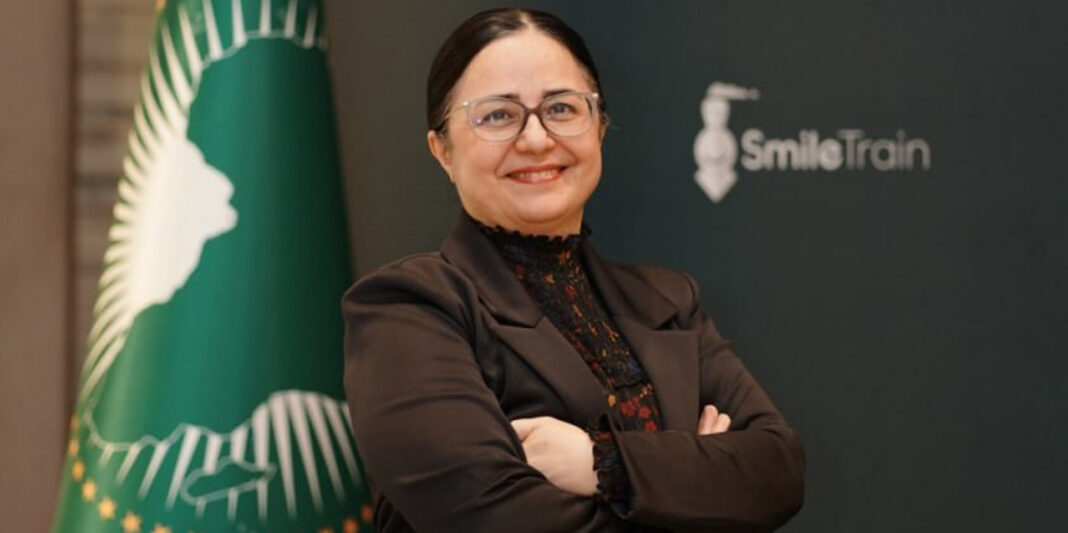
Smile Train is strengthening Ethiopia’s capacity to provide comprehensive cleft care through medical training, partnerships and investment in healthcare facilities. At the fourth Pan-African Surgical Healthcare Forum (PASHeF IV) in Addis Ababa, Smile Train Chief Impact Officer Dr. Mandana Arabi spoke to Capital about the organization’s work in Ethiopia, its five-year strategic plan, Africa’s surgical care challenges and the importance of building sustainable local capacity.
Capital: What has Smile Train achieved in Ethiopia so far?
Dr. Mandana Arabi: Smile Train is an international non-profit organization dedicated to providing comprehensive care for children affected by cleft conditions. This includes supporting surgery, safe and sustainable surgical and anaesthesia services, and other forms of care that children need.
In Ethiopia, we have been supporting several health facilities by training healthcare providers and ensuring that facilities are equipped to deliver safe surgery, sustainable care and anaesthesia services. We are also working to strengthen other areas, including nutrition, and hope to expand access to orthodontic care in the future.
This week, we inaugurated a newly equipped paediatric operating theatre at Arba Minch Hospital in partnership with Kids Operating Room. This was an important opportunity to celebrate the progress we have made together. We also work with several other partners in Ethiopia.
Capital: Do you have plans to expand Smile Train’s activities in Ethiopia and across Africa?
Arabi: Yes. As an organization, we have developed a new five-year strategic plan aimed at increasing the availability of surgery for children who need it. We hope to establish more partnerships and expand access to comprehensive care.
Our ambition goes beyond surgery. We want to ensure that children receive the support they need throughout childhood, including good nutrition, psychosocial care, speech and hearing services.
This also means training local specialists and strengthening the capacity of our partners to provide comprehensive care close to communities, particularly for those who need these services most.
Capital: Cleft conditions can affect children psychologically and socially, not just physically. How does Smile Train address these challenges?
Arabi: That is an important issue. We always say that surgery is the beginning of the journey for a child affected by a cleft condition, but it is not the only support they need.
Children and their families also require psychosocial support to help them cope with the condition and ensure that children can reach their full potential. We want them to have a healthy childhood and eventually transition into adulthood as confident, supported individuals.
They also need proper nutrition, speech therapy and orthodontic care. As an organization dedicated to children with cleft conditions, we want to help make these services available as part of comprehensive care.
We recognize that the need is significant. Our approach is to build local capacity that remains within the country and is owned by local partners. This is something we want to continue doing with our partners in Ethiopia and around the world.
Capital: Unlike organizations that send visiting surgical teams to hospitals for temporary missions, Smile Train focuses on training local surgeons and healthcare professionals. Why is this approach important?
Arabi: This is a model to which we are deeply committed. We do not believe that sustainable, safe and meaningful care can be achieved simply by sending a surgical team to a hospital for a short period and then leaving. We believe that this care must be provided by local specialists, surgeons, surgical teams and comprehensive cleft care teams.
Our model is about teaching people how to provide care themselves rather than simply delivering a service temporarily. We achieve this through training, mentorship, fellowships and partnerships with local institutions, including medical schools, universities and professional associations.
There are three important reasons for this approach. First, continuity: children with cleft conditions may require several operations and years of speech therapy, orthodontics and nutritional support. Second, resilience: local programmes can continue operating during difficult periods, including extreme weather, pandemics and conflicts. Third, multiplication: every healthcare professional we train can transfer that knowledge to other colleagues and treat more patients.
Capital: What do Smile Train’s latest figures reveal about its contribution to surgical care in Africa?
Arabi: Our 2025 impact figures show that our partners in Africa provided 15,285 surgeries across 34 countries. We are now present in nearly 40 countries. One important figure is that Africa accounted for about 16 percent of our global surgeries but received approximately 55 percent of our global training hours, amounting to 19,008 hours. This is a deliberate investment because the main bottleneck is not demand for surgery; it is the shortage of trained professionals close to the children who need care.
We are investing in the workforce first, because as more trained professionals become available, surgical services can expand. In 2025, we also trained 627 providers in safety, delivering more than 8,600 hours of training. Our training programmes included 365 nurses, 318 surgeons and 211 anaesthesia providers. Anaesthesia and perioperative safety are particularly important because these are areas where many African surgical systems have limited capacity.
Capital: What are the major challenges preventing more people from accessing safe and affordable surgical care in Africa?
Arabi: The challenges include limited resources, inadequate infrastructure, shortages of trained healthcare professionals and policies that do not always support the development of surgical services. The unmet need remains enormous. The 2015 Lancet Commission on Global Surgery estimated that five billion people lacked access to safe and affordable surgical and anaesthesia care. A 2025 follow-up report indicated that the unmet need had grown to at least 160 million operations annually.
There has been progress in the surgical workforce, but low-income countries continue to lag behind. As of 2025, no country had reached the target of 5,000 surgical procedures per 100,000 people by 2030 set by the Lancet Commission. Several countries have developed national surgical plans, which is encouraging. However, many remain unfunded. A plan without a budget is a promise, not a functioning system.
Capital: You have emphasized the importance of surgical data. Why is better data collection essential to improving access to care?
Arabi: Sustainable health systems are built on data. Surgical data helps governments and health institutions identify where their capacity gaps are and determine where investment is most needed. For too long, much of the evidence on cleft conditions, surgical techniques and treatment outcomes has been generated in high-income countries. However, Africa has different realities in terms of genetics, nutrition, the age at which patients receive treatment and the constraints facing health systems. Our evidence must reflect those realities.
One approach we are promoting is the use of the timing of cleft lip repair as an indicator of the strength of a country’s surgical system. Cleft lip is visible at birth, and there is an established recommended period for surgical repair. When children receive treatment late or do not receive it at all, this can indicate wider weaknesses in referral systems, trained medical teams, anaesthesia services, financing and continuity of care. Cleft care therefore provides an opportunity to understand and strengthen the broader surgical system.
Capital: What role should African governments play in addressing these challenges?
Arabi: Governments have a very important role. We are calling on African ministries of health to develop, update and finance national surgical, obstetric and anaesthesia plans. Governments also need to strengthen essential health-service packages, referral pathways and quality frameworks to ensure that patients can access coordinated care.
A child should not have to navigate five disconnected programmes to receive five essential components of treatment. We need integrated services that make care more accessible, affordable and sustainable in every community. Cleft care can also become a catalyst for strengthening entire surgical systems and advancing universal health coverage.
Capital: What initiatives is Smile Train undertaking to strengthen surgical expertise and policy leadership across Africa?
Arabi: We are investing in both healthcare professionals and the next generation of surgical policy leaders. Through partnerships with regional and international institutions, we create opportunities for local surgeons to gain exposure to high standards of practice. The knowledge they acquire is adapted to local realities, transferred to the next generation and ultimately owned by local institutions.
We also support the PASHeF Policy to Practice Fellowship, a 12-week hybrid executive programme that equips African surgical and anaesthesia leaders with practical tools, mentorship and strategies to implement national surgical plans and mobilize resources. The second cohort brings together six emerging African leaders committed to translating policy commitments into action and improving access to quality surgical care.
Capital: What is the significance of the Cleft Leadership Center in Kumasi, Ghana, and could a similar model be established elsewhere in Africa?
Arabi: The Cleft Leadership Center in Kumasi is the first of its kind in Africa. It provides a patient-centred model in which families can receive different aspects of cleft care under one roof, rather than having to move from one facility or service to another.
It is designed to provide coordinated and accessible care while generating locally developed training programmes, treatment-outcome data and regional evidence that can help shape the future of cleft care across Africa.
In the coming months, the center will also establish a simulation laboratory aligned with global training standards. This will use technology to connect and train cleft care providers across Africa while allowing them to participate from their own countries. The center is part of a growing global network of Cleft Leadership Centers, which also includes facilities in Brazil, Chile, India, the Philippines and Vietnam.