Thursday, October 22, 2026
Home Blog Page 199

Unpredictable policies and overnight legal changes cripple long-term business planning

0

Regional business leaders and chamber executives have issued a stark warning that a constantly changing and unpredictable legal and regulatory framework has made long-term business planning virtually impossible. They expressed deep concern over sudden policies introduced or amended overnight without consulting the business community. This approach is severely eroding confidence in the private sector and forcing enterprises to focus only on short-term exit strategies rather than strategic investment.

The primary threat to sustainable economic growth stems directly from this legal instability, which leaves both local businesses and potential foreign joint-venture investors unable to plan their future operations. According to corporate representatives, new proclamations and directives are frequently introduced or amended overnight, creating policy volatility that disrupts supply chains, destabilizes financial projections and halts capital projects.

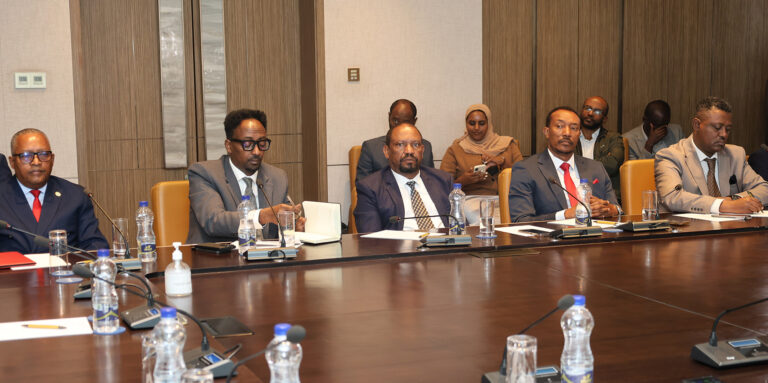
These statements were made during a panel discussion themed “Private Sector Participation in the National Dialogue Process,” organized by the Ethiopian Chamber of Commerce and Sectoral Associations (ECCSA) in collaboration with the Ethiopian National Dialogue Commission.

Speaking at the forum, Bogale Bitane, president of the South Ethiopia Chamber of Commerce and Sectoral Associations, said a deep culture of fear has emerged, making business owners highly afraid to provide candid policy feedback to government bodies. “A business community that is afraid to express its views has been created,” he warned, explaining that traders are under dangerous structural pressure.

The president noted that under the current environment, laws are changing overnight, with new proclamations stamped and issued before stakeholders can even finish reading the previous ones. Consequently, foreign investors are shunning joint-venture opportunities. He urged the national chamber to move away from passivity and work actively and aggressively toward achieving a predictable legal environment.

The dialogue centered on the reality that the business community is often the first and worst casualty whenever regional conflict arises. According to participants, when conflicts break out, legitimate business establishments become the initial targets of looting, arson and property destruction long before any broader political fallout occurs.

Bogale detailed how business owners who had accumulated wealth and assets over decades — often using a 30/70 bank loan structure — have watched their factories, heavy transport fleets and buildings completely destroyed overnight. This devastation has plunged former investors and factory owners into severe psychological and economic crisis, reducing them to poverty and forcing them to seek employment from their peers.

To counter this structural vulnerability, the South Ethiopia Chamber has proposed the urgent establishment of a Corporate Social Responsibility Fund for Peace. Managed by the business community, the fund would serve as a financial safety net to support traders impoverished by war, whom the conventional banking system is unwilling to assist.

For his part, Berihu Haftu, president of the Tigray Chamber of Commerce and Sectoral Associations, echoed these concerns. Speaking on behalf of a region recovering from five years of devastating war, Berihu warned that the goals of the national dialogue cannot be achieved if some regional business communities still feel marginalized and excluded.

The financial data presented on post-war recovery was staggering. Berihu explained that before the war, Commercial Bank loans held by business owners in Tigray stood at 32 billion birr. Due to accumulated interest, compound interest and penalties accrued during the years the region was completely cut off from the national economy, that figure has now risen to 89 billion birr.

“Even though we have been litigating this matter with the federal government and financial regulators for nearly three years, we have yet to receive any solution,” he said. “If we cannot resolve even the current, immediate and obvious post-war crisis, the idea that they will provide solutions to problems accumulated over eras feels discouraging.” He added that issues such as power outages, a lack of stimulus loans, and kidnappings and harassment by armed groups along transit routes are leaving northern business communities incapacitated and unable to contribute their share to national economic revival.

Reinforcing criticism of the government’s timelines, chamber representatives said that while the work currently being done by the National Dialogue Commission is vital, the process is far too late.

They argued that the commission is operating at a time when crises have already escalated to this level because the dialogue did not begin eight or ten years ago, before the problems erupted. Had such deep consultations taken place earlier, the country could have reached consensus from a position of economic strength.
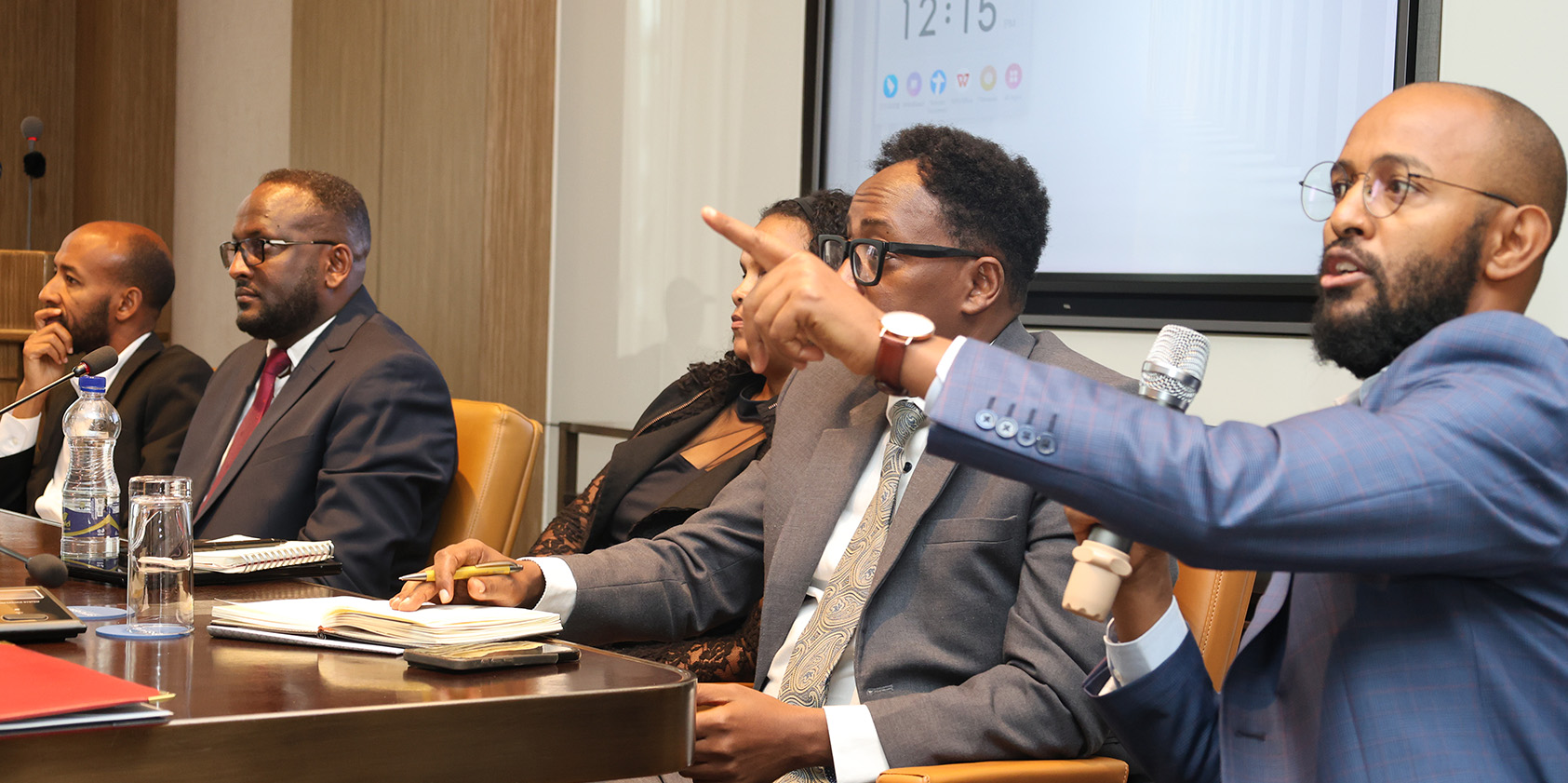
Sector actors also challenged the misconception that peacebuilding is exclusively the responsibility of government security agencies. They strongly criticized views suggesting that business owners should mind their own business and stay out of peace efforts.

Aynalem Abayneh, vice president of ECCSA, said the private sector can play a major role in Ethiopia’s national dialogue process by representing economic interests, promoting stability and contributing practical solutions to national challenges.

“The Ethiopian Chamber of Commerce and Sectoral Associations has a strong interest in supporting national dialogue outcomes that mitigate conflicts and strengthen predictability,” he said.

During the event, Ambaye Ogato noted that given the business community’s broad membership and reach, it has the potential to serve as an ambassador for peace and unity, thereby strengthening public participation and ownership.

He explained that the Ethiopian National Dialogue Commission, which has been operational for three years, developed 10 screening criteria to identify fundamental national issues, drawing from Article 6 of its establishing proclamation. Accordingly, the agendas have been divided into two categories: the first consists of core national issues to be discussed by the public at the national plenary, while the second includes grievances and inputs gathered from the woreda level upward regarding laws and policies that exist but have failed to be implemented by various stakeholders.

According to Ambaye, preparations have been completed to organize the gathered agendas and submit them to regional presidents, executive bodies and the Prime Minister. He said more than 4,000 delegates have been identified through the process, and consultations are scheduled to begin in Addis Ababa on July 14, 2026.
Ahadu Bank secures high-rise building, launches AI-Powered banking apps

0

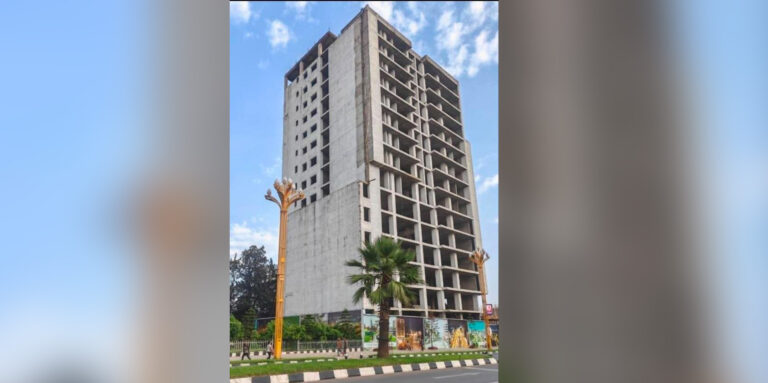
Ahadu Bank has secured a semi-finished high-rise building in the Mexico area of Addis Ababa, marking a major milestone for the young lender as it expands its presence in Ethiopia’s banking sector. The bank also launched two new mobile applications — Ahadu Le Kulu for retail customers and Mahder for MSMEs — as part of its push into digital banking.

Sources told Capital that the acquired property reportedly consists of two basement levels and 15 upper floors. Sources said Ahadu Bank emerged as the highest bidder in an auction conducted by Nib International Bank on May 21, 2026, and that the bid has since been accepted.

The acquisition is expected to provide the bank with its own high-rise headquarters and support its long-term growth ambitions.

At the same time, Ahadu Bank unveiled Ahadu Le Kulu, a retail banking app developed entirely in-house by the bank’s technology and software team. Board Chairman Anteneh Sebsibe said the app reflects the bank’s motto, “From the Many to the Many,” and is designed to bring a full range of banking services directly to customers’ hands.

He said the app allows users to self-register without visiting a branch, check account information, transfer funds, manage daily cash flow and make payments from anywhere at any time.

A notable feature of the app is its artificial intelligence capability, which analyzes user behavior and displays frequently used services more prominently on the dashboard. The app also generates weekly spending reports and financial analytics to help customers budget more effectively.

Ahadu Bank said security was a core consideration in the design of the platform. The app was built in line with international cybersecurity standards and includes modern fraud-prevention systems intended to protect customer data and guard against cyber threats.

Alongside the retail app, the bank also launched Mahder, a platform tailored for micro, small and medium-sized enterprises. The app serves as both a digital vault and an operational tool, with an integrated digital cash book that helps business owners track sales, expenses and overall performance from their smartphones.

Government struggling to recover over 14 billion birr in misappropriated funds from past years

0

The Federal Office of the Auditor General (OFAG) announced that, out of a staggering 21.57 billion birr and an additional USD 23,200.43 identified for recovery due to illegal or irregular financial practices in past budget years, only 31 percent — approximately 6.61 billion birr — has been successfully recovered. This leaves more than 14.95 billion birr and the entire foreign currency amount unrecovered to date, underscoring what the audit report describes as a persistent culture of financial unaccountability.

OFAG recently presented its consolidated audit report for the 2017 Ethiopian fiscal year to the House of Peoples’ Representatives, exposing severe delays and weaknesses in federal institutions. While a few entities, such as the Kombolcha Customs Branch Office and Arba Minch University, showed commendable corrective efforts by recovering 99 percent and 80 percent of their irregular payments respectively, major branches such as Kality, Modjo and Adama Customs lagged far behind.

Federal institutions also largely ignored directives to provide full documentation for unsupported expenditures. Out of 2.92 billion birr identified over the years as lacking supporting evidence, valid documentation was presented for only 1.8 percent, leaving nearly 2.87 billion birr completely unaccounted for.

In response to these persistent irregularities, the Ministry of Finance intervened during the budget year by imposing financial penalties and issuing stern written warnings to the top management of seven federal institutions that failed to implement laws and directives.

Beyond the outstanding arrears from previous years, the Auditor General’s Office carried out extensive oversight work during the 2017 budget year. After revising its plan due to security concerns and institutional mergers, the office audited 1.51 trillion birr, achieving 99.53 percent of its annual target. The financial review showed some positive shifts: the number of institutions receiving an unqualified, or clean, audit opinion increased by 13.8 percent year on year, rising from 116 to 132.

In addition, no federal institution received a disclaimer of opinion due to a total breakdown in the accounting system. However, the report strongly criticized five major federal institutions that received adverse audit opinions because of material and pervasive irregularities in their financial reports. The detailed analysis of the 2017 budget year highlighted critical areas where public funds continue to be wasted due to systemic gaps, indicating that the government’s revenue collection structure is burdened by a massive accumulation of outstanding arrears.

A joint assessment conducted across 11 customs branches and 12 revenue branches exposed 6.85 billion birr in uncollected customs duties and tax debts, representing a sharp 65.11 percent increase compared with the previous year.

The Dire Dawa Revenue and Customs branches alone accounted for the largest share of this deficit, with billions in uncollected government revenue. Illegal tax practices and non-compliance with the Value Added Tax (VAT) law cost the government an additional 1.21 billion birr in potential revenue.

Furthermore, accumulated uncollected debts and receivables reached 16.32 billion birr across 138 institutions. Most alarmingly, 4.7 billion birr of this amount consists of outstanding arrears dating back more than a decade, with the Ministry of Health and Wachemo University emerging as the top debtors.

According to the report, illegal or unsupported expenditures rose sharply. Payments exceeding 1.18 billion birr were made across 42 institutions without adequate supporting evidence, while 35.8 million birr was recorded as expenditure with no documentation at all.

The Ministry of Health was specifically singled out for making 231.1 million birr in overpayments and duplicate payments, as well as wasting 122.1 million birr on court orders and tax penalties resulting from avoidable payment delays.

Explaining the situation to the House, Auditor General Meseret Damtie said public infrastructure projects continue to suffer from severe delays and weak contract enforcement. Advance payments of 571.1 million birr granted to contractors remain unrecovered, unsupported by active bank guarantees or unrenewed, with Mekelle and Wollega universities facing high exposure in this regard.

“Worse still, 23 major construction projects valued at a total of 1.41 billion birr at Gambella, Salale and Bule Hora universities have ground to a complete halt due to severe breaches of contract,” she said. She pointed out that operating outside standard procurement procedures and directives has severely drained the government’s budget. The audit report noted that more than 1.25 billion birr was used in direct violation of the Procurement Proclamation. This includes 441 million birr in direct procurements that should have been handled through open bidding, and 194 million birr in procurements executed by bypassing the mandatory electronic Government Procurement (e-GP) system.

According to the report, although Ethiopia aimed to reduce the under-five mortality rate to 25 per 1,000 live births by 2030, recent survey data from 2024/25 shows that it has instead risen to 51. At Mugher Cement Factory, vital legal protections were bypassed, with performance guarantees not secured for 28 of 34 machinery procurement projects. All projects reportedly experienced delays of up to four years.

Furthermore, the factory failed to provide any utilization records showing the whereabouts of more than 21,000 tons of cement produced between 2016 and 2017 E.C., and it has yet to collect 84.3 million birr in credit sales dating back to 2010.

When presenting the report to the House regarding the Authority for Civil Society Organizations, the Auditor General said the regulatory body has failed to track the physical addresses of registered NGOs. Out of 5,000 active organizations, only 12 percent have registered their assets, and the tracking system relies entirely on manual paperwork rather than a digital database.

As a major example, it was stated that a prominent organization imported duty-free goods worth 403.5 million birr from the Canadian government and then completely diverted the goods from their intended development purpose. In her briefing, Meseret Damtie urged the House of Peoples’ Representatives to ensure strict legal accountability, calling on the relevant standing committees to question and hold failing institutional heads accountable in order to safeguard the nation’s financial integrity.

Ethiopia expects birr stability in 2026/27 despite heavy FX pressures

0

The Ministry of Finance projects the birr will stabilize in the upcoming 2026/27 fiscal year, despite a 15 percent depreciation against major foreign currencies over the past year.

During his federal budget presentation to Parliament last week, Finance Minister Ahmed Shide forecasted a 9.8 percent overall economic growth for the coming fiscal year. This growth is expected to be driven by a 7.1 percent increase in agriculture, 11.6 percent in industry, and 8.5 percent in the services sector, with the economy maintaining strong momentum despite unforeseen global developments.

However, Ahmed acknowledged potential challenges from the ongoing Middle East conflict, which has been factored into the government’s budget planning.

Ethiopia is projected to import goods worth USD 25.8 billion in 2026/27, with fuel imports alone accounting for approximately USD 6 billion. The minister attributed this higher fuel import bill to rising global energy prices, exacerbated by Middle

Eastern tensions. “The impact of the conflict in the Middle East has been considered in our forecasts,” Ahmed informed lawmakers.

The government will continue implementing measures to stabilize the foreign exchange market. Ongoing reforms are expected to strengthen the market and contribute to greater stability in the birr’s exchange rate.

Despite official claims that the gap between the official and parallel foreign exchange markets has narrowed significantly, the birr has depreciated by at least 15 percent over the current fiscal year, based on average winning rates from National Bank of Ethiopia (NBE) foreign exchange auctions.

Officials maintain that monetary and macroeconomic policies under the government’s reform agenda have reduced disparities between the formal and informal forex markets.

Since broad economic reforms began in July 2024, the government has introduced various measures to modernize foreign exchange administration. Recently, new directives have granted commercial banks greater authority to approve deferred import transactions for their customers.

Economists suggest these reforms, which decentralize foreign exchange decision-making from the central bank to commercial banks, could channel foreign currency transactions into formal financial systems and curb illegal market activities.

Experts also anticipate these measures will further reduce the gap between official and parallel exchange rates. While some analysts estimate the parallel market premium remains above 15 percent, NBE officials indicate it has fallen below 11 percent.

Nevertheless, the parallel market has faced renewed pressure recently, particularly following escalating tensions in the Persian Gulf region, with exchange rates reportedly strengthening by as much as 3 percent.

The NBE is preparing additional legislation and amendments to foreign exchange directives to improve ease of doing business, expand access to foreign currency, and further narrow the gap between official and unofficial exchange rates.

Ahmed stated that additional measures would be introduced in the new fiscal year, beginning July 8.

During the first ten months of the current fiscal year, Ethiopia allocated USD 18.4 billion for imports, an 18 percent increase year-on-year. Government officials cited Middle East developments as a primary driver for this surge in foreign exchange demand for imports.

For 2026/27, total imports are projected to reach USD 25.8 billion, with fuel imports alone expected to comprise USD 6 billion.

The proposed federal budget for the fiscal year totals 2.34 trillion birr, with an overall fiscal deficit projected at 2.36 percent of GDP. Excluding principal debt repayments of 214 billion birr, the deficit would decrease to approximately 1.4 percent of GDP.

The government plans to allocate 293 billion birr (approximately USD 1.8 billion), or 12.5 percent of the total proposed budget, to service external debt obligations. Authorities have previously secured temporary external debt servicing relief and are nearing the final stages of negotiations to restructure these repayments.

Domestic debt servicing is projected to reach 249 billion birr, comprising 26 billion birr (11 percent) in principal repayments and 222 billion birr (89 percent) in interest payments.

As part of its ongoing macroeconomic and foreign exchange reform agenda, the National Bank of Ethiopia (NBE) plans to establish an interdealer foreign exchange trading platform and further relax surrender requirements for commodity exporters.

The interbank foreign exchange market officially launched on January 28. It operates through a technology platform built on the infrastructure of the Ethiopian Securities Exchange (ESX), which includes a dedicated foreign exchange trading segment. This platform aims to enhance transparency, competitive pricing, and real-time transaction execution, though its performance to date remains unclear.

The central bank is currently developing a roadmap to deepen the interbank foreign exchange market. In line with commitments made to development partners, this roadmap will include creating an electronic interdealer trading platform that facilitates anonymous, real-time trading among major financial institutions.

This initiative is a key structural benchmark within Ethiopia’s reform program, which began at the start of the 2024/25 fiscal year. The NBE aims to operationalize the platform during the first quarter of the 2026/27 fiscal year.

Officials believe a well-functioning interbank market will improve banks’ foreign exchange risk management capabilities and increase transparency. Efforts are also underway to upgrade settlement systems to enable domestic settlement of interbank foreign exchange transactions.

According to the latest IMF review, the NBE will develop new indicators and benchmarks to assess the progress of the foreign exchange market. These metrics will include the size and persistence of the parallel market premium, interbank trading volumes, unmet foreign exchange demand, and banks’ net open positions.

These indicators will guide decisions on the gradual reduction and eventual elimination of surrender requirements by the end of the IMF-supported program, which is expected to continue for another 24 months.

The IMF review also notes that the NBE plans to relax rules governing exporters’ use of foreign currency retained in foreign exchange accounts. These changes will provide exporters with greater flexibility to meet surrender obligations and capitalize on favorable exchange rates. Implementation is expected at the start of the new fiscal year.

Under Foreign Exchange Directive No. FXD/01/2024, issued on July 29, 2024, exporters were required to convert 50 percent of export proceeds into birr, retaining the remaining 50 percent in foreign currency accounts.

However, a significant amendment introduced on February 11 substantially altered this framework. Service exporters are now exempt from surrender requirements and may retain 100 percent of their foreign currency earnings indefinitely. Exporters operating within Special Economic Zones (SEZs) are also entitled to full retention of export proceeds.

The revised Directive No. FXD/04/2026 represents one of the most comprehensive overhauls of Ethiopia’s foreign exchange regime in decades, incorporating key recommendations under the IMF’s Article VIII framework.

Major reforms include the elimination of long-standing exchange restrictions and the authorization for banks to issue internationally recognized foreign currency payment cards for retail and e-commerce transactions abroad. Foreign currency account holders now have expanded rights to directly cover education, medical, and travel expenses for immediate family members.

The minimum balance requirement of USD 100 to open a foreign currency savings account has also been abolished.

Furthermore, profit-making institutions are now permitted to open foreign currency accounts funded by grants and other non-export sources. Ethiopian nationals may also be allowed to make outbound investments on a case-by-case basis, subject to National Bank of Ethiopia (NBE) approval.

Collectively, these measures signify a substantial move toward a more market-oriented and flexible foreign exchange regime.

Directive No. FXD/05/2026, issued last month, further liberalizes the country’s foreign exchange system by transferring the authority for approving deferred Letters of Credit (LCs) and Cash Against Documents (CAD) transactions from the NBE to commercial banks.