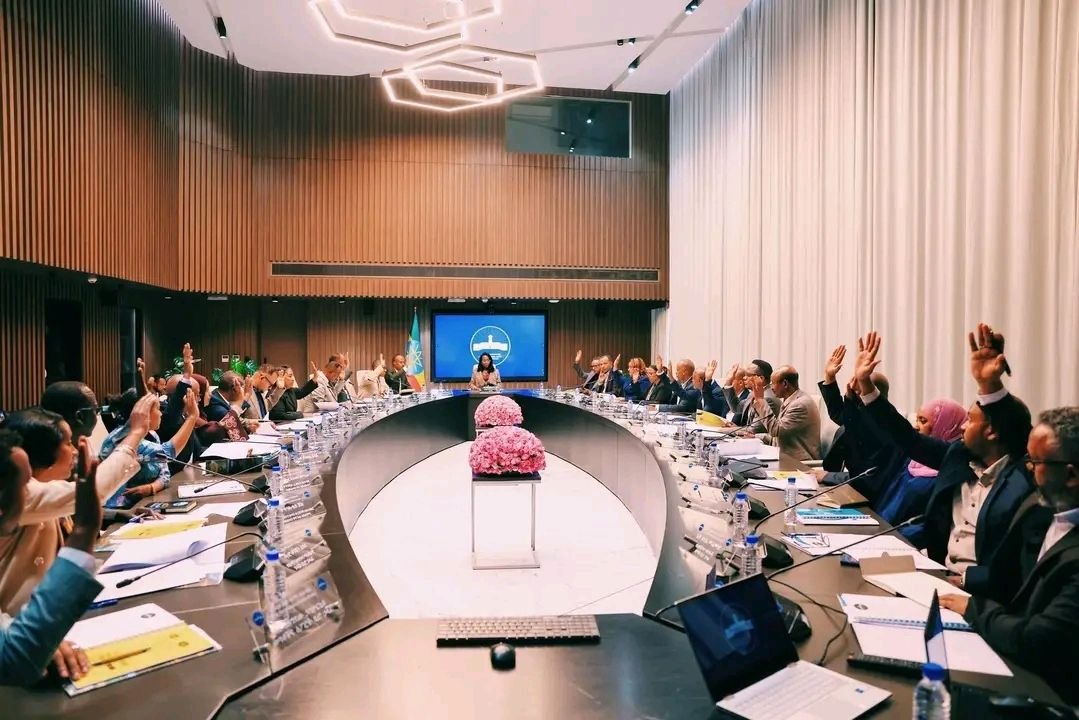
Rotary Addis Ababa West will celebrate its 35th anniversary with a special live performance by internationally acclaimed pianist Girma Yifrashewa at a charity event themed “Music for Humanity.”
Scheduled for June 5, 2026, at the Sheraton Addis, Luxury Collection Hotel, the evening will bring together European classical works and timeless Ethiopian compositions in what organizers describe as a rare musical experience in the capital.
The concert is expected to blend artistry and philanthropy, with proceeds supporting selected charitable causes for underserved communities. Organizers say every ticket will contribute to Rotary’s community service work, making the event both a cultural and humanitarian gathering.
The program will run from 5:30 p.m. to 9:00 p.m. and will also feature silent auctions, networking opportunities, and fine cuisine alongside the musical performance.
Rotary Addis Ababa West says the event will highlight 35 years of service and impact while creating an evening where world-class music meets purpose.
Tickets are available for early purchase, with organizers encouraging guests to secure seats in advance for what they describe as a rare and memorable night in Addis Ababa.
In this interview, Festival Coordinator Menna Haile reflects on how the Addis International Film Festival has managed to endure for two decades despite political shifts, financial pressure, and occasional pushback. She discusses the festival’s commitment to human rights storytelling, the thinking behind this year’s theme, and why AIFF sees its mission as far from complete.
Q1: The festival has survived 20 editions through political shifts and financial pressure — what has kept AIFF going when so many cultural initiatives in the region have not?
A: First, I have to acknowledge our partners — many of them have been with us through the years and without that continued support this festival simply would not exist. But beyond that, the mission never shifted. AIFF stayed anchored in human rights storytelling even when it would have been easier to soften that focus. A lot of initiatives fade because they start playing it safe. We never did. That clarity of purpose, backed by partners who believed in it as much as we did, is what kept this festival alive for twenty years.
Q2: “Stories That Matter” was this year’s theme — how does AIFF decide what stories deserve a platform?
A: It comes down to what’s being silenced or overlooked. If a story isn’t getting space elsewhere and it speaks to something urgent, that’s exactly where AIFF should be.
Q3: Has AIFF ever faced pushback over a film it chose to screen?
A: Yes. During the 18th edition we had a film about Palestine scheduled at the Italian Cultural Institute and faced difficulties showing it there. We moved the screening to the Goethe Institute. The film screened, the audience came, and the conversation happened. That’s the job.
Q4: Twenty years in — is AIFF achieving what it set out to do?
A: The work isn’t finished. Films are being shown, rooms are being filled, but the gap between these stories and the audiences who need them most is still real. Twenty editions is a milestone, not a finish line.
In this interview with Capital’s Eyasu Zekarias, Claudio Pasqualucci, Trade Promotion Commissioner at the Italian Embassy in Addis Ababa, discusses the changing trade and investment landscape between Italy and Ethiopia, from the Mattei Plan and major infrastructure financing to banking reforms, coffee, and new opportunities in mining and manufacturing. He says the relationship is moving from recovery to expansion, but still needs stronger trade flows, better awareness among Italian firms, and faster implementation of key projects. Experts;
Capital: How would you describe the current bilateral trade relationship between Italy and Ethiopia compared to three years ago? What are the primary factors driving this change?
Claudio Pasqualucci: To understand the present, we must look back three or four years. Prior to COVID-19, Ethiopia was experiencing a significant socio-economic boom. Just months before the pandemic, we hosted a business forum featuring high-caliber Italian companies, and the outlook was incredibly promising. However, the pandemic hit Ethiopia and the world hard, causing bilateral trade to decline sharply.
Today, Ethiopia is recovering well. Several key reforms have been implemented, and trade is on an upward trajectory. That said, the current volume is not yet sufficient. In 2025, bilateral trade did not reach €400 million , which is modest considering the size of our industries, the potential of the Ethiopian market, and our decades-long relationship.
Our goal for the next two to three years is to double exports. We also want to increase Ethiopian exports to Italy—specifically in sectors like coffee. Italy does not produce coffee, yet we lead the world in coffee processing. We need high-quality Ethiopian coffee to sustain our industry. This presents a bridge for Italian companies to invest here, bringing in technology for roasting, selecting, cleaning, and packaging. There is a vast amount of untapped potential for collaboration.
Capital: What is the current volume of trade between Ethiopia and Italy, and are there specific strategies aimed at expanding access for Ethiopian products to the Italian market?
Claudio Pasqualucci: As mentioned, bilateral trade reached approximately €400 million last year. While positive, it remains below our targets. Our primary strategy is to increase awareness among Italian companies regarding the specific opportunities in this market.
We recently concluded the “Big 5 Construct Ethiopia,” where 20 Italian companies participated; several are already in talks with local partners. We are also bringing high-level business delegations to the country. Last year alone, we invited around 100 Ethiopian companies to visit major trade fairs in Italy, such as ‘Salone del Mobile’ for furniture and Macfrut for agro-technology. We select these buyers specifically to match them with Italian expertise.
Capital: Italy has placed Ethiopia at the center of its “Mattei Plan.” Over the past year, how has this strategy altered the volume and composition of trade between Rome and Addis Ababa?
Caudio Pasqualucci: The Mattei Plan is a comprehensive, win-win cooperative approach designed by the Italian government to develop sustainable projects that benefit both Italian and African industries. Ethiopia was the first country included in this initiative. Prime Minister Giorgia Meloni’s two visits in the last six months underscore our government’s commitment.
However, this is a partnership. We are highly encouraged by the “Pro-Business” reforms Ethiopia is implementing. In the year I have been in Addis Ababa, I have seen the country open up significantly through fiscal, banking, and foreign investment reforms. These changes create far greater opportunities for Italian trade and investment than existed previously.
Capital: More than 20 Italian companies participated in Big 5 Construct Ethiopia 2026. What were the key breakthroughs achieved during this event?
Claudio Pasqualucci: This year was exceptional, partly due to the new convention center, which provides a world-class venue for international trade. This infrastructure reflects Ethiopia’s ambition to level up its trade capabilities.
While specific bilateral agreements between private companies are confidential, our “customer satisfaction” surveys showed the highest possible ranking (5/5) regarding the quality of business meetings. Some Italian firms are currently in active negotiations to form local partnerships.
Capital: What are the primary challenges Italian exporters currently face, and how is the Italian Trade Agency (ITA) mitigating these hurdles?
Claudio Pasqualucci: The primary challenge is that some Italian firms are not yet fully aware of Ethiopia’s industrial evolution. We are bridging this gap by organizing trade missions and site visits.
Furthermore, Italy is actively supporting Ethiopia’s accession to the WTO. This is a critical step. Once Ethiopia is fully integrated into international trade dynamics and regulatory frameworks, the environment for Italian companies will become more predictable and automated.
Capital: The bilateral debt restructuring agreement signed in March 2026 was a milestone. How has this impacted risk insurance premiums for Italian companies?
Claudio Pasqualucci: The landscape has shifted favorably. Before COVID, Italian credit agencies were very active here but pulled back due to financial instability. Now, the wheel has turned. Agencies like SACE (export credit) and SIMEST (which incentivizes joint ventures) are becoming active in Ethiopia again.
Most importantly, the opening of the local banking system is a game-changer. Key Ethiopian banks can now operate within international circuits, allowing investors to repatriate revenues. This was a major limitation in the past. Ethiopia’s renegotiations with the IMF and its commitment to debt obligations have strengthened economic fundamentals, signaling to international donors and investors that the country is open for business.
Capital: Following recent macroeconomic reforms, is “forex shortage” still considered the primary obstacle?
Claudio Pasqualucci: The situation is evolving rapidly. The reform allowing profit repatriation is only a few months old, but it is a massive step forward. We are seeing more international conventions being hosted in Addis, which shows that the world sees Ethiopia not just as a logistical hub, but as a financial one.
With a market of 120 million people—15% of whom we believe represent a high-spending “middle class”—there is a huge opportunity for Italian consumer goods. I aim to bring more “affordable luxury” in fashion, food, and interior design to Ethiopia. Italian products are often perceived as expensive, but when you account for quality, durability, and design, our costs are highly competitive.
Capital: Rome is focused on the Koysha Hydroelectric Project and the Bishoftu Airport expansion. What is the timeline for financing these projects through SACE and CDP?
Claudio Pasqualucci: The timeline depends largely on the Ethiopian authorities. However, I can confirm that major Italian players are extremely interested and are ready to bring their entire supply chains with them. We held a preparatory event just before the Big 5 exhibition. We are standing by for the release of the tenders for the new airport lots. Once the tenders are live, we are prepared to provide the necessary financing structures through SACE and CDP.
Capital: Is there interest from Italian banks to establish a presence in Addis Ababa?
Claudio Pasqualucci: We are working on it. Having an Italian banking presence here would be a significant asset for our investors. Conversely, I want to encourage Ethiopian banks to visit Italy to promote themselves within our banking system and build stronger ties.
Capital: How are you addressing the logistical challenges of Ethiopia being a landlocked country?
Claudio Pasqualucci: While Ethiopia is landlocked, it possesses a world-class logistical engine in Ethiopian Airlines Cargo. This helps mitigate many geographic limitations. Looking ahead, we hope for a more stable situation in the Horn of Africa, which could lead to broader diplomatic agreements regarding port access in the region.
Capital: Are there active Joint Venture initiatives to process Ethiopian raw materials using Italian technology?
Claudio Pasqualucci: Yes, the ITA is drafting a three-year project to provide Italian companies with better access to critical raw materials in Ethiopia. For example, Ethiopia is a major source of Tantalum, which is vital for the aerospace industry due to its heat resistance. Given Italy’s advanced aerospace sector, this is a natural fit. Our first year focuses on mapping these minerals, followed by pilot projects to bring Italian technology directly to Ethiopian mining and processing sites.
Economic development is, at its core, an exercise in intentional change. Governments, multilateral institutions, and philanthropies design incentives to reduce poverty, accelerate growth, and correct market failures. Yet history repeatedly shows that well-meaning interventions can backfire, producing outcomes that are not merely disappointing but actively counterproductive. This phenomenon is often described as the “Cobra effect,” a term that deserves renewed attention in contemporary development policy.
The phrase originates from a colonial anecdote. Faced with a proliferation of venomous cobras in Delhi, British administrators offered a bounty for every dead snake. Initially, the policy appeared successful. Then enterprising residents began breeding cobras to kill them for reward. When the program was eventually scrapped, the breeders released their now-worthless snakes, leaving the city with more cobras than before. Whether apocryphal or not, the story captures a deep truth: incentives matter, and poorly designed ones can reshape behavior in ways policymakers neither predict nor desire.
In economic development, the Cobra effect is not an anomaly; it is a recurring risk. Development interventions frequently operate in complex social systems where actors respond rationally to incentives, even when those incentives undermine the policy’s stated objectives. The problem is not malice or corruption alone, but the mismatch between simplified policy targets and the nuanced realities of human behavior.
One common manifestation appears in output-based targets. Consider education policy in low-income countries. International donors often tie funding to measurable indicators such as enrollment rates, test scores, or graduation numbers. These metrics are attractive because they are quantifiable and comparable. However, when schools and ministries are rewarded primarily for hitting numerical targets, they adapt accordingly. Enrollment figures may rise while attendance remains sporadic. Test scores may improve through “teaching to the test” or outright manipulation, even as genuine learning stagnates. Graduation rates may increase by lowering standards rather than raising capabilities. The incentive succeeds on paper while failing in substance.
Healthcare provides similar examples. Payment schemes that reward the number of patients treated or procedures performed can incentivize over-treatment, misdiagnosis, or neglect of preventive care. In some settings, clinics have focused on easily treatable cases to maximize reported success rates, leaving more complex or chronic patients underserved. Once again, rational actors respond to what is rewarded, not to what policymakers intend.
Agricultural development has also been fertile ground for Cobra effects. Input subsidies for fertilizer or seeds, designed to boost productivity and food security, have at times led to dependency, environmental degradation, or black markets. When farmers receive subsidized inputs regardless of soil conditions or crop suitability, short-term yields may rise while long-term soil health deteriorates. In extreme cases, subsidized goods are diverted or resold, enriching intermediaries rather than improving farm outcomes. The policy “works” in distribution terms but fails in developmental impact.
At a deeper level, the Cobra effect exposes a fundamental tension in economic development: the reliance on incentives to engineer outcomes in systems characterized by information asymmetry and adaptive behavior. Policymakers typically possess less information than local actors about preferences, constraints, and informal institutions. When incentives are introduced, local actors exploit this informational advantage. This is not a moral failing; it is a predictable feature of human behavior under constraints.
Moreover, development incentives often crowd out intrinsic motivations. Teachers who once took pride in student mastery may focus narrowly on test preparation when bonuses are tied to scores. Community health workers motivated by social mission may become transactional when paid per visit. Over time, the very social norms that underpin sustainable development can erode, replaced by compliance behaviors optimized for the incentive regime.
This does not imply that incentives are inherently flawed or that economic development should abandon measurement and accountability. Rather, it suggests that simplistic, single-metric incentive schemes are ill-suited to complex developmental goals. The challenge is to design policies that are robust to gaming, adaptable to context, and aligned with long-term welfare rather than short-term outputs.
One promising approach is to shift focus from narrow outputs to broader outcomes, even when they are harder to measure. Learning assessments that test conceptual understanding rather than rote memorization, or health indicators that track long-term well-being rather than visit counts, reduce but do not eliminate perverse incentives. Complementing quantitative metrics with qualitative evaluation can also surface unintended consequences before they metastasize.
Another lesson from the Cobra effect is the value of experimentation and feedback. Policies should be treated as hypotheses rather than fixed solutions. Pilot programs, randomized evaluations, and iterative adjustment can reveal behavioral responses early, allowing policymakers to recalibrate incentives before they scale harm. This requires institutional humility and political tolerance for revision—traits that are often scarce but increasingly necessary.
Decentralization and local participation can further mitigate Cobra effects. When communities have a role in defining success and monitoring outcomes, incentives are more likely to align with local priorities and norms. While local actors can also game systems, shared ownership of goals reduces the adversarial dynamic between implementers and policymakers that often fuels perverse responses.
Ultimately, the Cobra effect is a cautionary tale about the limits of technocratic control. Economic development is not merely a problem of optimizing incentives; it is a process of social transformation embedded in culture, power, and history. Policies that ignore this complexity risk becoming self-defeating, no matter how elegant their design.
The enduring relevance of the Cobra effect lies in its uncomfortable message: good intentions are insufficient, and clever incentives are not a substitute for understanding human behavior in context. As development practitioners confront challenges ranging from climate adaptation to urbanization and digital inclusion, the temptation to rely on easily measurable targets will only grow. Resisting that temptation, and designing policies that anticipate adaptation rather than deny it, may be one of the most important steps toward genuinely sustainable economic development.