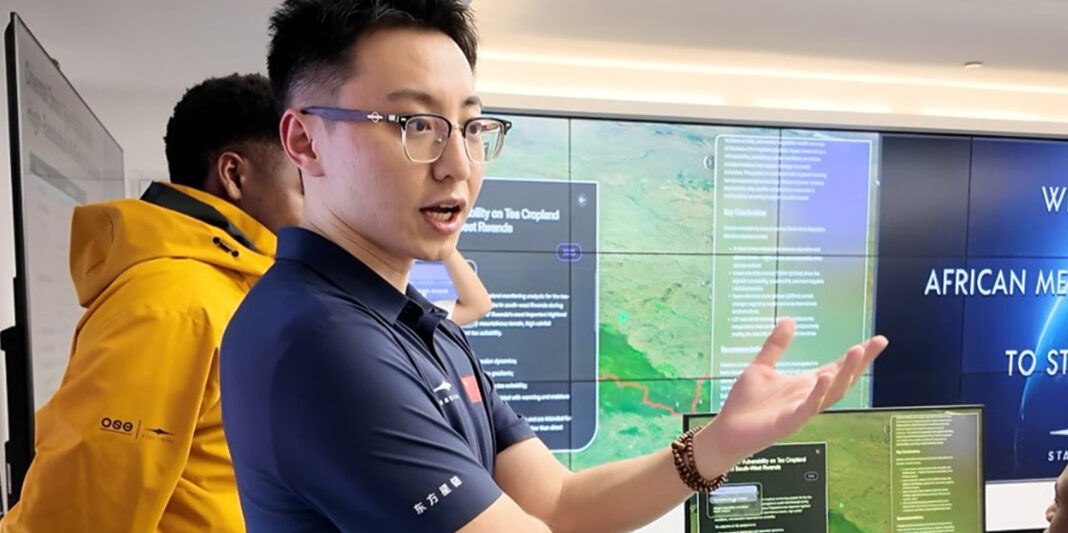
Curtis Ma explains how STAR.VISION is working with African partners to advance satellite innovation, talent development, and digital transformation.
Space technology is increasingly becoming a catalyst for Africa’s development, with applications spanning agriculture, disaster management, environmental monitoring, and digital connectivity. As governments and private sector players invest in space-based solutions, global partnerships are playing an important role in expanding the continent’s access to advanced technologies.
Among the companies seeking to shape this landscape is STAR.VISION, a global space technology company focused on integrating artificial intelligence with satellite systems and space computing. Through satellite innovation, strategic partnerships, and talent development initiatives, the company is working to expand the use of space technologies across Africa while fostering collaboration with local institutions and emerging innovators.
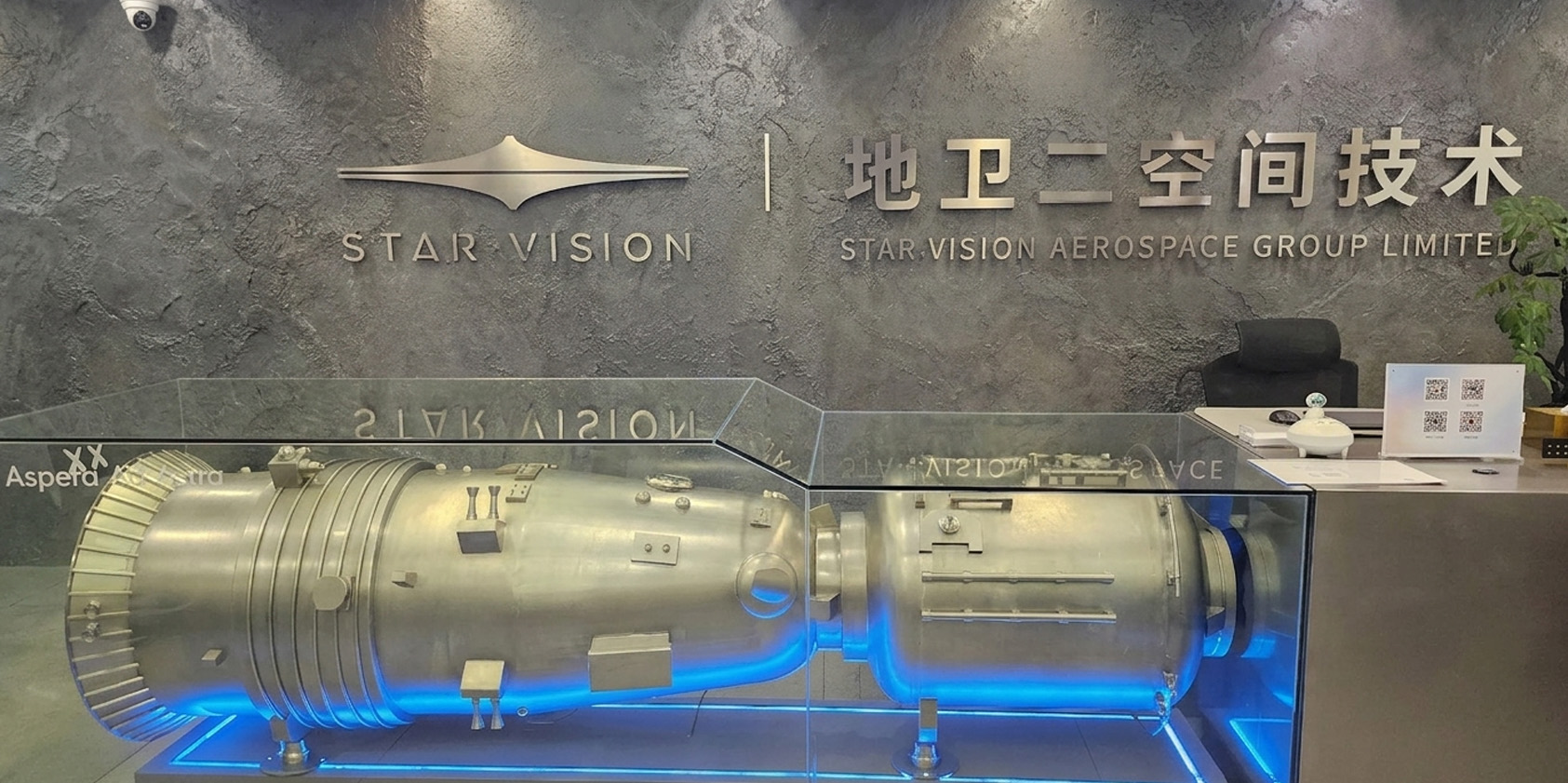
During a recent visit to STAR.VISION’s headquarters in Hangzhou, Zhejiang Province, China, Capital spoke with Curtis Ma, Director of Global Alliance, about the company’s strategy for Africa, its collaborative approach to building the continent’s space ecosystem, and the opportunities it sees for African talent in the rapidly evolving global space industry. Excerpts:
Capital: STAR.VISION has proposed an African satellite constellation for agriculture, disaster prevention, and communications. What role do you see the Global Alliance playing in making this a reality, and what are the biggest hurdles?
Curtis MA: The Global Alliance at STAR.VISION serves as a strategic bridge, aligning technology with regional policy and capital. For the proposed African satellite constellation, our role is to evolve from a technology provider into an ecosystem enabler.
The biggest hurdles are data sovereignty and cross-border policy alignment. Space infrastructure depends on mutual trust among participating countries. We address this by promoting a shared-benefit model, where each nation retains control over its localized data while benefiting from the collective system’s enhanced coverage and revisit frequency.
Capital: You’ve partnered with Kenya’s DRSRS for resource mapping and environmental monitoring. How do you balance commercial interests with public-sector collaboration, and what lessons apply elsewhere?
Curtis MA: Our partnership with Kenya’s Directorate of Resource Surveys and Remote Sensing (DRSRS) is based on a shared-value approach rather than a purely transactional relationship.
One key lesson from Kenya is the importance of local capacity building. For space technology to be sustainable, local institutions must move beyond being consumers of satellite imagery to becoming active co-pilots in analyzing and applying insights. This model is highly transferable to other African countries.
Capital: The Spaceborne AI Algorithm Rideshare Program allows students and researchers to co-develop AI for satellite data. How does this keep STAR.VISION innovative, and how do you ensure fair ownership?
Curtis MA: The Rideshare Program strengthens our innovation by tapping into global cognitive diversity. Edge computing in orbit benefits from creative and highly optimized algorithms developed by a wide pool of contributors.
We ensure fairness through a transparent joint intellectual property framework. Researchers retain academic publishing rights and receive commercial royalties if their algorithms are deployed globally. This ensures genuine partnership rather than outsourcing.
Capital: Students from Rwanda have developed AI algorithms for your WonderJourney-1A satellite. What does this say about African talent, and how are you scaling such success?
Curtis MA: The success of Rwandan students demonstrates that high-caliber talent is not geographically limited; access to infrastructure is the key factor.
We are now moving from isolated success stories to institutionalized pipelines. STAR.VISION is building partnerships with universities and space agencies across Africa, integrating our software development kits into engineering programs so that larger numbers of students can work directly with live satellite systems.
Capital: Your company promotes space technology as a practical tool for agriculture. What specific challenges are you addressing, and how do insights translate into real-world action?
Curtis MA: Through our agricultural AI platform, Crop007, we focus on early crop disease detection, yield prediction, and optimizing water and fertilizer use.
We apply an Observe–Orient–Decide–Act approach. Instead of just providing raw imagery, our on-orbit AI identifies anomalies, enabling policymakers to make informed decisions and allowing extension services to send targeted SMS alerts to farmers with precise recommendations on when and where to act.
Capital: Your training programs are bringing African students into the space-tech ecosystem. What skills are you building, and how does this support your broader Africa strategy?
Curtis MA: Our programs are designed to cultivate a pioneer mindset, encouraging students to see satellites as programmable systems rather than distant infrastructure.
This talent pipeline is central to our Africa strategy. By training engineers across countries such as Kenya and Rwanda, we are building a localized workforce capable of operating and advancing regional space-tech hubs. Our goal is for this technology to be maintained and driven by African experts on the ground.