Saturday, September 26, 2026
Home Blog Page 151

Siket Bank, ECX partner to modernize warehouse receipt lending

0

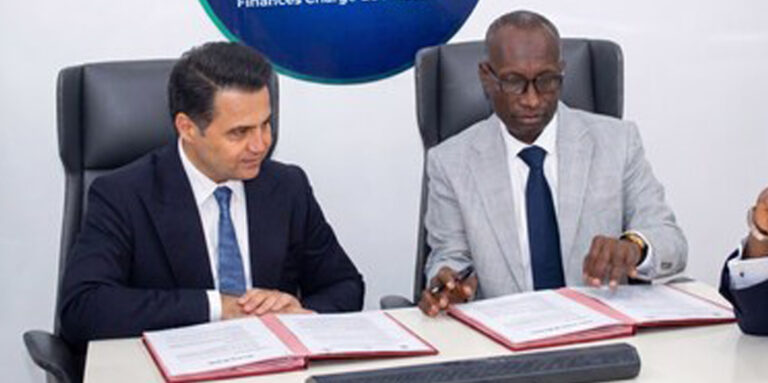
Siket Bank and the Ethiopian Commodity Exchange (ECX) have forged a landmark strategic partnership to fully integrate their financial and information ecosystems. This collaboration aims to enhance the efficiency of agricultural commodity trading and expand access to credit for farmers and traders.

A key aspect of this partnership involves the direct electronic integration of the ECX Data Center with Siket Bank’s “Tier 3” Data Center gateway. This integration will establish a secure and efficient financial settlement system.

Siket Bank, which recently transitioned from a microfinance institution to a full commercial bank authorized by the National Bank of Ethiopia, leverages the modern “T24” core banking system.

Damtew Alemayehu, President of Siket Bank, stated that the bank will install primary and backup data transmission lines to ensure permanent and seamless information exchange under the new agreement. This will allow electronic account instructions or fund transfer requests from the ECX trading system to be directly and instantly routed into Siket Bank’s core banking system, with immediate digital confirmation of task completion sent back to the ECX.

A vital component of the agreement is the strengthening of Warehouse Receipt financing. The ECX issues reliable warehouse receipts that confirm the ownership, quantity, quality, and grade of agricultural products stored in various warehouses.

According to Damtew, Siket Bank will accept these electronic warehouse receipts as loan collateral. This will enable producers, traders, and cooperatives to easily access working capital loans without needing traditional collateral such as property.

To date, the ECX has facilitated 1.74 billion Birr in loans to product owners pledging their goods. The inclusion of Siket Bank is expected to significantly boost this performance and provide rapid liquidity for participants in the agricultural trade value chain.

At the signing ceremony, Mergia Bayissa,CEO of the Ethiopian Commodity Exchange, emphasized the reliability of the institution’s payment system. He highlighted that this agreement marks a significant milestone, bringing the number of banks collaborating with the ECX in payment partnerships to 27.

“Over the past 18 years, the total amount of money deposited by buyers into exchange purchasing accounts and paid out to sellers has exceeded 430 billion Birr,” Mergia stated. “This has ensured that sellers receive their proper payments without any disruption the day after selling their products.”

He added that by fully transitioning its trading system to an Online Trading Platform, the ECX successfully traded 96,423 metric tons of diverse commodities worth 38.3 billion Birr between April 2025 and June 7, 2026, entirely without default.

Siket Bank President Damtew expressed his bank’s full readiness and high optimism for comprehensive implementation of the agreement. He noted that the bank’s rapid financial growth—with total assets reaching 24 billion Birr, capital at 10 billion Birr, over 795,000 clients, and a branch network of 163—positions it to become a strong competitor in the export financing sector.

“This partnership will provide our customers with a fast, efficient, and modern trading ecosystem,” Damtew said. “We will work with dedication to increase our borrowing customer base through the warehouse receipt lending service and contribute our share to the country’s economic growth.”

Red Fox opens Ethiopia’s first beneficial insect facility

0

Red Fox Ethiopia PLC, a well-established flower farm operating under the global floriculture brand Dümmen Orange, has inaugurated Ethiopia’s first dedicated facility for producing beneficial insects. This marks a significant shift toward biological pest control within the horticulture sector.

The 50-million-birr facility, located at the company’s production site 98 kilometers southeast of Addis Ababa, will produce predatory mites, specifically Swirskii and Californicus mites. These mites are natural enemies of harmful pests that damage ornamental crops. Rather than relying on synthetic chemical pesticides, the farm will now breed and release these natural predators directly into its greenhouses, a practice known as Integrated Pest Management (IPM).

While Red Fox Ethiopia has utilized biological control methods for a decade, this is the first time the company has produced these agents in-house.

Speaking at the inauguration ceremony on Tuesday, Yordanos Jemal, General Manager of Red Fox Ethiopia PLC, explained that importing beneficial insects had incurred significant foreign currency costs and resulted in losses due to transport from Europe.

She added, “The company has joined the Horti Footprint Chain Programme, which aims to help the entire ornamental horticulture supply chain become climate-positive by 2030.”

The new facility offers multiple benefits: it reduces reliance on chemical pesticides, protects the health of farm workers and surrounding communities, and lowers the risk of pesticide residue on export flowers, thereby helping Ethiopia comply with international market standards. Yordanos also noted that domestic production eliminates the need for air-freighted imports, reducing the industry’s CO₂ footprint.

“This facility is proof that nature, when respected and utilized wisely, is the most powerful tool we have,” she stated. “We are proud to lead this transformation in Ethiopia and invite the sector to follow.”

The inauguration was attended by Sofia Kassa, State Minister of the Ministry of Agriculture, and Christine Pirenne, Ambassador of the Netherlands.

Diriba Kuma (Amb.), Director General of the Ethiopian Agriculture Authority (EAA), commended the initiative for supporting Ethiopia’s national goals for green agriculture and environmental sustainability. However, he also cautioned about increasing regulatory pressure from export destinations.

“Globally, the market is moving away from chemical pesticides,” Diriba said. “My advice to the horticulture and floriculture industries is to take a bold step toward transitioning to biological pest management systems—not only to comply with EU standards but also to ensure the sustainability of the industry and the environment.”

Tewodros Zewdie, Executive Director of the Ethiopian Horticulture Producer Exporters Association, hailed the inauguration as a significant development for the sector. He urged research institutions to collaborate with farms, noting that the authority is currently drafting a legal framework to govern biological pest control and ensure the competitiveness of Ethiopian horticulture.

Established in 2003, Red Fox Ethiopia generates over €10 million in annual export earnings and has grown to become the largest farm within the Dümmen Orange network. Spanning 100 hectares, including 40 hectares of high-tech greenhouses, the facility annually exports over 120 million cuttings, stems, and tubers.

Dümmen Orange, the parent company headquartered in the Netherlands, is one of the world’s leading breeders and producers of ornamental plants.

“Capital size alone is not the ultimate goal; Global competitiveness is key” — Zemen Bank

0

As Ethiopia’s financial sector undergoes its most significant institutional and policy reforms in history, it has become clear that simply increasing banks’ capital size should not be the ultimate objective. Instead, the primary goal is to foster regional and international competitiveness, enhance technological adoption, and establish robust corporate governance systems.

This perspective was emphasized during a panel discussion hosted by Zemen Bank, themed “Financial Sector Reforms in Ethiopia: Capitalization, Mergers, and the Role of Shareholders.” The event convened banking experts, economic researchers, and stakeholders, generating extensive debate on the sector’s current challenges and its future strategic direction.

Dereje Zebene, CEO of Zemen Bank, highlighted that the dynamic growth of both the global and domestic economies, coupled with market expansion, technological innovation, and policy reforms, is compelling local banks to become stronger, more competitive, and more capable.

“Globally, mergers and acquisitions (M&A) in banking, as well as decisions to increase capital, have served as reform tools across different eras and under various circumstances,” the CEO stated. He observed that while some countries have leveraged these options to strengthen financial institutions and enhance market competitiveness, others have prioritized internal capacity, opting for organic growth, capital increases, or structural reforms.

According to Dereje, a key lesson from Africa and other regions is that no single solution fits every country. Nevertheless, despite differences in timing and implementation, the overarching objective remains consistent: to cultivate strong institutions with greater capital, the capacity to finance major national projects, the ability to support technology investments, and the resilience to withstand market competition.

Dereje further elaborated: “The growing capital requirement enables banks to strengthen their financial position and better compete with regional and international institutions.

However, capital size alone is not the ultimate goal. The main objective is to build financial institutions that can withstand global competition, are technologically advanced, possess strong governance, and create tangible value for the economy.”

He also stressed that, throughout this process, shareholders must play a more critical role than ever, not only by contributing capital but also by providing strategic direction and helping to embed sound corporate governance.

Sharing his insights at the panel, renowned economics researcher Professor Alemayehu Geda suggested that the current deadline for capital fulfillment in the banking industry might not be the final benchmark.

He said the National Bank of Ethiopia (NBE) might introduce additional policy measures to achieve its envisioned level of institutional strength.

“Some argue, ‘Why do we need such huge capital? We can just take our market segment and operate.’ But where will the next structural pressure come from?” the professor asked, explaining that the central bank views the mandatory capital increase as merely one tool.

He clarified that the regulator’s primary goal is to foster banks that can withstand the entry of foreign banks, are easier for the National Bank to supervise, are efficient, and can expand internationally.

Alemayehu highlighted the risk-weighted capital adequacy ratio and stress testing as potential future requirements from the National Bank of Ethiopia.

Regulatory signals indicate that banks must raise their risk-weighted capital adequacy ratio to at least 11 percent by year-end. Through stress testing, the National Bank will evaluate banks’ ability to withstand market risks under various scenarios without resorting to mergers and acquisitions.

“Therefore, I do not think surpassing the 5 billion birr capital adequacy threshold is a reason to relax,” the professor warned.

According to Professor Alemayehu Geda’s analysis, approximately nine recently established third-tier banks have not yet met the capital requirement. However, once the National Bank implements the risk-weighted capital adequacy ratio and stress tests, an additional four banks, currently believed to have met the requirements, could also become vulnerable. This means at least 13 banks could face significant challenges under the new framework, increasing pressure for them to merge.

The professor specifically urged the National Bank to prioritize institutions offering interest-free, or Islamic, banking services. He noted that conventional banks have diverse merger options. However, due to their religious and ideological structure, Islamic banks cannot merge with conventional banking windows. Consequently, he argued they might be left without alternatives unless a distinct regulatory framework is developed for them.

ESL resumes fuel imports after 40 years

0


In a significant operational recovery, state-owned Ethiopian Shipping and Logistics (ESL) has resumed handling the country’s petroleum imports, including from new international suppliers. This marks a historic first, as Ethiopia has now sourced fuel from within Africa.

The Ethiopian government has diversified its procurement strategy to include West Asian markets and ports in western India. This shift comes amid disruptions to traditional oil supply routes and rising domestic demand, particularly for jet fuel. The demand for jet fuel is largely driven by Bole International Airport’s role as a major African aviation hub and the extensive operations of Ethiopian Airlines, a leading carrier on the continent.

A recent breakthrough saw Ethiopia import jet fuel from a terminal in Nigeria, operated by the Dangote Petroleum Refinery at Dangote Quays, Lekki, owned by billionaire Aliko Dangote.

This development represents a dual milestone: it is Ethiopia’s first import of African oil for jet fuel and other domestic purposes since halting imports from neighboring Sudan, and it signals a departure from the importing practices observed over the past four decades.

Notably, ESL has not imported oil on behalf of its customers since approximately 1986. For the past 40 years, the state oil importer, the Ethiopian Petroleum Supply Enterprise (EPSE) — which was the sole importer until last year — relied on its own arrangements to bring in this strategic commodity, despite Ethiopia owning two medium-sized tanker vessels a few years ago.

“There was a perception that ESL lacked the capacity to handle oil imports,” stated Demissew Benti, head of the Market Department at ESL. “This latest development is part of our effort to correct that misunderstanding and establish a new operational precedent.”

Lensa Geremew, head of the Chartering Division within ESL’s Commercial Directorate, confirmed the successful execution of a fuel import from Nigeria. She highlighted that conflict and travel restrictions in the Strait of Hormuz — a critical waterway through which approximately 20 percent of the world’s oil supply and a significant portion of Ethiopia’s fuel imports transit — had created substantial supply challenges.

“In response to favorable conditions created by the government, the company was able to import 120,000 metric tons of aviation fuel and diesel fuel for the first time in four decades,” she said.

ESL officials added that vessel operators successfully transported the petroleum products, helping to alleviate global fuel shortages resulting from shipping disruptions in the Strait of Hormuz following the conflict involving the United States, Israel, and Iran, which began on February 28.

The liquid cargo originated from the Dangote Terminal in Nigeria and was delivered in three voyages via the vessels MV Kokolight, MT Mostar, and MT Explorer.

Through these chartered ships, ESL transported 80,000 metric tons of jet fuel and 40,000 metric tons of diesel fuel to the Horizon Oil Terminal in Djibouti, a key hub for Ethiopian fuel imports.

Jet fuel imports have been a priority since the Hormuz crisis began. Experts note that the primary challenge with aviation fuel is not only the substantial demand from Ethiopian Airlines but also the country’s insufficient storage infrastructure for jet fuel, unlike that for diesel and gasoline.

Owned by Dangote Industries, the Dangote Petroleum Refinery in Lagos State’s Lekki Free Zone began operations in 2024. It currently processes about 650,000 barrels of crude oil per day, with plans to double this capacity soon.

Ethiopia, a nation that does not produce oil, spends at least a quarter of its total goods-import budget on oil. For the 2024/25 budget year, oil imports were estimated at USD 3.7 billion and are expected to increase by 8.9 percent by the end of the current budget year, which concludes in less than three weeks.

The ongoing situation in the Strait of Hormuz is projected to further escalate import costs. According to Finance Minister Ahmed Shide, who presented the figures to parliament this week during his budget speech, the central bank anticipates fuel imports could reach up to USD 6 billion in the upcoming budget year. This increase is primarily due to price hikes linked to the regional conflict.

Ahmed announced a proposed capital injection for the Ethiopian Petroleum Supply Enterprise (EPSE) for the upcoming budget year, starting July 8. Until last year, EPSE was the sole importer of this strategic commodity. The minister stated that this proposed capital, amounting to 116.4 billion birr, will be disbursed from central government coffers as part of the recurrent budget throughout the year.

In parallel, the government has liberalized the oil import sector, allowing private entities to participate. A week ago, the National Bank of Ethiopia issued a directive permitting foreign direct investors, the diplomatic community, and international non-governmental organizations to import fuel using their own foreign currency.

This move aims to reduce the foreign currency allocated for oil imports and exclude entities that should not benefit from oil subsidies. Ethiopia hosts numerous international organizations and embassies, making it a continental hub.

The government has acknowledged that its oil subsidy historically covered parties that should not have been included. Under the four-year macroeconomic reform program launched in July 2024, the oil sector is expected to become a source of profit for EPSE and generate tax revenue for the government.

Consequently, the subsidy has been revised to target specific communities. However, experts note that the excise and value-added taxes, which were scheduled for imposition last December, have not been fully applied.

Although the government initially aimed for a 100 billion birr fuel subsidy for the 2025/26 budget year (ending July 7), Trade and Regional Integration Minister Kassahun Gofe reported in a late-March social media post that the actual subsidy for that year was 272 billion birr.

For the coming budget year, the government has proposed a 20 billion birr subsidy for the sector, a significant reduction from the previous year’s figure, reflecting a planned gradual decrease in subsidies.